

Electric Cars: The Basics
For those of you new to zero-emission electric driving, we recommend a read of the following articles:
What Is Regenerative Braking In Electric Cars: The Basics: The Complete Electric Car Buying Guide For India
Electric Cars: The Basics For those of you new to zero-emission electric driving, we recommend a read of the following articles: Sign up to the newsletter The Mazda MX-30…
Read More
The History Of Electric Cars and Vehicles: Are EVs A New Invention?
Electric Cars: The Basics For those of you new to zero-emission electric driving, we recommend a read of the following articles: Sign up to the newsletter The Mazda MX-30…
Read More
Different Types Of Electric Cars: The Complete Electric Car Buying Guide For India
Electric Cars: The Basics For those of you new to zero-emission electric driving, we recommend a read of the following articles: Sign up to the newsletter The Mazda MX-30…
Read More
Electric Cars and Vehicles: Pros, Cons And Myths: The Complete Electric Car Buying Guide For India
Electric Cars: The Basics For those of you new to zero-emission electric driving, we recommend a read of the following articles: Sign up to the newsletter The Mazda MX-30…
Read More
Electric Cars Range: WLTP: The Basics: The Complete Electric Car Buying Guide For India
Electric Cars: The Basics For those of you new to zero-emission electric driving, we recommend a read of the following articles: Sign up to the newsletter The Mazda MX-30…
Read MoreSign up to the newsletter
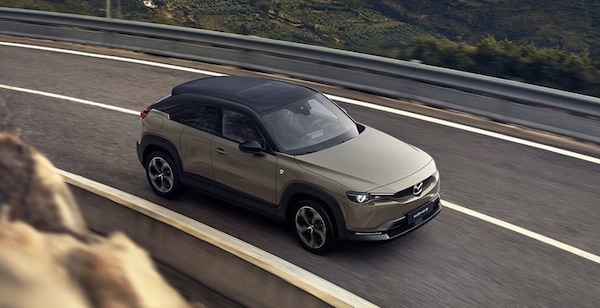
The Mazda MX-30 R-EV PHEV SUV
The Mazda Motor Corporation, more commonly known simply as Mazda, is a leading Japanese automotive manufacturer, with business activities across a number of key international markets. Mazda was founded in 1920, initially as a cork-making factory (Toyo Cork Kogyo Co, Ltd.). The company started manufacturing vehicles in 1931. The ‘Mazda-go’, a tricycle truck, was the first vehicle to be manufactured by the company. Mazda derives its name from ‘Ahura Mazda’, the God of harmony, intelligence and wisdom.
Mazda has conducted research on alternative fuel vehicles for many decades. The company has had a particular focus on hydrogen-powered vehicles. The Mazda electric vehicle (EV) portfolio includes both, battery-electric vehicle (BEV) and plug-in hybrid electric vehicle (PHEV) models:
- All-electric Mazda MX-30 (BEV)
- Mazda CX-60 plug-in hybrid (PHEV)
- Mazda CX-80 plug-in hybrid (PHEV)
- Mazda MX-30 R-EV plug-in hybrid (PHEV)
Like other automotive manufacturers competing fiercely for leadership in the rapidly evolving electric driving sector, Mazda is positioning its latest electric car, as unique. Well, to some extent, the Mazda MX 30 plug-in hybrid does offer a unique approach to developing a PHEV, but in many ways, it has much in common with other plug-in hybrids.
Despite the improvements in the latest-generation of plug-in hybrid electric vehicles (PHEVs), the electric driving narrative is fast migrating towards battery-electric vehicles (BEVs), also referred to as pure electric cars. This is not surprising, given the significant improvement in electric range of the latest-generation of pure electric cars.
For those of you, keen on buying an electric car, but prefer a PHEV, as a first step towards electric driving, the Mazda MX 30 plug-in hybrid is worth consideration. The Mazda plug-in hybrid SUV has a 17.8 kWh onboard EV battery (weight: 188.2 kg), with a WLTP certified zero-emission electric range up to 85 km. An above average pure electric range, and certainly useful for most day-to-day driving needs.
Adjusting for real-world driving conditions, the MX-30 plug-in hybrid electric vehicle (PHEV) should comfortably deliver an emission-free pure electric range up to 70 km. Useful for city and shorter distance motorway driving! For those new to electric driving, it is worth noting that many factors influence the real-world electric car range. Some of these include: driving style, temperature, elevation, wind, rain, road surface, tyre size, onboard services used etc.
Mazda is keen to emphasis the uniqueness of its hybrid system, such that, the onboard rotary engine is used only as a generator, and the plug-in hybrid resembles closer to a battery-electric vehicle (BEV). Put another way, the wheels are powered exclusively by the electric motor/ EV battery. In other PHEVs, the internal combustion engine (ICE) powers the wheels. In general, rotary engines are compact and deliver a higher output.
According to the company, “Like a battery-electric vehicle (BEV), the wheels are driven exclusively by electric motors. However, unlike other PHEVs, the petrol engine doesn’t power the wheels directly, but acts as a generator to charge the battery. That means you can enjoy uninterrupted electric propulsion wherever you go”. Of course, do keep in mind that the generator is still powered by petrol, a fossil fuel. The EV incorporates a 50-litre fuel tank.
Taking advantage of the EV range will also require inculcating a habit of charging the EV on a regular basis, which is as easy as charging a smartphone. We at e-zoomed discourage the use of a domestic 3-PIN plug for charging an electric car. A ‘topping up’ approach to charging will help improve the overall efficiency of the electric vehicle and also improve the long-term maintenance of the onboard EV battery. Mazda offers a 8 years or 160,000 km warranty.
The PHEV incorporates DC charging up to 50 KW DC. The EV can be charged 10%-80% in 25 minutes. The EV has a 7.2 kW onboard charger. The Mazda electric vehicle can be charged 0% to 100% via a dedicated EV charging station, like myenergi zappi in 1 hour and 30 minutes. If you insist on using a domestic socket for charging, the EV will take up to 4 hours and 50 minutes to fully charge.
The all-wheel drive Mazda PHEV SUV combines a 830cc rotary engine with an onboard electric motor (125 kW), powered by the EV battery. The PHEV can achieve 0-100 km/h in 9.1 seconds. The 1-speed automatic Mazda plug-in electric SUV delivers 170 PS maximum power and 260 Nm torque. Top speed is 140 km/h. The Mazda EV has 5 regenerative braking modes. The Mazda MX-30 plug-in electric SUV has tailpipe emission up to 21g CO2/km.
The MX-30 plug-in hybrid has a host of safety features and onboard technology, to include: blind spot monitoring, driver attention alert, emergency lane-keeping, intelligent speed assist, lane-keep assist system with lane departure warning system, 7” colour touch-screen for climate control settings, colour 7” TFT instrument cluster display, Apple CarPlay & Android Auto, 360º View Monitor and more.
Bottom-line, electric driving is good for the environment and the wallet!
| PROS | CONS |
|---|---|
| Unique combination of a rotary engine and electric motor | Small boot (350 L) |
| Decent EV battery size and electric range | Access to rear seats not easy |
| DC charging up to 50 kW | Rear-view visibility limited |
Gallery
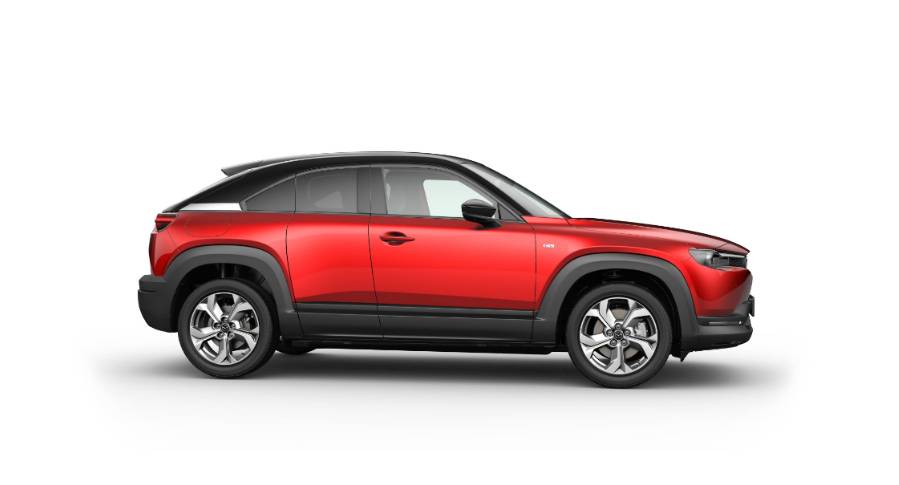
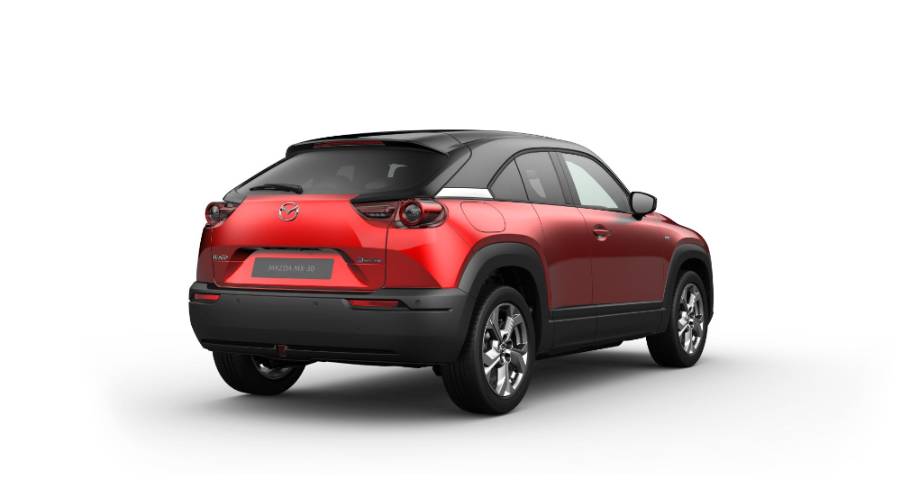
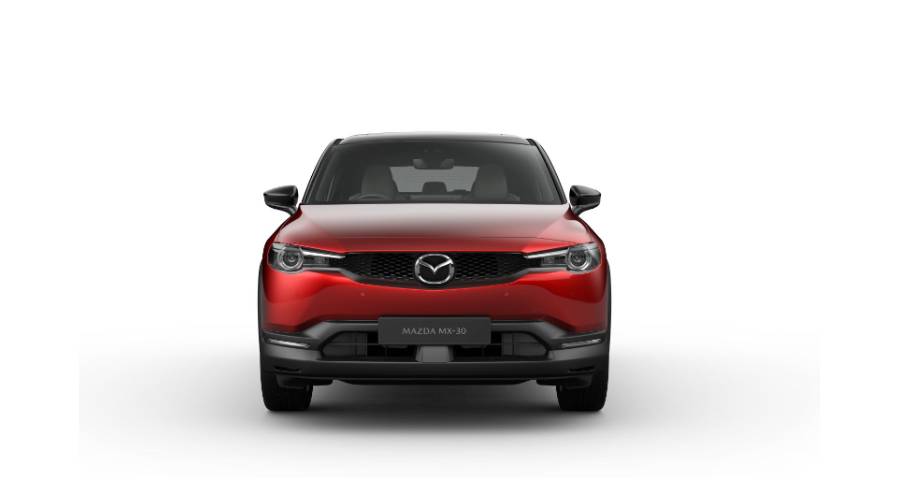
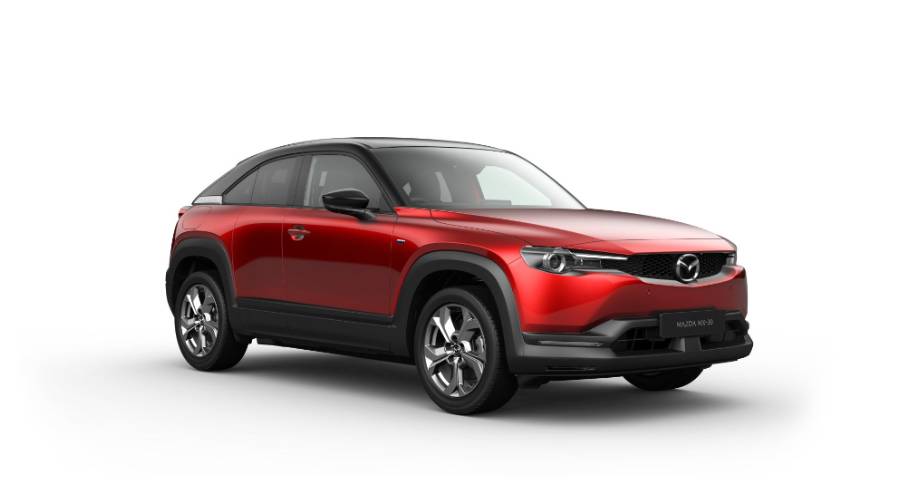
The Mazda MX-30 R-EV Plug-In Hybrid SUV (credit: Mazda)
| At A Glance | |
|---|---|
| EV Type: | Plug-In Hybrid Electric Vehicle (PHEV) |
| Body Type: | SUV |
| Engine: | Petrol/ Electric |
| Available In India: | No |
| Variants (1 Option) |
|---|
| Mazda MX-30 R-EV PHEV (from ₹ N/A) |
| EV Battery & Emissions | |
|---|---|
| EV Battery Type: | Lithium-ion |
| EV Battery Capacity: | Available in one battery size: 17.8 kWh |
| Charging: | 50 kW DC charging (10%-80%: 25 mins). Onboard charger: 7.2 kW (0%-100%: 1 hr 30 mins) |
| Charge Port: | Type 2 |
| EV Cable Type: | Type 2 |
| Tailpipe Emissions: | 21g (CO2/km) |
| Battery Warranty: | 8 years or 160,000 km |
| Charging Times (Overview) | |
|---|---|
| Slow charging AC (3 kW – 3.6 kW): | 6 – 12 hours (dependent on size of EV battery & SOC) |
| Fast charging AC (7 kW – 22 kW): | 3 – 8 hours (dependent on size of EV battery & SoC) |
| Rapid charging AC (43 kW): | 0-80%: 20 mins to 60 mins (dependent on size of EV battery & SoC) |
| Rapid charging DC (50 kW+): | 0-80%: 20 mins to 60 mins (dependent on size of EV battery & SoC) |
| Ultra rapid charging DC (150 kW+): | 0-80% : 20 mins to 40 mins (dependent on size of EV battery & SoC) |
| Tesla Supercharger (120 kW – 250 kW): | 0-80%: up to 25 mins (dependent on size of EV battery & SoC) |
- Note 1: SoC: state of charge
| Dimensions | |
|---|---|
| Height (mm): | 1555 |
| Width (mm): | 1795 |
| Length (mm): | 4395 |
| Wheelbase (mm): | 2655 |
| Turning Circle (m): | 11.4 |
| Boot Space (L): | 350 |
| Frunk (L): | N/A |
| Mazda MX-30 e-SKYACTIV R-EV | |
|---|---|
| EV Battery Capacity: | 17.8 kWh |
| Pure Electric Range (WLTP): | 85 km |
| Electric Energy Consumption (kWh/ 100km): | 3.6 |
| Fuel Consumption (L/100 km): | N/A |
| Charging: | 50 kW DC charging (10%-80%: 25 mins). Onboard charger: 7.2 kW (0%-100%: 1 hr 30 mins) |
| Top Speed: | 140 km/h |
| 0-100 km/h: | 9.1 seconds |
| Drive: | All-wheel drive (AWD) |
| Electric Motor (kW): | 125 |
| Horsepower (ps): | 170 |
| Torque (Nm): | 260 |
| Transmission: | Automatic |
| Seats: | 5 |
| Doors: | 5 |
| Minimum Kerb Weight (kg): | 1,881 |
| Towing Capacity (Braked/Unbraked)/ (kg): | N/A |
| Colours: | 10 |
| NCAP Safety Rating: | Five-Star |
Electric Driving: Top 5 EV Jargons For India
Despite the increased visibility of EVs in India, the vocabulary (jargon) used in electric driving is still new to consumers. In fact, for many, it can seem daunting and confusing. We have therefore put below some of the more commonly used terms in the EV glossary, to give you an easier introduction to electric driving in India!
| EV Glossary: Top 5 | |
|---|---|
| DoD (Depth-Of-Charge): | What is Depth-Of-Charge? A battery’s Depth-of-Charge is the level of discharge of a battery. As you drive an EV, the battery is discharged. The DoD indicates the % that has been discharged relative to the capacity of a battery. Conversely, a State-of-Charge (SOC), is the percentage of capacity still available in a battery. If you use 25% of your EV battery capacity, then the DoD is 25% and the SOC is 75%. It is recommended not to fully discharge an electric car battery, as this reduces the lifespan of a battery. Automotive manufacturers publish recommend DoD levels for charging, but a charging range between 20% to 80% is ideal. |
| EV Battery Life: | What is the life of an EV battery? Like petrol and diesel engines, electric car batteries also have a finite lifespan. Though EV battery technology has come a long way over the past few years, battery degradation is inevitable. Just as normal wear and tear is the case for an internal combustion engine (ICE) vehicle. Currently most EV manufacturers are offering a warranty up to 8 years or 160,000 km. However, some automotive manufacturers are offering an even longer EV battery warranty. An example is the Japanese automotive manufacturer, Toyota. The company offers a 10 years EV battery warranty for the all-electric Toyota bZ4X SUV. In most cases, such warranties are up to 70% of the original EV battery capacity. The battery life is impacted by a number of factors, which in turn impacts battery electrical performance, to include, the range the electric car can travel. The most commonly used batteries in electric cars are lithium-ion batteries. |
| Frunk: | What is a frunk? Though a frunk is not a new term, its availability is becoming more widespread with the development of electric vehicles (EVs). A frunk is a storage space/ compartment/ trunk in the front of a vehicle, rather than the rear. In the case of pure electric cars, given that these vehicles do not have an onboard internal combustion engine (ICE), there is space for a frunk. It is worth noting that a frunk is usually much smaller than a trunk, and in EVs, a good space for storing the EV cable. |
| One-Pedal Driving: | What is one-pedal driving? In one-pedal driving, the EV slows down or stops, when the pedal is released. One-pedal functionality reduce the need to use the brake pedal, for speed reduction or stopping. Of course, the brake pedal is still the best way to hold a vehicle in place at a complete stop. |
| WLTP (Worldwide Harmonised Light Vehicle Test Procedure): | In a bid to continue to improve the quality of realistic data released by automotive manufacturers, on economy, range and CO2 emissions, Europe has implemented its first phase for the WLTP program. The testing procedures under WLTP will result in reduced ranges for electric cars released under other previous testing regimes. The WLTP is seen as a significant improvement over the New European Driving Cycle (NEDC) designed in the 1980s and based on theoretical driving. The WLTP has been developed with the aim of becoming a global standard, so that cars can be easily compared between regions. |
While e-zoomed uses reasonable efforts to provide accurate and up-to-date information, some of the information provided is gathered from third parties and has not been independently verified by e-zoomed. While the information from the third party sources is believed to be reliable, no warranty, express or implied, is made by e-zoomed regarding the accuracy, adequacy, completeness, legality, reliability or usefulness of any information. This disclaimer applies to both isolated and aggregate uses of this information.
Related articles

The All-Electric Mazda MX-30 (SUV): The Complete Electric Car Buying Guide For India
Electric Cars: The Basics For those of you new to zero-emission electric driving, we recommend a read of the following articles: Sign up to the newsletter The Mazda MX-30…
Read More
The All-Electric Hyundai INSTER (SUV): The Complete Electric Car Buying Guide For India
Electric Cars: The Basics For those of you new to zero-emission electric driving, we recommend a read of the following articles: Sign up to the newsletter The Mazda MX-30…
Read More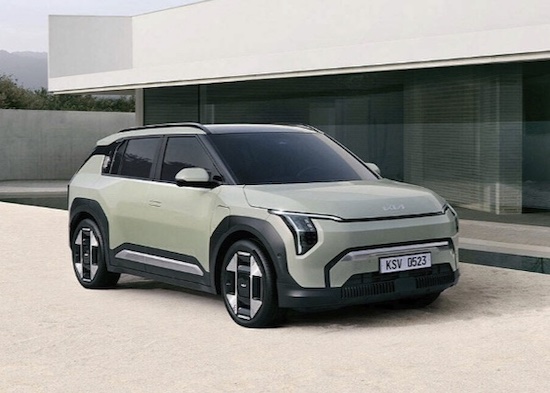
The All-Electric Kia EV3 (SUV): The Complete Electric Car Buying Guide For India
Electric Cars: The Basics For those of you new to zero-emission electric driving, we recommend a read of the following articles: Sign up to the newsletter The Mazda MX-30…
Read More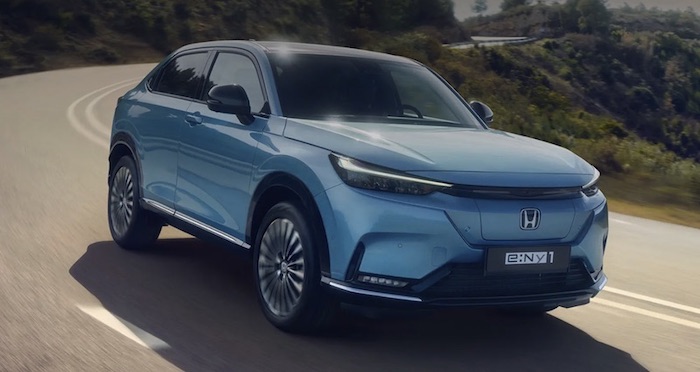
Honda e:Ny1 Electric (SUV): The Complete Electric Car Buying Guide For India
Electric Cars: The Basics For those of you new to zero-emission electric driving, we recommend a read of the following articles: Sign up to the newsletter The Mazda MX-30…
Read More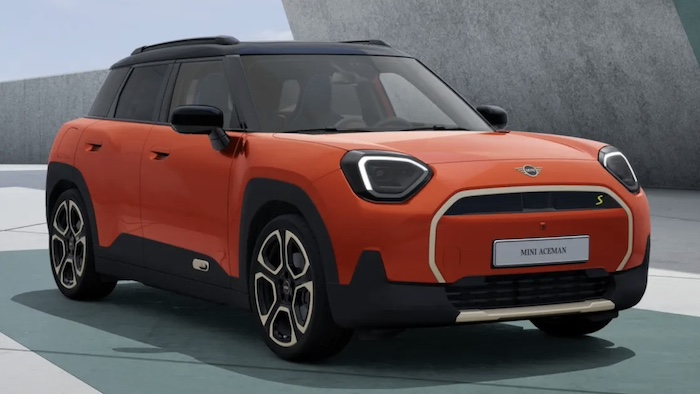
The MINI Aceman Electric (SUV): The Complete Electric Car Buying Guide For India
Electric Cars: The Basics For those of you new to zero-emission electric driving, we recommend a read of the following articles: Sign up to the newsletter The Mazda MX-30…
Read More