

Electric Cars: The Basics
For those of you new to zero-emission electric driving, we recommend a read of the following articles:
What Is Regenerative Braking In Electric Cars: The Basics: The Complete Electric Car Buying Guide For India
Electric Cars: The Basics For those of you new to zero-emission electric driving, we recommend a read of the following articles: Sign up to the newsletter The Hyundai Tucson…
Read More
The History Of Electric Cars and Vehicles: Are EVs A New Invention?
Electric Cars: The Basics For those of you new to zero-emission electric driving, we recommend a read of the following articles: Sign up to the newsletter The Hyundai Tucson…
Read More
Different Types Of Electric Cars: The Complete Electric Car Buying Guide For India
Electric Cars: The Basics For those of you new to zero-emission electric driving, we recommend a read of the following articles: Sign up to the newsletter The Hyundai Tucson…
Read More
Electric Cars and Vehicles: Pros, Cons And Myths: The Complete Electric Car Buying Guide For India
Electric Cars: The Basics For those of you new to zero-emission electric driving, we recommend a read of the following articles: Sign up to the newsletter The Hyundai Tucson…
Read More
Electric Cars Range: WLTP: The Basics: The Complete Electric Car Buying Guide For India
Electric Cars: The Basics For those of you new to zero-emission electric driving, we recommend a read of the following articles: Sign up to the newsletter The Hyundai Tucson…
Read MoreSign up to the newsletter
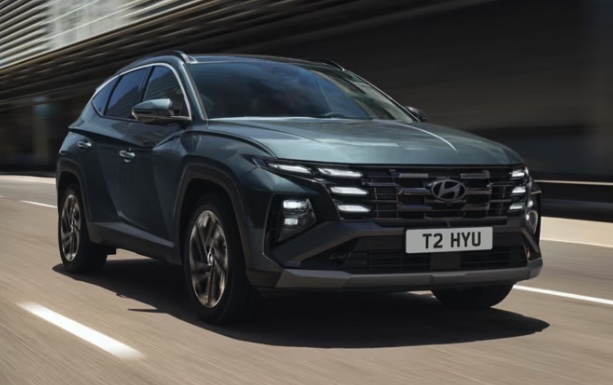
The Hyundai Tucson PHEV SUV
The Hyundai Motor Company, usually referred to simply as Hyundai, is a leading South Korean automotive manufacturer headquartered in Seoul. The company was founded in 1967, with its first model, the Cortina (in collaboration with Ford Motor Company), launched in 1968. The Cortina was assembled in the Ulsan plant in South Korea. Hyundai has come a long way since then, and currently owns a 33.88% stake in Kia Corporation, and also wholly owns the luxury automotive brand, Genesis, among others.
Hyundai has an annual production capacity of over 1.6 million units, making the automotive manufacturer the third-largest in terms of production behind the Japanese automotive manufacturer, Toyota and the German automotive group, Volkswagen. Hyundai has production facilities across a number of global locations. Some of these include: North America, India, Russia, Turkey, China and the Czech republic. Hyundai vehicles are sold in nearly 200 countries globally. The company currently has the following battery-electric vehicles (BEVs) and plug-in hybrid electric vehicles (PHEVs):
- All-electric Hyundai IONIQ (BEV)
- All-electric Hyundai Kona (BEV)
- All-electric Hyundai IONIQ 3 (BEV)
- All-electric Hyundai IONIQ 5 (BEV)
- All-electric Hyundai IONIQ 5 N (BEV)
- All-electric Hyundai IONIQ 6 (BEV)
- All-electric Hyundai IONIQ 6 N (BEV)
- All-electric Hyundai IONIQ 9 (BEV)
- All-electric Hyundai Inster (BEV)
- All-electric Hyundai Staria (BEV)
- All-electric Hyundai Nexo (FCEV)
- Hyundai IONIQ Plug-In Hybrid (PHEV)
- Hyundai Santa Fe Plug-In Hybrid (PHEV)
- Hyundai Tucson Plug-In Hybrid (PHEV)
The Hyundai Tucson sport utility vehicle (SUV) has been available since 2004. The 5-seater SUV is named after Tucson, the city is Arizona, USA. Since its launch the Tucson SUV has been very popular, making it the best-selling Hyundai SUV. Since 2004, more than 7 million units have been sold globally. The current model, the fourth-generation variant, was revealed in 2020. The Tucson is also available as a plug-in hybrid electric vehicle (PHEV).
The Hyundai Tucson PHEV is a good option for families keen on a mid-sized SUV, without breaking the bank. Driving the plug-in hybrid on all-electric mode will help lower the cost of motoring, amplified by the recent increase in fuel prices.
The all-wheel drive Tucson plug-in hybrid electric vehicle (PHEV) pairs a 1.6-litre (4-cylinder) T-GDi petrol engine with a 66.9 kW electric motor, powered by an onboard EV battery. The automotive manufacturer claims a fuel economy up to 1.3 l/100km for the electric vehicle (EV). Of course, the real-world fuel economy will depend on a number of factors, but none as influential as using the e-mode.
Bottom-line, to increase the fuel economy of the electric vehicle and lower the driving costs, the PHEV should be driven as much as possible on the pure electric mode. If the EV is driven primarily using the combustion engine, expect the fuel economy to be closer to the internal combustion engine (ICE) variant.
Given the WLTP certified emission-free electric range is 60 km, and most day-to-day commutes are short, there is much scope for taking advantage of electric driving to save money. The PHEV has a 13.8 kWh onboard EV battery, which is reasonably standard for a PHEV of this size.
However, expect the real-world electric range to be closer to 50 km. The EV range is impacted by a number of factors, to include: driving profile, speed, load, regenerative braking, road condition, weather, wheel size and a lot more.
Taking advantage of the EV range will also require inculcating a habit of charging the EV on a regular basis, which again is as easy as charging a smartphone. We at e-zoomed recommend the use of a dedicated EV charging station, like easee to charge the EV.
We do not encourage the use of a domestic 3-PIN plug. Charging the EV using a single-phase EV charger will take up to two hours. Of course, if you top-up on a regular basis, the charging time will be faster. The PHEV has a 7.2 kW onboard charger and does not offer fast DC charging capability.
In terms of practicality, the Hyundai EV has much to offer. The interior cabin is spacious, with ample headroom and legroom for front and rear seat passengers. The driver seat benefits from good visibility and the driver cockpit is well designed. Despite the placement of the onboard EV battery, the boot space is decent (558 L), though a little smaller than the petrol variant.
The EV is packed with a host of driving assistance and safety features, to include: highway drive assist (HDA), forward collision-avoidance assist, remote smart park assist, blind spot view monitor and more. The EV has been awarded a Five-Star NCAP Safety Rating.
The performance of the electric SUV is decent. The all-wheel drive Tucson PHEV can achieve 0-100 km/h in 8.6 seconds, also benefiting from instant torque. The drivetrain delivers a maximum power of 265 PS (torque 350 Nm) and the top speed is 190 km/h. Sufficient for city and motorway driving.
The EV has claimed tailpipe emissions up to 31g CO2/km. Again, substantially lower than the emissions of the conventional combustion engine variant. Bottom-line, electric driving is good for the environment and the wallet! The Hyundai electric car is not available in India.
| PROS | CONS |
|---|---|
| Good standard equipment specification | Cheaper alternatives available |
| Spacious and good quality interiors | Electric range limited. DC charging not available |
| Easy and comfortable to drive | Exterior design may not be to everyones liking |
Gallery
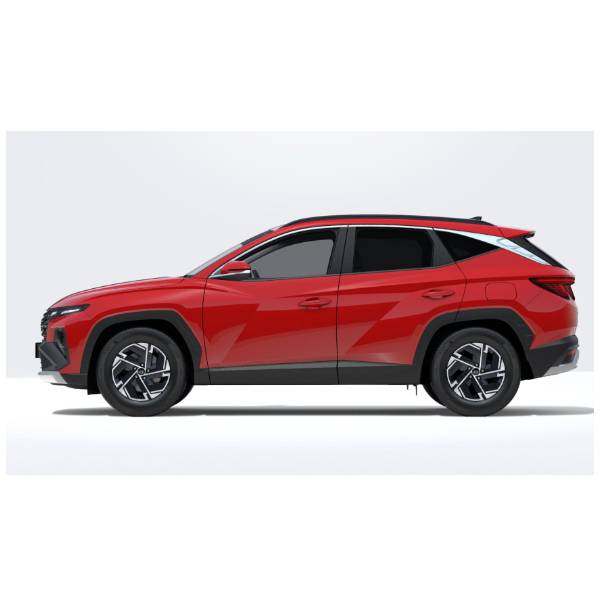
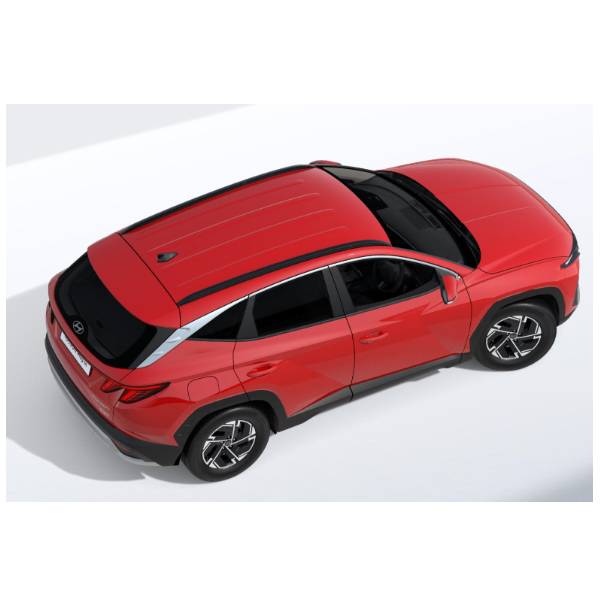
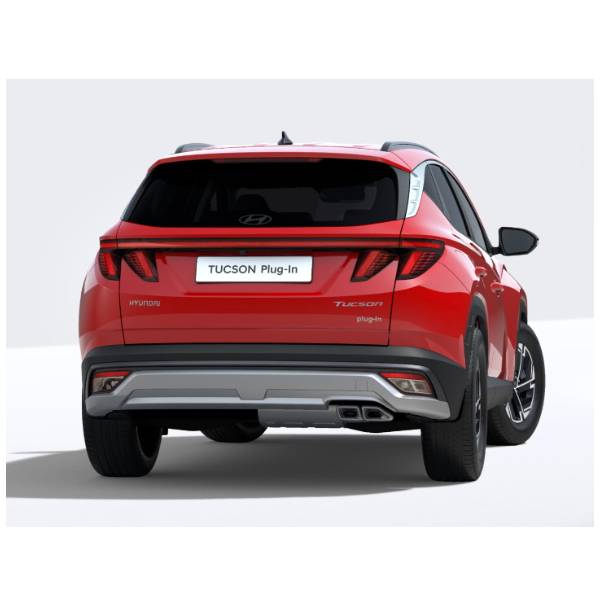
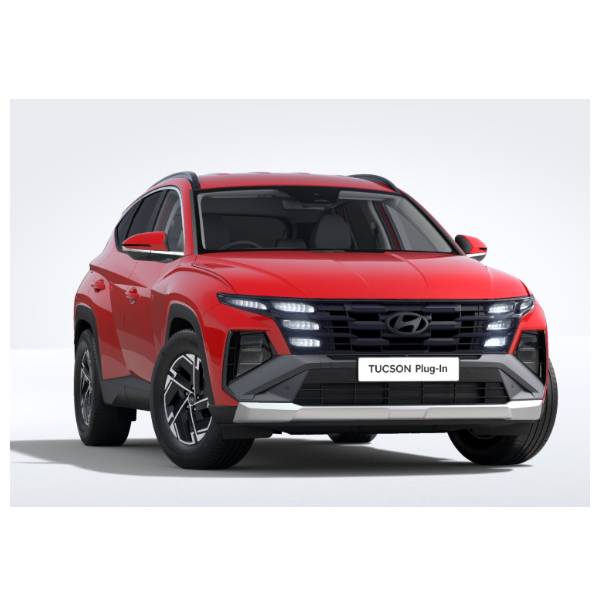
The Hyundai Tucson PHEV SUV (credit: Hyundai)
| At A Glance | |
|---|---|
| EV Type: | Plug-In Hybrid Electric Vehicle (PHEV) |
| Body Type: | SUV |
| Engine: | Petrol/ Electric |
| Available In India: | No |
| Trims (1 Option) |
|---|
| Hyundai Tucson (from ₹ N/A) |
| EV Battery & Emissions | |
|---|---|
| EV Battery Type: | Lithium-ion |
| EV Battery Capacity: | Available in one battery size: 13.8 kWh |
| Charging: | DC charging not available. On board charger: 7.2 kW AC (0% – 100%: 2 hrs) |
| Charge Port: | Type 2 |
| EV Cable Type: | Type 2 |
| Tailpipe Emissions: | 31g (CO2/km) |
| Battery Warranty: | 8 years or 160,000 km |
| Charging Times (Overview) | |
|---|---|
| Slow charging AC (3 kW – 3.6 kW): | 6 – 12 hours (dependent on size of EV battery & SOC) |
| Fast charging AC (7 kW – 22 kW): | 3 – 8 hours (dependent on size of EV battery & SoC) |
| Rapid charging AC (43 kW): | 0-80%: 20 mins to 60 mins (dependent on size of EV battery & SoC) |
| Rapid charging DC (50 kW+): | 0-80%: 20 mins to 60 mins (dependent on size of EV battery & SoC) |
| Ultra rapid charging DC (150 kW+): | 0-80% : 20 mins to 40 mins (dependent on size of EV battery & SoC) |
| Tesla Supercharger (120 kW – 250 kW): | 0-80%: up to 25 mins (dependent on size of EV battery & SoC) |
- Note 1: SoC: state of charge
| Dimensions | |
|---|---|
| Height (mm): | 1651 |
| Width (mm): | 1865 |
| Length (mm): | 4500 |
| Wheelbase (mm): | 2680 |
| Turning Circle (m): | 10,6 |
| Boot Space (L): | 558 |
| 1.6 T-GDi Plug-In Hybrid 4WD | |
|---|---|
| EV Battery Capacity: | 13.8 kWh |
| Pure Electric Range (WLTP): | 60 km |
| Electric Energy Consumption (kWh/100km): | N/A |
| Fuel Consumption (l/100km): | 1.3 |
| Charging: | DC charging not available. On board charger: 7.2 kW AC (0% – 100%: 2 hrs) |
| Top Speed: | 190 km/h |
| 0-100 km/h: | 8.6 seconds |
| Drive: | All-wheel drive (AWD) |
| Electric Motor (kW): | 66.9 |
| Max Power (PS): | 265 |
| Torque (Nm): | 350 |
| Transmission: | Automatic |
| Seats: | 5 |
| Doors: | 5 |
| Kerb Weight (kg): | 1,818 – 1,924 |
| Colours: | 10 |
| NCAP Safety Rating: | Five-Star |
Electric Driving: Top 5 EV Jargons For India
Despite the increased visibility of EVs in India, the vocabulary (jargon) used in electric driving is still new to consumers. In fact, for many, it can seem daunting and confusing. We have therefore put below some of the more commonly used terms in the EV glossary, to give you an easier introduction to electric driving in India!
| EV Glossary: Top 5 | |
|---|---|
| DoD (Depth-Of-Charge): | What is Depth-Of-Charge? A battery’s Depth-of-Charge is the level of discharge of a battery. As you drive an EV, the battery is discharged. The DoD indicates the % that has been discharged relative to the capacity of a battery. Conversely, a State-of-Charge (SOC), is the percentage of capacity still available in a battery. If you use 25% of your EV battery capacity, then the DoD is 25% and the SOC is 75%. It is recommended not to fully discharge an electric car battery, as this reduces the lifespan of a battery. Automotive manufacturers publish recommend DoD levels for charging, but a charging range between 20% to 80% is ideal. |
| EV Battery Life: | What is the life of an EV battery? Like petrol and diesel engines, electric car batteries also have a finite lifespan. Though EV battery technology has come a long way over the past few years, battery degradation is inevitable. Just as normal wear and tear is the case for an internal combustion engine (ICE) vehicle. Currently most EV manufacturers are offering a warranty up to 8 years or 160,000 km. However, some automotive manufacturers are offering an even longer EV battery warranty. An example is the Japanese automotive manufacturer, Toyota. The company offers a 10 years EV battery warranty for the all-electric Toyota bZ4X SUV. In most cases, such warranties are up to 70% of the original EV battery capacity. The battery life is impacted by a number of factors, which in turn impacts battery electrical performance, to include, the range the electric car can travel. The most commonly used batteries in electric cars are lithium-ion batteries. |
| Frunk: | What is a frunk? Though a frunk is not a new term, its availability is becoming more widespread with the development of electric vehicles (EVs). A frunk is a storage space/ compartment/ trunk in the front of a vehicle, rather than the rear. In the case of pure electric cars, given that these vehicles do not have an onboard internal combustion engine (ICE), there is space for a frunk. It is worth noting that a frunk is usually much smaller than a trunk, and in EVs, a good space for storing the EV cable. |
| One-Pedal Driving: | What is one-pedal driving? In one-pedal driving, the EV slows down or stops, when the pedal is released. One-pedal functionality reduce the need to use the brake pedal, for speed reduction or stopping. Of course, the brake pedal is still the best way to hold a vehicle in place at a complete stop. |
| WLTP (Worldwide Harmonised Light Vehicle Test Procedure): | In a bid to continue to improve the quality of realistic data released by automotive manufacturers, on economy, range and CO2 emissions, Europe has implemented its first phase for the WLTP program. The testing procedures under WLTP will result in reduced ranges for electric cars released under other previous testing regimes. The WLTP is seen as a significant improvement over the New European Driving Cycle (NEDC) designed in the 1980s and based on theoretical driving. The WLTP has been developed with the aim of becoming a global standard, so that cars can be easily compared between regions. |
While e-zoomed uses reasonable efforts to provide accurate and up-to-date information, some of the information provided is gathered from third parties and has not been independently verified by e-zoomed. While the information from the third party sources is believed to be reliable, no warranty, express or implied, is made by e-zoomed regarding the accuracy, adequacy, completeness, legality, reliability or usefulness of any information. This disclaimer applies to both isolated and aggregate uses of this information.
Related articles

The All-Electric Hyundai IONIQ 5 (SUV): The Complete Electric Car Buying Guide For India
Electric Cars: The Basics For those of you new to zero-emission electric driving, we recommend a read of the following articles: Sign up to the newsletter The Hyundai Tucson…
Read More
The Hyundai Santa Fe Plug-In Hybrid (SUV): The Complete Electric Car Buying Guide For India
Electric Cars: The Basics For those of you new to zero-emission electric driving, we recommend a read of the following articles: Sign up to the newsletter The Hyundai Tucson…
Read More
The Mazda CX-60 Plug-In Hybrid (SUV): The Complete Electric Car Buying Guide For India
Electric Cars: The Basics For those of you new to zero-emission electric driving, we recommend a read of the following articles: Sign up to the newsletter The Hyundai Tucson…
Read More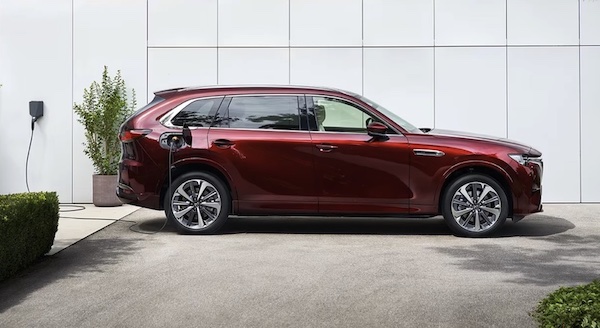
The Mazda CX-80 Plug-In Hybrid (SUV): The Complete Electric Car Buying Guide For India
Electric Cars: The Basics For those of you new to zero-emission electric driving, we recommend a read of the following articles: Sign up to the newsletter The Hyundai Tucson…
Read More
The BYD SEAL U DM-i Plug-In Hybrid (SUV): The Complete Electric Car Buying Guide For India
Electric Cars: The Basics For those of you new to zero-emission electric driving, we recommend a read of the following articles: Sign up to the newsletter The Hyundai Tucson…
Read More