Electric Cars: The Basics
For those of you new to zero-emission electric driving, we recommend a read of the following articles:

Different Types Of Electric Cars: The Complete Electric Car Buying Guide For India
Electric Cars: The Basics For those of you new to zero-emission electric driving, we recommend a read of the following articles: Sign up to the newsletter What Is Smart…
Read More
What Is Regenerative Braking In Electric Cars: The Basics: The Complete Electric Car Buying Guide For India
Electric Cars: The Basics For those of you new to zero-emission electric driving, we recommend a read of the following articles: Sign up to the newsletter What Is Smart…
Read More
The History Of Electric Cars and Vehicles: Are EVs A New Invention?
Electric Cars: The Basics For those of you new to zero-emission electric driving, we recommend a read of the following articles: Sign up to the newsletter What Is Smart…
Read More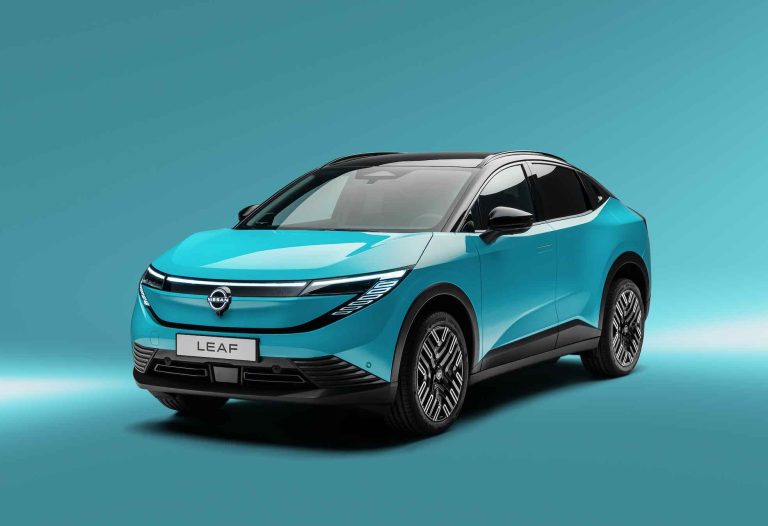
Electric Cars and Vehicles: Pros, Cons And Myths: The Complete Electric Car Buying Guide For India
Electric Cars: The Basics For those of you new to zero-emission electric driving, we recommend a read of the following articles: Sign up to the newsletter What Is Smart…
Read More
Electric Cars Range: WLTP: The Basics: The Complete Electric Car Buying Guide For India
Electric Cars: The Basics For those of you new to zero-emission electric driving, we recommend a read of the following articles: Sign up to the newsletter What Is Smart…
Read MoreSign up to the newsletter
What Is Smart Charging?
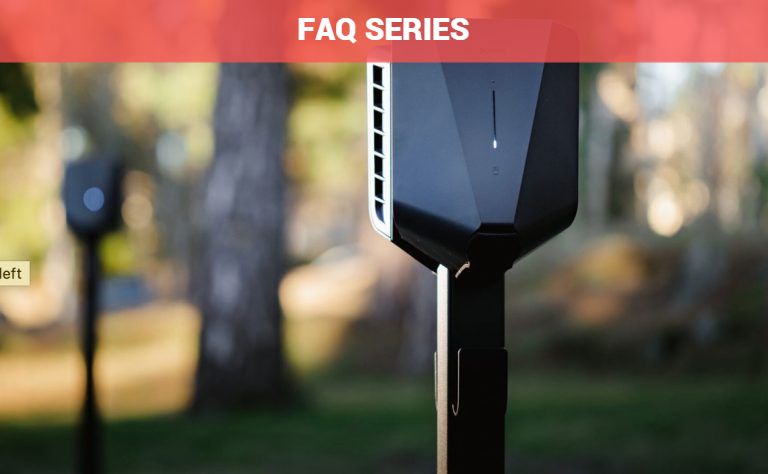
Along with the rapid development of the electric vehicles (EVs), we have also witnessed significant progress in the development of EV chargers. Both residential and public charging EV stations have come a long way since the introduction of the first-generation modern electric cars, like the all-electric Nissan Leaf in 2010.
For early adopters of electric driving, charging an electric car using a basic ‘dumb/ non-smart’ portable charger was the norm. These EV chargers did not incorporate the ability to ‘communicate’ or share data, significantly limiting its functionality and operation. Move forward a decade: residential and public EV charging stations could not be more different!
In fact, the latest-generation of residential EV chargers allow ‘bidirectional’ charging, known as Vehicle-to-Grid (V2G) charging. Wallbox, the Spain headquartered charging station manufacturer, launched the Wallbox Quasar, the first bidirectional electric car charger for the residential market. The Pulsar V2G charger communicates with the National Grid, such that, an onboard EV battery can be used as a residential battery storage unit, not only to power the home, but also to export to the grid in times of significant demand.
There are different levels of smart EV chargers or smart charging. At the most basic level, a smart EV charger will give the user some level of control and functionality, either via a mobile app or via the electric car. A smart EV charger is capable of ‘smart charging’ i.e. the electric car charger is able to ‘communicate’ via WiFi (internet), bluetooth or a SIM card. The EV charger can send and receive data between the electric car and the EV charger.
A smart charger also allows sharing of vital data during the charging session with a number of stakeholders, to include, the user, the charging operator, the National Grid and the energy supplier. For stakeholders, like the National Grid, the insights gained from EV charging sessions are vital for the long-term performance and stability of the grid infrastructure.
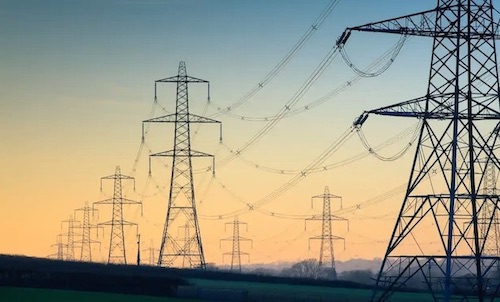
The transition to electric driving will have a significant impact on the National Grid, to include the stability of the grid during peak demand. Though electric cars can be charged at anytime, it is more common for EVs to be charged overnight, when electricity prices are lower. Given that the current market share of electric cars is still below 25%, the issue is less critical compared to when battery-electric vehicles (BEVs) account for the significant majority of the cars on our roads.
The National Grid has to manage demand and supply carefully, such that continuous and stable power supply is the norm. The management of the supply of electricity generation is already a complex task for the grid, given the energy mix of India and the variability of the power generation profile.
For example, renewable energy, like wind energy, though very beneficial, does not provide a stable generation profile. Though wind patterns can be forecast, the actual generation of wind energy will depend on real-wind conditions on-site on the given day. Wind generation does not change only on a day-to-day basis, but also on an hour-to-hour basis. Though solar energy, is more stable, it is still variable. So, bottom-line, supply side management is critical for the stability of the grid, and smart charging is vital in achieving this objective .
A smart EV charger allows users to remotely monitor, manage and control the charging session. Though smart charging offers a number of benefits, the two key benefits are: energy use optimisation and cost efficiency.
Smart chargers optimise the charging session and manages the load safely. A smart EV charger monitors electrical consumption and adjusts the charging session based on the available energy (dynamic load balancing). Smart charging also allow load balancing for locations with multiple EV charging stations. For such EV charging destinations, an operator can choose how best to distribute the available energy capacity across all active EV chargers. For most public and workplace charging destinations, load balancing is vital for stable operation. But it is also equally important for semi-public charging destinations, like, apartment blocks that share EV charging infrastructure.

Other advantages of smart chargers, include: firmware updates remotely via the internet, enhanced security, and integration with renewable energy and battery storage. It is worth noting that not all smart EV chargers offer compatibility with renewable energy (solar or wind), but we can expect this to become more widely available in the near future.
Smart EV chargers allow the user to decide on the time and duration of a specific charging session. For example, charging when electricity tariffs are at their lowest. Bottom-line, a smart EV charger enables smart energy management.
EV Charging Protocol: Open Charge Alliance (OCA)
For those EV consumers studious about new technology, you may have come across Open Charge Point Protocol (OCPP). Usually mentioned in the data sheet provided by the charging station manufacturer. So what is OCPP? And why is it important? Like all new technologies, standardisation of protocols evolve, as the technology or industry matures. The EV charging sector is no different, in that, for the successful long-term development of the technology and market, a global protocol standard is key.
The OCA is an alliance of electric car charging hardware manufacturers, software providers, charging network operators and service providers. The mission of the OCA is to ‘foster global development, adoption, and compliance of communication protocols in the EV charging infrastructure and related standards through collaboration, education, testing, and certification’. The key objectives of the OCA, include: development of the Open Charge Point Protocol (OCPP) and Open Smart Charging Protocol (OSCP).
Though it is not mandatory for industry participants to use the OCPP protocols, it is fast becoming the de-facto protocol. The OCA alliance was launched in 2009 (OCPP 1.5) and since then has evolved the protocol. Many of the latest generation EV charging points incorporate OCPP 1.6 protocol. The latest iteration is the OCPP 2.01 charge point protocol. The 2.01, includes all that OCPP 1.6 has to offer and more, to include: added security, new smart charging functionalities, improved transaction handling, improved device management and more.
Electric Driving: Top 5 EV Jargons For India
Despite the increased visibility of EVs in India, the vocabulary (jargon) used in electric driving is still new to consumers. In fact, for many, it can seem daunting and confusing. We have therefore put below some of the more commonly used terms in the EV glossary, to give you an easier introduction to electric driving in India!
| EV Glossary: Top 5 | |
|---|---|
| DoD (Depth-Of-Charge): | What is Depth-Of-Charge? A battery’s Depth-of-Charge is the level of discharge of a battery. As you drive an EV, the battery is discharged. The DoD indicates the % that has been discharged relative to the capacity of a battery. Conversely, a State-of-Charge (SOC), is the percentage of capacity still available in a battery. If you use 25% of your EV battery capacity, then the DoD is 25% and the SOC is 75%. It is recommended not to fully discharge an electric car battery, as this reduces the lifespan of a battery. Automotive manufacturers publish recommend DoD levels for charging, but a charging range between 20% to 80% is ideal. |
| EV Battery Life: | What is the life of an EV battery? Like petrol and diesel engines, electric car batteries also have a finite lifespan. Though EV battery technology has come a long way over the past few years, battery degradation is inevitable. Just as normal wear and tear is the case for an internal combustion engine (ICE) vehicle. Currently most EV manufacturers are offering a warranty up to 8 years or 160,000 km. However, some automotive manufacturers are offering an even longer EV battery warranty. An example is the Japanese automotive manufacturer, Toyota. The company offers a 10 years EV battery warranty for the all-electric Toyota bZ4X SUV. In most cases, such warranties are up to 70% of the original EV battery capacity. The battery life is impacted by a number of factors, which in turn impacts battery electrical performance, to include, the range the electric car can travel. The most commonly used batteries in electric cars are lithium-ion batteries. |
| Frunk: | What is a frunk? Though a frunk is not a new term, its availability is becoming more widespread with the development of electric vehicles (EVs). A frunk is a storage space/ compartment/ trunk in the front of a vehicle, rather than the rear. In the case of pure electric cars, given that these vehicles do not have an onboard internal combustion engine (ICE), there is space for a frunk. It is worth noting that a frunk is usually much smaller than a trunk, and in EVs, a good space for storing the EV cable. |
| One-Pedal Driving: | What is one-pedal driving? In one-pedal driving, the EV slows down or stops, when the pedal is released. One-pedal functionality reduce the need to use the brake pedal, for speed reduction or stopping. Of course, the brake pedal is still the best way to hold a vehicle in place at a complete stop. |
| WLTP (Worldwide Harmonised Light Vehicle Test Procedure): | In a bid to continue to improve the quality of realistic data released by automotive manufacturers, on economy, range and CO2 emissions, Europe has implemented its first phase for the WLTP program. The testing procedures under WLTP will result in reduced ranges for electric cars released under other previous testing regimes. The WLTP is seen as a significant improvement over the New European Driving Cycle (NEDC) designed in the 1980s and based on theoretical driving. The WLTP has been developed with the aim of becoming a global standard, so that cars can be easily compared between regions. |
While e-zoomed uses reasonable efforts to provide accurate and up-to-date information, some of the information provided is gathered from third parties and has not been independently verified by e-zoomed. While the information from the third party sources is believed to be reliable, no warranty, express or implied, is made by e-zoomed regarding the accuracy, adequacy, completeness, legality, reliability or usefulness of any information. This disclaimer applies to both isolated and aggregate uses of this information.
Related articles
What Is Vehicle-To-Home (V2H) Bidirectional Charging?: The Complete Electric Car Buying Guide For India
Electric Cars: The Basics For those of you new to zero-emission electric driving, we recommend a read of the following articles: Sign up to the newsletter What Is Smart…
Read More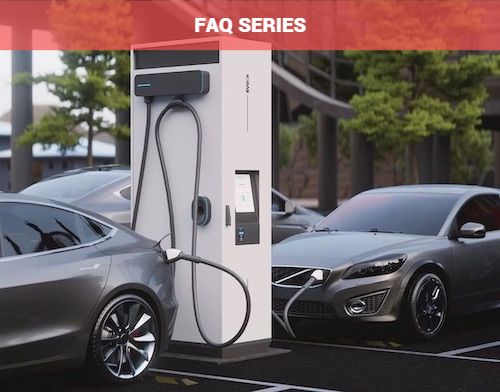
An Introduction To AC And DC Electric Car Charging: The Complete Electric Car Buying Guide For India
Electric Cars: The Basics For those of you new to zero-emission electric driving, we recommend a read of the following articles: Sign up to the newsletter What Is Smart…
Read More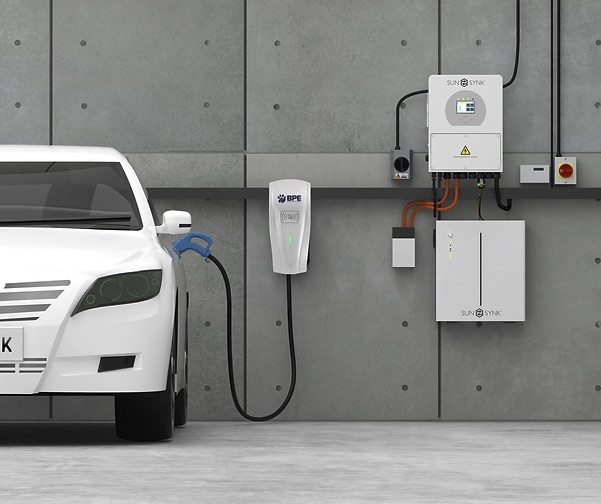
Battery Storage & Electric Car Charging: The Complete Electric Car Buying Guide For India
Electric Cars: The Basics For those of you new to zero-emission electric driving, we recommend a read of the following articles: Sign up to the newsletter What Is Smart…
Read More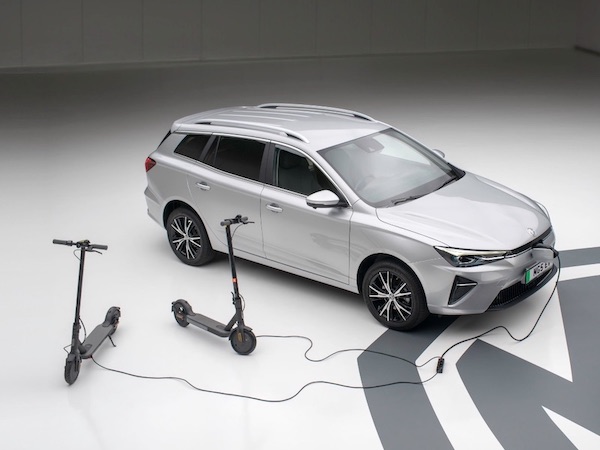
Electric Cars And Vehicle-To-Load Charging (V2L): The Benefits: The Complete Electric Car Buying Guide For India
Electric Cars: The Basics For those of you new to zero-emission electric driving, we recommend a read of the following articles: Sign up to the newsletter What Is Smart…
Read More
Benefits Of Green Energy and Electric Driving : The Complete Electric Car Buying Guide For India
Electric Cars: The Basics For those of you new to zero-emission electric driving, we recommend a read of the following articles: Sign up to the newsletter What Is Smart…
Read More