Electric Cars: The Basics
For those of you new to zero-emission electric driving, we recommend a read of the following articles:
What Is Regenerative Braking In Electric Cars: The Basics: The Complete Electric Car Buying Guide For India
Electric Cars: The Basics For those of you new to zero-emission electric driving, we recommend a read of the following articles: Sign up to the newsletter The BMW iX3…
Read More
The History Of Electric Cars and Vehicles: Are EVs A New Invention?
Electric Cars: The Basics For those of you new to zero-emission electric driving, we recommend a read of the following articles: Sign up to the newsletter The BMW iX3…
Read More
Different Types Of Electric Cars: The Complete Electric Car Buying Guide For India
Electric Cars: The Basics For those of you new to zero-emission electric driving, we recommend a read of the following articles: Sign up to the newsletter The BMW iX3…
Read More
Electric Cars and Vehicles: Pros, Cons And Myths: The Complete Electric Car Buying Guide For India
Electric Cars: The Basics For those of you new to zero-emission electric driving, we recommend a read of the following articles: Sign up to the newsletter The BMW iX3…
Read More
Electric Cars Range: WLTP: The Basics: The Complete Electric Car Buying Guide For India
Electric Cars: The Basics For those of you new to zero-emission electric driving, we recommend a read of the following articles: Sign up to the newsletter The BMW iX3…
Read MoreSign up to the newsletter
The BMW iX3 Electric SUV
BMW (Bayerische Motoren Werke AG), is a leading global automotive manufacturer headquartered in Munich, Germany. BMW is well known for its portfolio of luxury vehicles, to include the famed Rolls-Royce luxury cars. The group manufacturers a number of cars under its BMW brand, to include battery-electric vehicles (BEVs) and plug-in hybrid electric vehicles (PHEVs). The company currently has the following portfolio of battery-electric vehicles (BEVs):
- All-electric BMW iX3 (BEV)
- All-electric BMW iX1 (BEV)
- All-electric BMW iX2 (BEV)
- All-Electric BMW i5 (BEV)
- All-Electric BMW i7 (BEV)
- All-electric BMW iX (BEV)
- All-electric BMW i4 (BEV)
- All-electric BMW i3 (BEV)
The BMW iX3 electric SUV is an evolution of the conventional internal combustion engine (ICE) BMW X3 SUV. Put another way, unlike many of the recent electric vehicles (EVs) introduced in the market, the all-electric BMW iX3 was not developed on a dedicated electric vehicle platform. However, the German manufacturer has done well in making the most of the incumbent petrol X3 and transforming it to a zero-emission electric vehicle (ZEV).
The production version of the pure electric BMW iX3 was unveiled in July 2020. The e-SUV is being manufactured in China and production commenced in September 2020. The battery-electric vehicle (BEV) SUV has been on sale since 2021.
For those customers keen on migration to electric driving, but not keen on ‘futuristic styling’, the BMW iX3 BEV is a potential choice, as its design has not changed from the conventional petrol variant. Of course, as one would expect, there is no tailpipe in the electric iX3 and the front grille is different too! Apart from a few other small changes, much is the same!
The BMW iX3 family SUV is available in one EV battery size: 80 kWh, and has a claimed pure electric range up to 460 km for the entry-level M Sport variant. For the higher performance M Sport Pro variant, the claimed range is up to 454 km. The EV battery size and zero-emission electric range is similar to many of the more recent introductions of pure electric cars i.e. there is a trend of increasing EV battery size and longer zero-emission electric range.
Of course, the real-world EV range will be lower, impacted by a number of factors, to include: speed, driving profile, regen braking profile, weather conditions, road conditions, tyre size, onboard services used, payload and more. Expect a real-world electric range closer to 390 km. Useful for both short and longer journeys!
suvAs is the case with electric cars, the BMW iX3 has an onboard recuperation system that converts the kinetic energy during braking into electricity, further enhancing the efficiency of the electric vehicle and e-range. This is also known as regenerative braking. It does take some getting used to, but not long!
We at e-zoomed recommend a ‘topping up’ approach to charging an electric car. This way, there is always range readily available and moreover, a topping up approach reduces the amount of time required to charge. Regular charging is also beneficial for the long-term maintenance of the EV battery. BMW offers a 8 years or 160,000 km, which is fast becoming the industry standard for EVs.
The electric vehicle (EV) can be DC charged up to 150 kW and can achieve a 0%-80% in 34 minutes (10 mins = 55 miles). Both variants incorporate a 11 kW (3-phase) onboard charger, which can fully charge the EV in 7 hours and 30 minutes. However, given that most homes in India are restricted to single-phase power supply, expect the EV to take up to 12 hours for a full charge.
The BMW iX3 electric SUV delivers decent performance. The EV is only available as a rear-wheel drive and can achieve 0-100 km/h in 6.8 seconds. The vehicle delivers a maximum power up to 286 hp and 400 Nm torque. The top speed of the e-SUV is 180 km/h.
The electric SUV is practical, with ample headroom, legroom and space for passengers. The EV offers up to 510 L boot space. Interior quality, level of technology and equipment is in line with the premium price tag. The cockpit combines a 12.3″ fully digital instrument display with a 12″ touch-capable control display. The EV also includes a panoramic sunroof.
Bottom-line, electric driving is good for the environment and the wallet! The BMW electric vehicle is not available in India.
| PROS | CONS |
|---|---|
| A familiar design for those who prefer continuity (very similar to petrol BMW X3 SUV) | Only rear-wheel drive option |
| DC charging up to 150 kW. Three-phase onboard charger as standard | Not built on a dedicated EV platform |
| Practical and a good all-rounder e-SUV | Cheaper alternatives available |
Gallery


The All-Electric BMW iX3 SUV (credit: BMW)
| At A Glance | |
|---|---|
| EV Type: | Battery-Electric Vehicle (BEV) |
| Body Type: | SUV |
| Engine: | Electric |
| Available In India: | No |
| Trims (1 Option) |
|---|
| BMW iX3 (from ₹ N/A) |
| EV Battery & Emissions | |
|---|---|
| EV Battery Type: | Lithium-ion |
| EV Battery Capacity: | Available in one battery size: 80 kWh |
| Charging: | 150 kW DC charging (0%-80%: 34 mins). Onboard charger 11 kW AC (0%-100%: 7 hrs 30 mins) |
| Charge Port: | Type 2 |
| EV Cable Type: | Type 2 |
| Tailpipe Emissions: | 0g (CO2/km) |
| Battery Warranty: | 8 years or 160,000 km |
| Charging Times (Overview) | |
|---|---|
| Slow charging AC (3 kW – 3.6 kW): | 6 – 12 hours (dependent on size of EV battery & SOC) |
| Fast charging AC (7 kW – 22 kW): | 3 – 8 hours (dependent on size of EV battery & SoC) |
| Rapid charging AC (43 kW): | 0-80%: 20 mins to 60 mins (dependent on size of EV battery & SoC) |
| Rapid charging DC (50 kW+): | 0-80%: 20 mins to 60 mins (dependent on size of EV battery & SoC) |
| Ultra rapid charging DC (150 kW+): | 0-80% : 20 mins to 40 mins (dependent on size of EV battery & SoC) |
| Tesla Supercharger (120 kW – 250 kW): | 0-80%: up to 25 mins (dependent on size of EV battery & SoC) |
- Note 1: SoC: state of charge
| Dimensions | |
|---|---|
| Height (mm): | 1668 |
| Width (mm): | 1891 |
| Length (mm): | 4734 |
| Wheelbase (mm): | 2864 |
| Turning Circle (m): | 12.1 |
| Boot Space (L): | 510 |
| BMW iX3 M Sport | |
|---|---|
| EV Battery Capacity: | 80 kWh |
| Pure Electric Range (WLTP): | 460 km |
| Electric Energy Consumption (km/kWh): | 5.3 |
| Charging: | 150 kW DC charging (0%-80%: 34 mins). Onboard charger 11 kW AC (0%-100%: 7 hrs 30 mins) |
| Top Speed: | 180 km/h |
| 0-100 km/h: | 6.8 seconds |
| Drive: | Rear-wheel drive (RWD) |
| Electric Motor (kW): | 210 |
| Max Power (hp): | 286 |
| Torque (Nm): | 400 |
| Transmission: | Automatic |
| Seats: | 5 |
| Doors: | 5 |
| Unladen Weight-EU (kg): | 2,255 |
| Colours: | 4 |
| NCAP Safety Rating: | N/A |
| BMW iX3 M Sport Pro | |
|---|---|
| EV Battery Capacity: | 80 kWh |
| Pure Electric Range (WLTP): | 454 km |
| Electric Energy Consumption (km/kWh): | 5.3 |
| Charging: | 150 kW DC charging (0%-80%: 34 mins). Onboard charger 11 kW AC (0%-100%: 7 hrs 30 mins) |
| Top Speed: | 180 km/h |
| 0-100 km/h: | 6.8 seconds |
| Drive: | Rear-wheel drive (RWD) |
| Electric Motor (kW): | 210 |
| Max Power (hp): | 286 |
| Torque (Nm): | 400 |
| Transmission: | Automatic |
| Seats: | 5 |
| Doors: | 5 |
| Unladen Weight-EU (kg): | 2,255 |
| Colours: | 4 |
| NCAP Safety Rating: | N/A |
Vehicle-to-Grid (V2G): An Introduction
V2G is an innovative bidirectional technology that allows the onboard EV battery to be charged and discharged i.e. electrical energy to be exported/ discharged from the onboard EV battery to the grid via a V2G compatible EV charger. It also allows for vital informational flow (data) to the grid. In effect, the V2G technology allows an EV battery to be used as a grid-connected energy storage unit.
| Benefits: V2G | |
|---|---|
| Lower energy costs: | V2G can lower utility costs to include, lowering wholesale and retail energy costs |
| Improving the grid’s response ability: | V2G can improve the stability of the intra-day supply and demand needs, improving the grids ability to meet the needs of peak demand |
| Improving power quality: | V2G can improve power quality by controlling voltage and power factors |
| Increase resilience: | V2G can improve the resilience of the grid and electricity network in significantly adverse conditions |
| Increase use of renewable energy: | V2G enables an increase in the contribution of renewable energy to the national energy generation mix. The higher the contribution of RE, the greener the power supplied |
| Reduce cost of EV ownership: | V2G can reduce the cost of EV ownership by enabling EV owners to earn from exporting energy to the grid |
| Improves national energy security: | V2G can improve the national energy security of a country by reducing dependence on imported energy |
| Improve environmental impact: | V2G can improve the environmental impact of energy usage and transportation by reducing the dependence on fossil fuels |
While e-zoomed uses reasonable efforts to provide accurate and up-to-date information, some of the information provided is gathered from third parties and has not been independently verified by e-zoomed. While the information from the third party sources is believed to be reliable, no warranty, express or implied, is made by e-zoomed regarding the accuracy, adequacy, completeness, legality, reliability or usefulness of any information. This disclaimer applies to both isolated and aggregate uses of this information.
Related articles
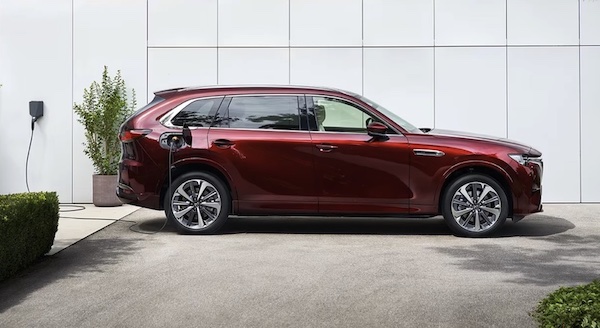
The Mazda CX-80 Plug-In Hybrid (SUV): The Complete Electric Car Buying Guide For India
Electric Cars: The Basics For those of you new to zero-emission electric driving, we recommend a read of the following articles: Sign up to the newsletter The BMW iX3…
Read More
The BMW iX2 Electric (SUV): The Complete Electric Car Buying Guide For India
Electric Cars: The Basics For those of you new to zero-emission electric driving, we recommend a read of the following articles: Sign up to the newsletter The BMW iX3…
Read More
The All-Electric Kia EV9 (SUV): The Complete Electric Car Buying Guide For India
Electric Cars: The Basics For those of you new to zero-emission electric driving, we recommend a read of the following articles: Sign up to the newsletter The BMW iX3…
Read More
The All-Electric CUPRA Tavascan (SUV-Coupé): The Complete Electric Car Buying Guide For India
Electric Cars: The Basics For those of you new to zero-emission electric driving, we recommend a read of the following articles: Sign up to the newsletter The BMW iX3…
Read More
The BYD Sealion 7 Electric (SUV): The Complete Electric Car Buying Guide For India
Electric Cars: The Basics For those of you new to zero-emission electric driving, we recommend a read of the following articles: Sign up to the newsletter The BMW iX3…
Read More