Electric Cars: The Basics
For those of you new to zero-emission electric driving, we recommend a read of the following articles:
Different Types Of Electric Cars: The Complete Electric Car Buying Guide For India
Electric Cars: The Basics For those of you new to zero-emission electric driving, we recommend a read of the following articles: Sign up to the newsletter We strongly encourage…
Read More
What Is Regenerative Braking In Electric Cars: The Basics: The Complete Electric Car Buying Guide For India
Electric Cars: The Basics For those of you new to zero-emission electric driving, we recommend a read of the following articles: Sign up to the newsletter We strongly encourage…
Read More
The History Of Electric Cars and Vehicles: Are EVs A New Invention?
Electric Cars: The Basics For those of you new to zero-emission electric driving, we recommend a read of the following articles: Sign up to the newsletter We strongly encourage…
Read More
Electric Cars and Vehicles: Pros, Cons And Myths: The Complete Electric Car Buying Guide For India
Electric Cars: The Basics For those of you new to zero-emission electric driving, we recommend a read of the following articles: Sign up to the newsletter We strongly encourage…
Read More
Electric Cars Range: WLTP: The Basics: The Complete Electric Car Buying Guide For India
Electric Cars: The Basics For those of you new to zero-emission electric driving, we recommend a read of the following articles: Sign up to the newsletter We strongly encourage…
Read MoreSign up to the newsletter
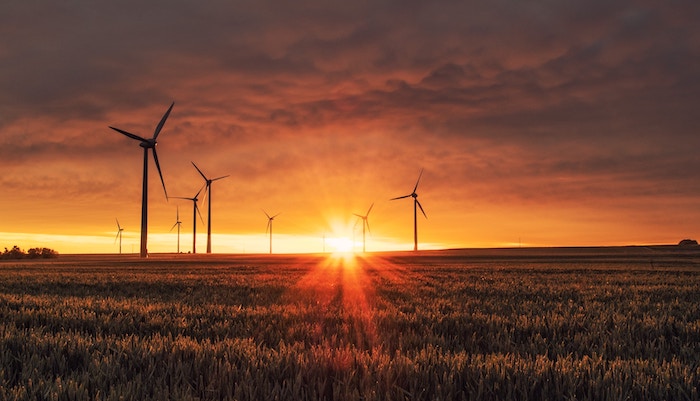
We strongly encourage EV owners to use green energy to charge their electric car to achieve zero-tailpipe ‘well-to-wheel’ emission!
India is not new to renewable energy, also known as green energy. In fact, India’s total non-fossil fuel installed capacity is 266.79 GW (as of 31st December 2025), accounting for 51.93% of total generation capacity in the country. The country is strongly committed to the transition to renewable energy and climate action. Solar and wind energy are significant contributors to energy generation in India which should not come as a surprise given the excellent solar and wind resource in the country.
Green energy, is energy that is produced or generated using natural resources like the wind, sun, water (hydro) and biomass, to generate electricity. Green electricity is renewable and clean i.e. emission-free, with a positive relationship with the environment. Renewable energy can be used to power a business, government buildings, infrastructure like airports and of course, your home, your electric car and much more!
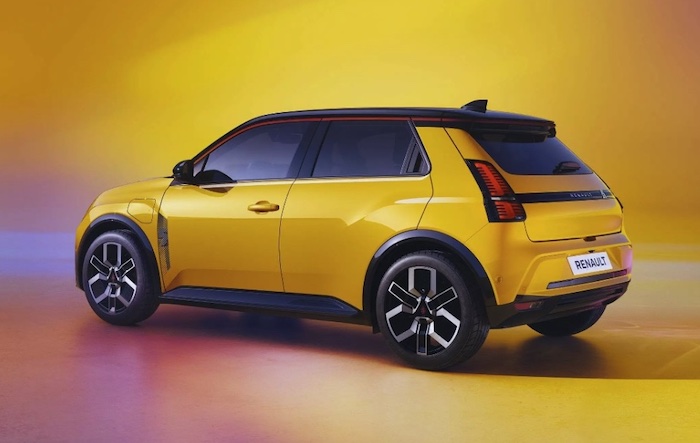
Though electric vehicles (EVs) come is various types, the most popular are battery-electric vehicles (BEVs) and plug-in hybrid electric vehicles (PHEVs), both of which use electricity to recharge (refuel) the onboard EV battery via an external charging source. A good example of a BEV, also known as a pure electric car, is the best-selling Renault 5. A good example of a PHEV is the BYD SEAL U DM-i Plug-In Hybrid.
Top Benefits Of Green Energy
It is true, in that, the benefits of using green and clean energy has a positive impact on us all. The greater the use of clean energy, the lower the negative impact on our planet and ecosystems. We all, everyone one of us, has a dependence and inescapable link to our environment. There is simply no exception! We therefore encourage all consumers (residential and business) to switch the green energy. The benefits of using renewable energy are many and include:
| Benefits Of Green Energy |
|---|
| 1). Energy generation without creating greenhouses gases, one of the catalysts for the increasing danger of climate change. Renewable energy does not emit carbon dioxide (CO2), mercury, nitrogen oxide (NOx), sulphur dioxide (SO2) or dangerous particulate matter into the air. |
| 2). Reducing air pollution and increasing air quality. In India and globally, increase in diseases and deaths have been linked directly to an increase in air pollution. Children and the elderly have been most impacted by the increasing level of air pollution in our cities and towns. |
| 3). Protects our environment and planet for future generations. |
| 4). Unlike fossil fuels, green energy is generated using unlimited renewable sources, like wind, hydro and solar, therefore guaranteeing that our ‘fuel supply’ will never run out! In India, both solar and wind resources are widely available to generate renewable electricity. |
| 5). By using green electricity to recharge your battery-electric vehicle (BEV), the tailpipe emissions are zero-emissions. |
| 6). Renewable energy generation does not have any long-term negative impact to land. |
| 7). Increases national energy security by reducing the dependence on other countries for energy. |
| 8). Reduces energy price fluctuations. Renewable electricity prices are more stable and less impacted by external factors like international politics, war and other global events. |
Electric Driving: Top 5 EV Jargons For India
Despite the increased visibility of EVs in India, the vocabulary (jargon) used in electric driving is still new to consumers. In fact, for many, it can seem daunting and confusing. We have therefore put below some of the more commonly used terms in the EV glossary, to give you an easier introduction to electric driving in India!
| EV Glossary: Top 5 | |
|---|---|
| DoD (Depth-Of-Charge): | What is Depth-Of-Charge? A battery’s Depth-of-Charge is the level of discharge of a battery. As you drive an EV, the battery is discharged. The DoD indicates the % that has been discharged relative to the capacity of a battery. Conversely, a State-of-Charge (SOC), is the percentage of capacity still available in a battery. If you use 25% of your EV battery capacity, then the DoD is 25% and the SOC is 75%. It is recommended not to fully discharge an electric car battery, as this reduces the lifespan of a battery. Automotive manufacturers publish recommend DoD levels for charging, but a charging range between 20% to 80% is ideal. |
| EV Battery Life: | What is the life of an EV battery? Like petrol and diesel engines, electric car batteries also have a finite lifespan. Though EV battery technology has come a long way over the past few years, battery degradation is inevitable. Just as normal wear and tear is the case for an internal combustion engine (ICE) vehicle. Currently most EV manufacturers are offering a warranty up to 8 years or 160,000 km. However, some automotive manufacturers are offering an even longer EV battery warranty. An example is the Japanese automotive manufacturer, Toyota. The company offers a 10 years EV battery warranty for the all-electric Toyota bZ4X SUV. In most cases, such warranties are up to 70% of the original EV battery capacity. The battery life is impacted by a number of factors, which in turn impacts battery electrical performance, to include, the range the electric car can travel. The most commonly used batteries in electric cars are lithium-ion batteries. |
| Frunk: | What is a frunk? Though a frunk is not a new term, its availability is becoming more widespread with the development of electric vehicles (EVs). A frunk is a storage space/ compartment/ trunk in the front of a vehicle, rather than the rear. In the case of pure electric cars, given that these vehicles do not have an onboard internal combustion engine (ICE), there is space for a frunk. It is worth noting that a frunk is usually much smaller than a trunk, and in EVs, a good space for storing the EV cable. |
| One-Pedal Driving: | What is one-pedal driving? In one-pedal driving, the EV slows down or stops, when the pedal is released. One-pedal functionality reduce the need to use the brake pedal, for speed reduction or stopping. Of course, the brake pedal is still the best way to hold a vehicle in place at a complete stop. |
| WLTP (Worldwide Harmonised Light Vehicle Test Procedure): | In a bid to continue to improve the quality of realistic data released by automotive manufacturers, on economy, range and CO2 emissions, Europe has implemented its first phase for the WLTP program. The testing procedures under WLTP will result in reduced ranges for electric cars released under other previous testing regimes. The WLTP is seen as a significant improvement over the New European Driving Cycle (NEDC) designed in the 1980s and based on theoretical driving. The WLTP has been developed with the aim of becoming a global standard, so that cars can be easily compared between regions. |
While e-zoomed uses reasonable efforts to provide accurate and up-to-date information, some of the information provided is gathered from third parties and has not been independently verified by e-zoomed. While the information from the third party sources is believed to be reliable, no warranty, express or implied, is made by e-zoomed regarding the accuracy, adequacy, completeness, legality, reliability or usefulness of any information. This disclaimer applies to both isolated and aggregate uses of this information.
Related articles
What Is A Smart EV Charger?: The Complete Electric Car Buying Guide For India
Electric Cars: The Basics For those of you new to zero-emission electric driving, we recommend a read of the following articles: Sign up to the newsletter We strongly encourage…
Read More
What Is Vehicle-To-Home (V2H) Bidirectional Charging?: The Complete Electric Car Buying Guide For India
Electric Cars: The Basics For those of you new to zero-emission electric driving, we recommend a read of the following articles: Sign up to the newsletter We strongly encourage…
Read More
An Introduction To AC And DC Electric Car Charging: The Complete Electric Car Buying Guide For India
Electric Cars: The Basics For those of you new to zero-emission electric driving, we recommend a read of the following articles: Sign up to the newsletter We strongly encourage…
Read More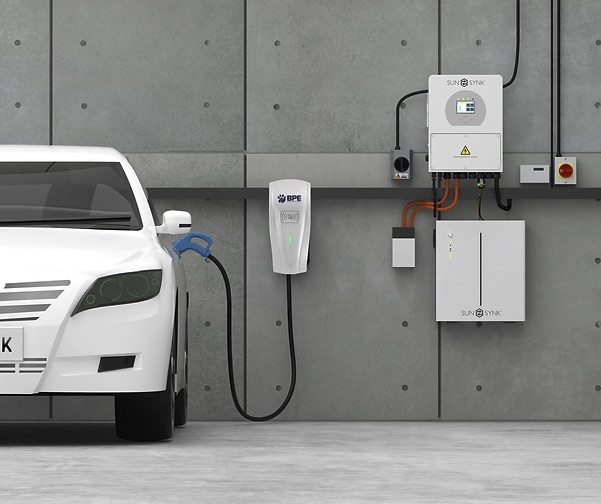
Battery Storage & Electric Car Charging: The Complete Electric Car Buying Guide For India
Electric Cars: The Basics For those of you new to zero-emission electric driving, we recommend a read of the following articles: Sign up to the newsletter We strongly encourage…
Read More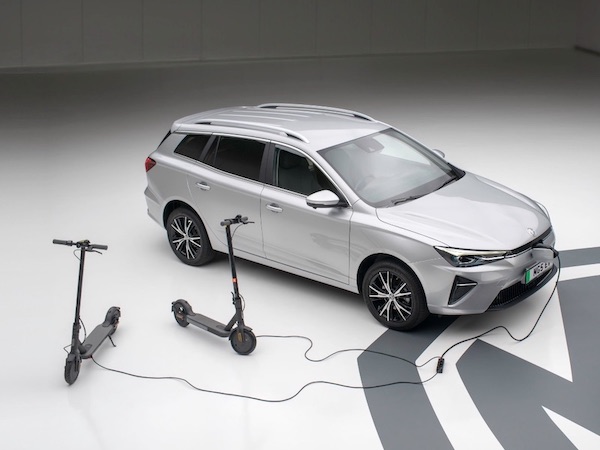
Electric Cars And Vehicle-To-Load Charging (V2L): The Benefits: The Complete Electric Car Buying Guide For India
Electric Cars: The Basics For those of you new to zero-emission electric driving, we recommend a read of the following articles: Sign up to the newsletter We strongly encourage…
Read More