

Electric Cars: The Basics
For those of you new to zero-emission electric driving, we recommend a read of the following articles:
What Is Regenerative Braking In Electric Cars: The Basics: The Complete Electric Car Buying Guide For India
Electric Cars: The Basics For those of you new to zero-emission electric driving, we recommend a read of the following articles: Sign up to the newsletter The All-Electric Lotus…
Read More
The History Of Electric Cars and Vehicles: Are EVs A New Invention?
Electric Cars: The Basics For those of you new to zero-emission electric driving, we recommend a read of the following articles: Sign up to the newsletter The All-Electric Lotus…
Read More
Different Types Of Electric Cars: The Complete Electric Car Buying Guide For India
Electric Cars: The Basics For those of you new to zero-emission electric driving, we recommend a read of the following articles: Sign up to the newsletter The All-Electric Lotus…
Read More
Electric Cars and Vehicles: Pros, Cons And Myths: The Complete Electric Car Buying Guide For India
Electric Cars: The Basics For those of you new to zero-emission electric driving, we recommend a read of the following articles: Sign up to the newsletter The All-Electric Lotus…
Read More
Electric Cars Range: WLTP: The Basics: The Complete Electric Car Buying Guide For India
Electric Cars: The Basics For those of you new to zero-emission electric driving, we recommend a read of the following articles: Sign up to the newsletter The All-Electric Lotus…
Read MoreSign up to the newsletter
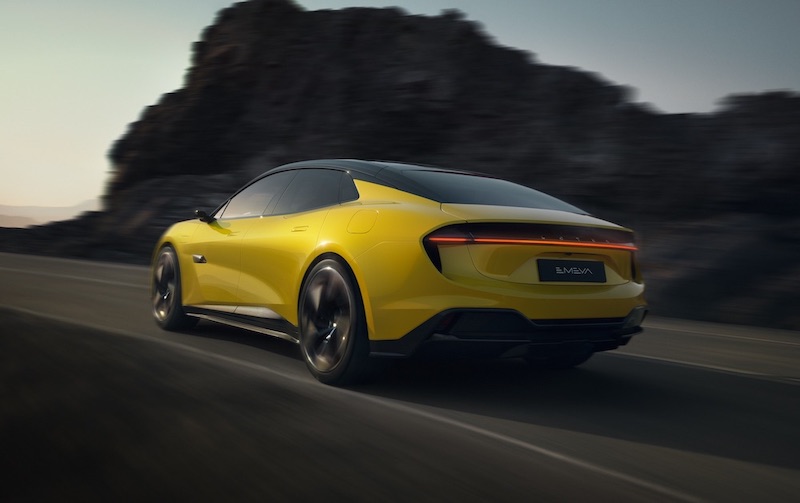
The All-Electric Lotus Emeya Hyper-GT Saloon
Lotus Cars Limited, is a UK based automotive manufacturer, famed for its iconic sports cars and participation in Formula One. The automotive manufacturer has witnessed a number of changes to its ownership since the founding of Lotus Engineering Limited in 1952, by Colin Chapman and Colin Dare.
The company is currently owned by the Chinese automotive manufacturer, Geely, headquartered in Hangzhou, Zhejiang province. Geely also owns the automotive brands Volvo Cars and Polestar. Previously, Lotus was owned by General Motors. The company has the following electric vehicles (EVs):
- All-electric Lotus Evija (BEV)
- All-electric Lotus Eletre Hyper-SUV (BEV)
- All-electric Lotus Emeya Hyper-GT (BEV)
Lotus continues its acceleration towards a comprehensive portfolio of battery-electric vehicles (BEVs). The latest addition, the all-electric Emeya, its first all-electric Hyper-GT (saloon), is certainly well positioned to compete in the high-performance premium EV segment.
Lotus has clearly leveraged the experience from the development of the pure electric Lotus Eletre Hyper-SUV, in the development of the four-door Emeya Hyper-GT (Grand Tourer). The Emeya was unveiled in New York in September 2023. Earlier in August 2023, the company had confirmed that the production of the Type 133 will be called Emeya.
Similar to the Lotus Eletre, the sportier Emeya e-saloon delivers 0-100 km/h in under 3 seconds (2.78 seconds to be precise!). All-wheel drive (AWD) is standard with Lotus ICC intelligent torque distribution, with motors place in the front and rear (same motors as Eletre). The EV delivers a maximum power up to 905 hp/ 985 Nm torque. The top speed is 256 km/h. The Emeya is certainly one of the fastest four-door saloon cars in the world, also gaining from one of the advantages of driving electric cars i.e. instant torque!
By way of comparison, the all-electric Porsche Taycan can achieve 0-100 km/h in 2.8 seconds and the all-electric Tesla Roadster can achieve 0-100 km/h 1.9 seconds. Though the Emeya does not compete head-on with the Roadster, it certainly will do with the Taycan.
The Emeya has a 102 kWh (800V architecture) high-voltage onboard EV battery. Though Lotus is yet to confirm the technical specifications for the Emeya, the manufacturer suggests the electric range as being ‘broadly similar’ to the Eletre. Therefore, we an expect a range between 500 – 600 km on a full battery charge. We suspect closer to 500 km! The EV battery is placed on the floor of the vehicle, as is the case with most EVs. This results in a lower centre of gravity for the vehicle (better handling) and also creates more interior space. The EV battery has a 50/50 weight distribution.
Like its sibling, the Emeya incorporates ultra-rapid DC charging capability up to 350 kW DC. The EV can be charged 10%-80% in 18 minutes. Put another way, the EV can add 150 km e-range in a mere five minutes! We can expect the Emeya to offer a 22 kW three-phase onboard AC charger as standard. Perfect for those EV owners with access to 3-phase EV charging at home or the workplace. Do keep in mind that most homes in India are powered by single-phase power supply. Interestingly, the EV has a motorised chargeport cover. Nice!
In terms of the interior, Lotus claims to be the first automotive manufacturer to use an ‘advanced new luxury thread that repurposes cotton scraps from the fashion and garment industries’. This may be the case, but Lotus is not the only automotive OEM keen to use sustainable materials for the production of an electric vehicle (EV). Most global automotive manufacturers are following a similar approach. It is now becoming quite common for most electric vehicle (EV) manufactures to use up to 20% of recycled materials for production. In fact, the young all-electric brand, Fisker, is on a mission to create the ‘most sustainable vehicles on Earth’.
Lotus also claims that the advanced fibre helps in reducing the weight of the EV, compared to using traditional materials like leather. To further reduce the weight of the Emeya, Lotus has also incorporated carbon-fibre in the EV (seats etc), and claims the electric car has a class leading ‘power-to-weight’ ratio. The EV also offers ample storage compartments in the interior to add to the practicality of the EV. A five-seat configuration is standard, however, buyers can opt to choose a four-seat configuration. As expected, there is commonality in the interior design between the Emeya and Eletre.
To further increase the performance of the e-vehicle via more efficient aerodynamics, the Emeya incorporates the following: active rear diffuser, active rear spoiler, active front grille, active air dam, flush door handles and eight ‘real’ vents. Apart from reducing the drag, the active rear spoiler (296mm wide) also improves vehicle handling at higher speeds (215kg net downforce).
As can be expected from a premium electric car, the Emeya is packed with technology and advanced driver assistance systems (ADAS): obstacle warnings, lane departure, forward collision alerts, blind-spot monitoring. It is interesting to note that Lotus offers a whopping 55″ augmented reality head-up display (HUD). The EV is also equipped for full autonomous driving, and includes, a LIDAR system that scans 200m in every direction (similar to the Eletre).
In terms of the exterior, there is no doubt that the coupé like sportier exterior styling is appealing. Of course, the sleek silhouette not only increases the appeal of the electric car, it also improves the efficiency (drag coefficient) of the electric vehicle. The Emeya does have commonality in design language with the taller Eletre SUV. According to Feng Qingfeng, CEO, Lotus Group: “Bringing together our rich heritage with intelligent performance and the latest cutting-edge technologies, we’re pushing the boundaries for how a luxury electric vehicle should look and handle–making it truly for the drivers”.
Production is expected to commence in 2024 in Wuhan, China, with deliveries also slated for 2024 in key international markets. The Wuhan factory is owned by Geely Holdings Group. Prices have yet to be confirmed, but Lotus suggests prices will be similar to the Eletre. Bottom-line, electric driving is good for the environment and the wallet! The electric car is not currently available in India.
| PROS | CONS |
|---|---|
| Ultra-high-performance all-electric saloon (AWD as standard) | Cheaper options available |
| Attractive exterior appeal and technology-filled | Available in only one EV battery option |
| 350 kW ultra-rapid DC charging and good-sized onboard EV battery | Sloping roofline impacts headroom for taller adults |
Gallery
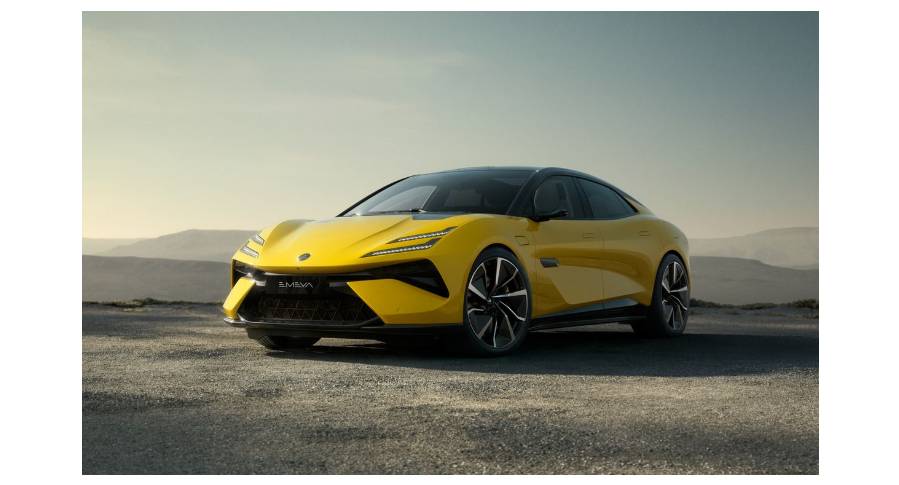
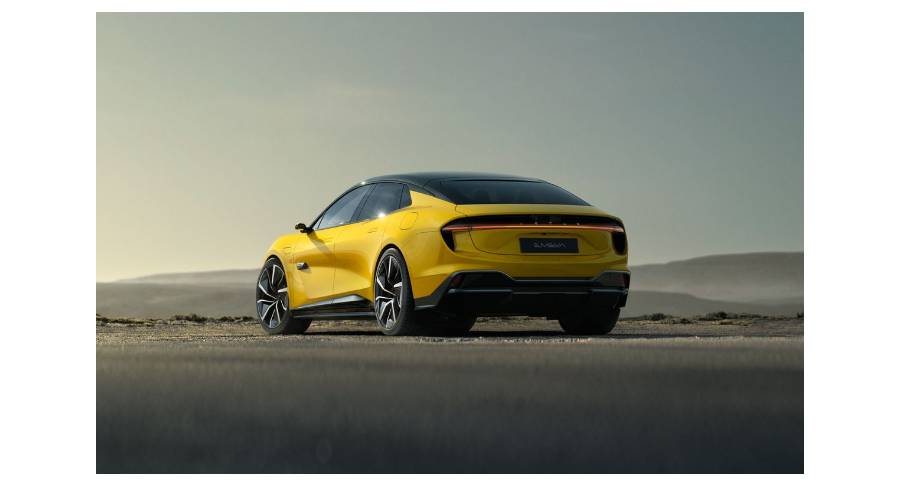
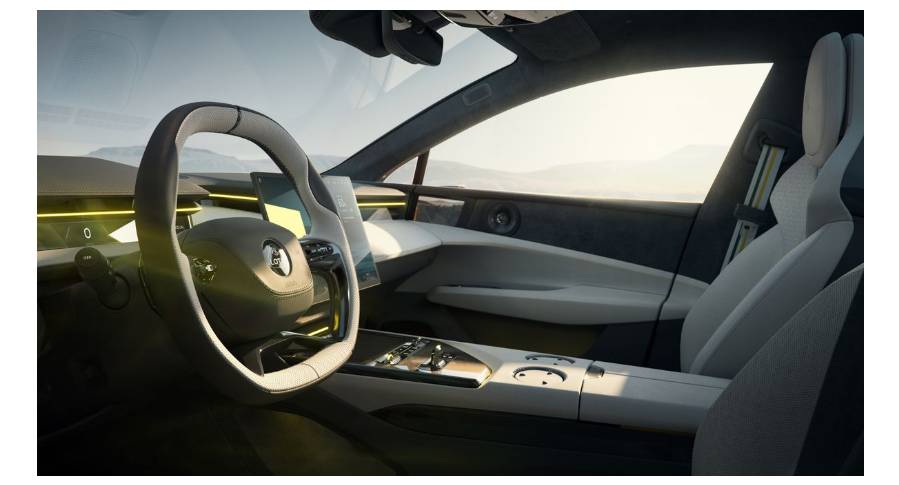
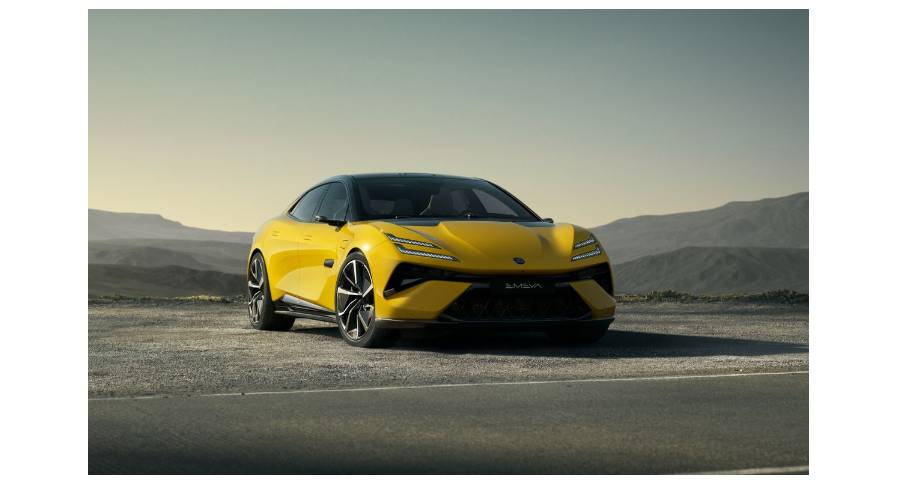
The All-Electric Lotus Emeya Saloon (credit: Lotus)
| At A Glance | |
|---|---|
| EV Type: | Battery-Electric Vehicle (BEV) |
| Body Type: | Saloon |
| Engine: | Electric |
| Available In India: | No |
| Variants (1 Option) |
|---|
| Lotus Emeya (from ₹ N/A) |
| EV Battery & Emissions | |
|---|---|
| EV Battery Type: | Lithium-ion |
| EV Battery Capacity: | Available in one battery size: 102 kWh |
| Charging: | 350 kW DC Rapid Charging (10%-80%: 18 mins). Onboard AC charger: 22 kW AC (0%-100%: N/A hrs) |
| Charge Port: | Type 2 |
| EV Cable Type: | Type 2 |
| Tailpipe Emissions: | 0g (CO2/km) |
| EV Battery Warranty: | 8 years or 200,000 km (70% or above) |
| Charging Times (Overview) | |
|---|---|
| Slow charging AC (3 kW – 3.6 kW): | 6 – 12 hours (dependent on size of EV battery & SOC) |
| Fast charging AC (7 kW – 22 kW): | 3 – 8 hours (dependent on size of EV battery & SoC) |
| Rapid charging AC (43 kW): | 0-80%: 20 mins to 60 mins (dependent on size of EV battery & SoC) |
| Rapid charging DC (50 kW+): | 0-80%: 20 mins to 60 mins (dependent on size of EV battery & SoC) |
| Ultra rapid charging DC (150 kW+): | 0-80% : 20 mins to 40 mins (dependent on size of EV battery & SoC) |
| Tesla Supercharger (120 kW – 250 kW): | 0-80%: up to 25 mins (dependent on size of EV battery & SoC) |
- Note 1: SoC: state of charge
| Dimensions | |
|---|---|
| Height (mm): | 1459 |
| Width (mm): | 2241 |
| Length (mm): | 5139 |
| Wheelbase (mm): | 3069 |
| Turning Circle (m): | 11.0 |
| Boot Space (L): | N/A |
| Lotus Emeya | (Target data only. To be reconfirmed by OEM) |
|---|---|
| EV Battery Capacity: | 102 kWh |
| Pure Electric Range (WLTP): | 500 – 600 km |
| Electric Energy Consumption (kWh/ 100km): | N/A |
| Charging: | 350 kW DC Rapid Charging (10%-80%: 18 mins). Onboard AC charger: 22 kW AC (0%-100%: N/A hrs) |
| Top Speed: | 256 km/h |
| 0-100 km/h: | 2.78 seconds |
| Drive: | All-wheel drive (AWD) |
| Electric Motor (kW): | 675 |
| Horsepower (hp): | 905 |
| Torque (Nm): | 985 |
| Transmission: | Automatic |
| Seats: | 4/5 (five-seat standard) |
| Doors: | 4 |
| Unladen Weight (kg): | N/A |
| Colours: | 5 |
| NCAP Safety Rating: | N/A |
Buying EV Cables: Top 3 Tips
When it comes to electric car charging cables, an astute electric car owner will focus on quality and performance over cheapest price. We at e-zoomed have an excellent range of high quality and high performance electric car charging cables, all priced very competitively! At e-zoomed we offer charging cables from 2m to 50m for single-phase and three-phase EV charging cables as standard.
| EV Cables: Top 3 Tips | |
|---|---|
| Never buy cheap: | Not all EV charging cables are the same. It is simply false economy to try and save a few Rupees on buying a cheaper cable, when in all probability the EV you own is worth over Rs 50 Lakhs! Nor are we suggesting you buy the most expensive. There is always a balance between price and quality, and electric car charging cables are no different. The last thing you need is to have the EV charging cable stop working when you most need it. EV cables on the e-zoomed Electric Living Shop are made from TPU (Thermoplastic Polyurethane), a higher quality material that is extremely flexible, durable and smooth to touch. |
| The shortest length is never the best choice: | A number of customers seek the shortest length (2m EV charging cable) because it is the cheapest. However a 2m EV cable is limited in practicality and usually not a good long-term investment. Most charging destinations (home or public) require an EV charging cable that is longer than 2m. In our experience, most customers buy EV charging cables between 5m and 25m. We recommend at least a 5m charging cable. It is long enough to meet most charging needs, but compact enough to be carried and put away easily! Of course, a number of customers need even longer EV cables. |
| A lower technical specification EV charging cable Is never the best choice: | As above, a number of electric car owners seek to buy a 16 amp (single-phase) EV charging cable, instead of a 32 amp (single-phase) EV charging cable. The reason is simple. The 16 amp is marginally cheaper! However, a 16 amp charging cable charges at 3.6 kW, a much slower rate to a 32 amp EV charging cable that charges at 7.2 kW. An ampere is the unit for measuring electricity. The accepted standard unit used for measuring how fast an electric current flows is an example of an ampere. The reason why customers in India buy a single-phase EV cable, is because most homes in India are powered by single-phase power supply. Also important to asses is the IP Rating for the EV cable. Not all EV cables have the same IP Rating. Of course, warranty is also important. Most EV cables are sold with a warranty of at least 2 years! |
While e-zoomed uses reasonable efforts to provide accurate and up-to-date information, some of the information provided is gathered from third parties and has not been independently verified by e-zoomed. While the information from the third party sources is believed to be reliable, no warranty, express or implied, is made by e-zoomed regarding the accuracy, adequacy, completeness, legality, reliability or usefulness of any information. This disclaimer applies to both isolated and aggregate uses of this information.
Related articles

The All-Electric Mercedes-Benz EQS (Saloon): The Complete Electric Car Buying Guide For India
Electric Cars: The Basics For those of you new to zero-emission electric driving, we recommend a read of the following articles: Sign up to the newsletter The All-Electric Lotus…
Read More
The Porsche Taycan Electric (Saloon): The Complete Electric Car Buying Guide For India
Electric Cars: The Basics For those of you new to zero-emission electric driving, we recommend a read of the following articles: Sign up to the newsletter The All-Electric Lotus…
Read More
The All-Electric BMW i7 (Saloon): The Complete Electric Car Buying Guide For India
Electric Cars: The Basics For those of you new to zero-emission electric driving, we recommend a read of the following articles: Sign up to the newsletter The All-Electric Lotus…
Read More
Electric Cars And Vehicle-To-Load Charging (V2L): The Benefits: The Complete Electric Car Buying Guide For India
Electric Cars: The Basics For those of you new to zero-emission electric driving, we recommend a read of the following articles: Sign up to the newsletter The All-Electric Lotus…
Read More
The All-Electric Kia EV6 (SUV): The Complete Electric Car Buying Guide For India
Electric Cars: The Basics For those of you new to zero-emission electric driving, we recommend a read of the following articles: Sign up to the newsletter The All-Electric Lotus…
Read More