Electric Cars: The Basics
For those of you new to zero-emission electric driving, we recommend a read of the following articles:
Different Types Of Electric Cars: The Complete Electric Car Buying Guide For India
Electric Cars: The Basics For those of you new to zero-emission electric driving, we recommend a read of the following articles: Sign up to the newsletter Introduction: Vehicle-To-Load Charging…
Read More
What Is Regenerative Braking In Electric Cars: The Basics: The Complete Electric Car Buying Guide For India
Electric Cars: The Basics For those of you new to zero-emission electric driving, we recommend a read of the following articles: Sign up to the newsletter Introduction: Vehicle-To-Load Charging…
Read More
The History Of Electric Cars and Vehicles: Are EVs A New Invention?
Electric Cars: The Basics For those of you new to zero-emission electric driving, we recommend a read of the following articles: Sign up to the newsletter Introduction: Vehicle-To-Load Charging…
Read More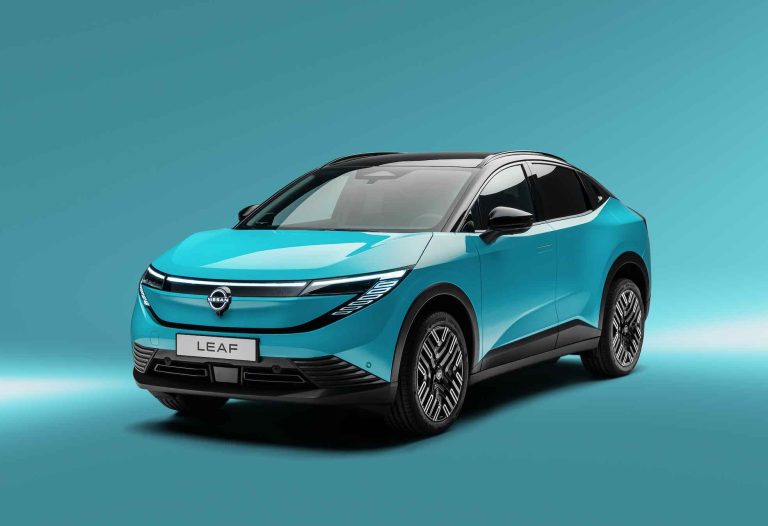
Electric Cars and Vehicles: Pros, Cons And Myths: The Complete Electric Car Buying Guide For India
Electric Cars: The Basics For those of you new to zero-emission electric driving, we recommend a read of the following articles: Sign up to the newsletter Introduction: Vehicle-To-Load Charging…
Read More
Electric Cars Range: WLTP: The Basics: The Complete Electric Car Buying Guide For India
Electric Cars: The Basics For those of you new to zero-emission electric driving, we recommend a read of the following articles: Sign up to the newsletter Introduction: Vehicle-To-Load Charging…
Read MoreSign up to the newsletter
Introduction: Vehicle-To-Load Charging (V2L)
Though the primary role of an electric vehicle (EV) is transportation, it is now clear that an electric vehicle will also be leveraged for a lot more than just driving, given the advantages of the onboard high-voltage EV battery. An area that is fast developing with the latest pure electric cars is bidirectional charging, and in particular, Vehicle-to-Grid (V2G), Vehicle-to-Load (V2L), Vehicle-to-Home (V2H) and Vehicle-to-Vehicle (V2V). Bidirectional charging allows a two-way electricity flow.
Though, each of the above have commonalities, each is different in operation and requirements. This article is an introductory article on Vehicle-to-load (V2L) in regards to electric cars. V2L functionality is still at an early stage in electric vehicles, with only a few passenger electric vehicles and commercial electric vehicles (i.e. electric vans) incorporating this functionality. However, expect this to become more widespread, as the electric driving market matures further.
It is clear from our experience of vehicle ownership over the past many decades, that the majority of the time vehicles are parked. In fact, some estimates suggest that cars are parked up to 95% of the time. Put another way, cars move only 5% of the time. Conventional internal combustion engine (ICE) petrol and diesel cars do not offer an opportunity to leverage the ‘parked time’. However, electric cars, to include battery-electric vehicles (BEVs) and plug-in hybrid electric vehicles (PHEVs), can be leveraged to benefit the user during the ‘parked time’ and also during the ‘moving time’.
For those new to electric driving, both BEVs and PHEVs have an onboard EV battery with stored energy for the propulsion of the vehicle. BEVs, also referred to as pure electric cars, are propelled only with electric power, while, PHEVs combine an internal combustion engine, with an onboard EV battery and electric motor.
In general, a BEV has a much larger onboard EV battery compared to a PHEV. Some of the recent introductions of pure electric cars offer an EV battery larger than 100 kWh. A long way since the introduction of the first generation all-electric Nissan Leaf more than a decade ago.
More recently, automotive manufacturers like Hyundai, have been keen to adopt V2L technology in their platforms. Hyundai first introduced V2L technology on its dedicated electric vehicle platform, E-GMP (Electric Global Modular Platform). We expect other OEMs to follow suit and also incorporate V2L as standard in upcoming electric cars.

| V2L: Overview | |
|---|---|
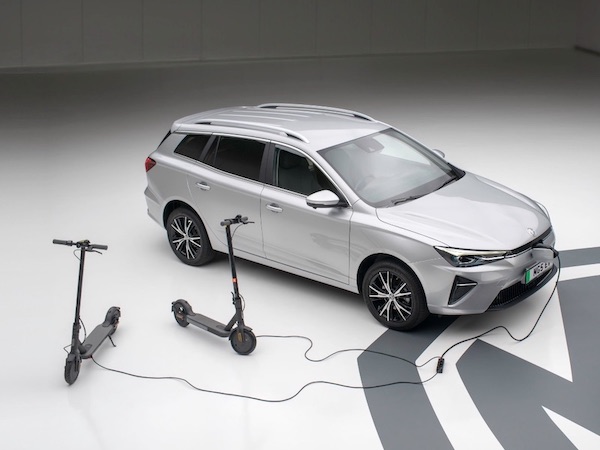
| What is Vehicle-to-Load (V2L) charging? | V2L charging is a bidirectional functionality allowing an electric vehicle (EV) to use its onboard high-voltage EV battery to charge or power devices/ appliances. It is also sometimes referred to as Vehicle-to-Device (V2D). Depending on the type of device/ appliance that needs to be charged or operated, V2L can be used while the EV is moving or parked. As an example, a laptop can be charged or used when an EV is parked or moving, while a lawn mower can only be charged or used when the EV is parked. V2L is a less complicated technology, compared to V2G, which requires interaction with the National Grid. V2L does not interact directly with the grid infrastructure. V2L cannot be used for powering your home or office. |
| What are the benefits of V2L charging? | V2L charging offers a number of benefits. Some of these include: convenience and financial savings. V2L offers advantages, such as, using an electric van as a mobile office to charge and power your laptop, smartphone or power tools. It can also be used for charging or powering devices or appliance for leisure activity, like camping. Apart from powering devices, the EV can also be used to save money, by using energy stored in the EV during cheaper tariff time (usually overnight EV charging) or using electricity generated from solar or wind energy on-site. As price inflation of grid power continues to increase, the potential to save money will only increase. Of course, do keep in mind that these savings are still limited, as V2L is not used for powering the home, but only a few appliances and devices. |
| What special equipment/ connector/ adapter is required for V2L? | The energy stored in the EV battery is DC and first needs to be converted to AC for V2L functionality. This DC to AC conversion is incorporated in the EV. V2L power output is measured in either Amps (A) or Kilowatts (kW) and usually ranges from 10A to 15A or 2.4 kW to 3.6 kW. However, some EVs like the Ford F-150 offer up to 9.6 kW. EVs generally offer one of the two, or both for V2L charging: an onboard AC outlet/socket (inside the vehicle)/ and a V2L adapter (vehicle-to-load connector) to be used with the EV charging port of the EV. For those using the charging port for V2L, it is best to source the adaptor directly from the manufacturer. |
| What type of appliances or devices can V2L charge? | Some examples include: smartphones, laptops, power tools, camping equipment, kettles, microwaves, coffee machines, e-bikes, e-scooters and more! |
| What are the limitations of Vehicle-to-Load charging? | The first, of course, is the amount of energy available to charge or power the devices or external appliances. The energy available will depend on the State-of-Charge (SoC) of the high-voltage EV battery. If the SoC is 20% or below, V2L operation will not be possible. Bottom-line, a charged EV battery is a must for V2L operation. Other limitation factors include: the power required by the device or appliance. As an example, the Hyundai IONIQ 5 can supply AC power up to 3.6 kW (15 Amps). Therefore devices/ appliances that consume more power, will not be compatible for V2L use. |
| Safety tips on V2L charging | Just like using a domestic socket at home or in the office, safety measures must be adhered to, for the safe operation of V2L charging. Some common sense safety tips include: never operate V2L with wet hands, do not allow the V2L external adaptor to become wet, do not use in rain, do not leave any electrical device or appliance in use unattended, do not disassemble the V2L adaptor, do not operate if there is a foreign substance in the V2L adapter or V2L socket. The above are just some of the safety and hazard tips. We at e-zoomed recommend reading the EV instruction manual in detail before commencing V2L operation. |
| How many devices/ appliances can be charged or powered simultaneously using V2L? | In theory, multiple appliances/ devices can be used simultaneously via a multi-plug power board. However, it is recommended to only use one device or appliance at a time to avoid the risk of an electrical overload. Moreover, a multi-plug power board is not encouraged. Instead, it is recommended to plug the device/ appliance directly into the V2L external adaptor or the V2L socket in the cabin. |
| Can I use an extension cord with the V2L adapter? | In general, the use of an electrical extension board is discouraged. As above, always plug the device/ appliance directly into the V2L external adaptor or the V2L socket in the cabin. |
Electric Cars With V2L Functionality

Though we expect Vehicle-to-load (V2L) capability to become more widespread in the future, the following electric vehicles (EVs) currently offer V2L charging functionality.
| Electric Vehicle With V2L | Type Of Electric Vehicle |
|---|---|
| MG 4 EV | Battery-electric-vehicle (BEV) |
| MG ZS EV | Battery-electric-vehicle (BEV) |
| MG5 EV | Battery-electric vehicle (BEV) |
| Kia EV6 | Battery-electric vehicle (BEV) |
| Hyundai IONIQ 5 | Battery-electric vehicle (BEV) |
| Ford F-150 Lightning | Battery-electric vehicle (BEV) |
| Genesis GV60 | Battery-electric vehicle (BEV) |
| Genesis GV70 | Battery-electric vehicle (BEV) |
| Genesis G80 | Battery-electric vehicle (BEV) |
| Ford E-Transit | Battery-electric vehicle (BEV) |
Electric Vehicles (EVs): Top Jargons
Despite the increased visibility of EVs in India, the vocabulary (jargon) used in electric driving is still new to consumers. In fact, for many, it can seem daunting and confusing. We have therefore put below some of the more commonly used terms in the EV glossary, to give you an easier introduction to electric driving in India!
| Glossary: Electric Vehicles (EVs) | |
|---|---|
| Battery-Electric Vehicle (BEV): | What is a BEV? A battery-electric vehicle (BEV) is more commonly referred to as a pure electric car. A BEV is ‘pure’, in that, the vehicle only uses electric power for propulsion i.e. a BEV does not have an internal combustion engine (ICE). It is easy to recognise these zero-tailpipe emission green cars, as these vehicles are silent (except for the artificial noise), and do not have a tailpipe! |
| Frunk: | What is a frunk? Though a frunk is not a new term, its availability is becoming more widespread with the development of electric vehicles (EVs). A frunk is a storage space/ compartment/ trunk in the front of a vehicle, rather than the rear. In the case of pure electric cars, given that these vehicles do not have an onboard internal combustion engine (ICE), there is space for a frunk. It is worth noting that a frunk is usually much smaller than a trunk, and in EVs, a good space for storing the EV cable. |
| Mild Hybrid Electric Vehicles (MHEVs): | What is a MHEV? Mild hybrids use both an internal combustion engine (ICE) and an electric motor. These cars are also known as ‘self-charging hybrids’. The vehicle uses regenerative braking (recuperated electric energy) to improve the fuel efficiency and to reduce tailpipe emissions (CO2 g/km). However, mild hybrids cannot be charged by an external power source, like an EV charger. |
| Plug-In Hybrid Electric Vehicle (PHEV): | What is a PHEV? Like a MHEV, a plug-in hybrid electric vehicle (PHEV) aims to increase the fuel efficiency and reduce tailpipe emissions. However there is much difference between a PHEV and a MHEV. A PHEV has a more powerful electric motor and a larger onboard EV battery. In a PHEV, the electric motor and onboard EV battery are also used to propel the electric vehicle. Moreover, a PHEV battery is charged by using an external power source, like a dedicated EV charger. |
| Regenerative Braking: | What is regenerative braking? Also known as regen braking or brake recuperation, regenerative braking is a process of capturing the wasted energy (during braking) from an electric vehicle, to be reused (recycled). In the case of electric driving, the ‘captured’ energy is reused to increase the pure electric range of the EV. |
While e-zoomed uses reasonable efforts to provide accurate and up-to-date information, some of the information provided is gathered from third parties and has not been independently verified by e-zoomed. While the information from the third party sources is believed to be reliable, no warranty, express or implied, is made by e-zoomed regarding the accuracy, adequacy, completeness, legality, reliability or usefulness of any information. This disclaimer applies to both isolated and aggregate uses of this information.
Related articles
What Is A Smart EV Charger?: The Complete Electric Car Buying Guide For India
Electric Cars: The Basics For those of you new to zero-emission electric driving, we recommend a read of the following articles: Sign up to the newsletter Introduction: Vehicle-To-Load Charging…
Read More
What Is Vehicle-To-Home (V2H) Bidirectional Charging?: The Complete Electric Car Buying Guide For India
Electric Cars: The Basics For those of you new to zero-emission electric driving, we recommend a read of the following articles: Sign up to the newsletter Introduction: Vehicle-To-Load Charging…
Read More
An Introduction To AC And DC Electric Car Charging: The Complete Electric Car Buying Guide For India
Electric Cars: The Basics For those of you new to zero-emission electric driving, we recommend a read of the following articles: Sign up to the newsletter Introduction: Vehicle-To-Load Charging…
Read More
Battery Storage & Electric Car Charging: The Complete Electric Car Buying Guide For India
Electric Cars: The Basics For those of you new to zero-emission electric driving, we recommend a read of the following articles: Sign up to the newsletter Introduction: Vehicle-To-Load Charging…
Read More
Benefits Of Green Energy and Electric Driving : The Complete Electric Car Buying Guide For India
Electric Cars: The Basics For those of you new to zero-emission electric driving, we recommend a read of the following articles: Sign up to the newsletter Introduction: Vehicle-To-Load Charging…
Read More