Electric Cars: The Basics
For those of you new to zero-emission electric driving, we recommend a read of the following articles:
What Is Regenerative Braking In Electric Cars: The Basics: The Complete Electric Car Buying Guide For India
Electric Cars: The Basics For those of you new to zero-emission electric driving, we recommend a read of the following articles: Sign up to the newsletter The MG ZS…
Read More
The History Of Electric Cars and Vehicles: Are EVs A New Invention?
Electric Cars: The Basics For those of you new to zero-emission electric driving, we recommend a read of the following articles: Sign up to the newsletter The MG ZS…
Read More
Different Types Of Electric Cars: The Complete Electric Car Buying Guide For India
Electric Cars: The Basics For those of you new to zero-emission electric driving, we recommend a read of the following articles: Sign up to the newsletter The MG ZS…
Read More
Electric Cars and Vehicles: Pros, Cons And Myths: The Complete Electric Car Buying Guide For India
Electric Cars: The Basics For those of you new to zero-emission electric driving, we recommend a read of the following articles: Sign up to the newsletter The MG ZS…
Read More
Electric Cars Range: WLTP: The Basics: The Complete Electric Car Buying Guide For India
Electric Cars: The Basics For those of you new to zero-emission electric driving, we recommend a read of the following articles: Sign up to the newsletter The MG ZS…
Read MoreSign up to the newsletter
The MG ZS Electric SUV
MG Motor UK Limited (MG Motor), is a UK headquartered British automotive manufacturer, now owned by the Chinese automotive company, SAIC Motor (December 2007). SAIC is owned by the Chinese government and headquartered in Shanghai. MG was owned by MG Rover up to 2005, before the collapse of the company. The history of the company can be traced back to 1924 to its founding in Oxford (UK). MG was founded by Cecil Kimber, a motor car designer. The automotive company currently has the following battery-electric vehicles (BEVs) and plug-in hybrid electric vehicles (PHEVs):
- All-electric MG ZS EV (BEV)
- All-electric MG4 EV (BEV)
- All-electric MG5 EV (BEV)
- All-electric MG Cyberster (BEV)
- MG HS Plug-In Hybrid (PHEV)
The pure electric MG ZS EV was unveiled in 2016 at the Guangzhou Auto Show. The e-SUV was launched in 2017 in China. Since its launch, the MG ZS EV has always had a decent proposition on offer, in particular, for those families seeking affordability and ‘value for money’ in a pure electric family car.
However, with the 2022 update of the electric vehicle (EV), the proposition has become more appealing for those families and company-car drivers seeking an affordable and practical electric car. As part of the 2022 update, MG updated both the size of the EV battery and introduced a second EV battery choice.
The MG ZS EV is now available in two EV battery sizes: 51.1 kWh and 72.6 kWh (Long Range). Before the update the EV was only available in only one battery size (44.5 kWh). However, the second EV battery option is not available in India.
The choice of two EV battery sizes increases the potential customer base, as not every EV driver needs a large onboard EV battery and long electric range. Both battery sizes offer a useful and practical pure electric range. The 51.1 kWh has a range up to 318 km (WLTP), while the 72.6 kWh offers a range up to 440 km (WLTP).
Even adjusting for real-world driving conditions, both options remain useful! For the 51.1 kWh expect a real-world emission-free e-range closer to 270 km, while for the larger battery, 375 km will be more realistic.
The MG EV incorporates a single-phase (7 KW AC) onboard charger. More than adequate for EV home charging in India, given that the majority of homes have single-phase power supply. The 51.1 kWh EV can be fully charged in 8 hours using a dedicated residential EV charger like easee. The MG ZS EV Long Range can be full charged in 10 hours and 30 minutes.
We at e-zoomed recommend charging overnight when the electricity prices are lower. We also recommend charging on a regular basis. This way charging times are reduced and regular charging is good for the long-term maintenance of the onboard EV battery. MG offers a 7 years or 160,000 km warranty.
The MG ZS electric SUV also offers DC charging capability. Using a 100 kW DC rapid charger, the 51.1 kWh EV can be charged from 10%-80% in 36 minutes. The 72.6 kWh can be charged up to 80% in 42 minutes. Of course, a 50 kW DC charger will be slower: the 51.1 kWh can be charged up to 80% in 54 minutes, while the Long Range battery will take 63 minutes.
In terms of the exterior styling, the latest update has improved the appeal of the EV. However, neither the exterior or the interior is class-leading, but it gets the job done.
MG offers a host of safety features (MG Pilot Advanced Driver Assistance Systems) and technology, to include: active emergency braking with pedestrian and bicycle detection, lane keep assist with lane departure warning system, traffic jam assist, intelligent speed limit assist, blind spot detection with lane change assist, 10.1″ colour touchscreen, Apple CarPlay, Android Auto, 360o parking camera and more. The EV is practical for front and rear seat passengers. The available boot space is 470 L.
In terms of performance, the front-wheel drive MG ZS EV achieves 0-100 km/h in 8.0 seconds for the standard EV battery. The Long Range is a little slower and achieves 0-100 km/h in 8.2 seconds. The EV delivers a maximum power up to 176 PS (torque: 280 Nm). The top speed is 175 km/h.
Bottom-line, electric driving is good for the environment and the wallet! The MG ZS EV is available in India.
| PROS | CONS |
|---|---|
| An affordable family electric car | Driving performance will not set the heart racing |
| Available in two EV battery sizes | Only available as front-wheel drive |
| Decent pure electric range | Interior quality can be improved |
Gallery


The All-Electric MG ZS EV SUV (credit: MG)
| At A Glance | |
|---|---|
| EV Type: | Battery-Electric Vehicle (BEV) |
| Body Type: | SUV |
| Engine: | Electric |
| Available In India: | Yes |
| Variants (2 Options) |
|---|
| MG ZS EV Excite: 51.1 kWh(from Rs 22.98 Lakhs) |
| MG ZS EV Exclusive: 51.1 kWh(from Rs 26.89 Lakhs) |
| EV Battery & Emissions | |
|---|---|
| EV Battery Type: | Lithium-ion |
| EV Battery Capacity: | Available in two battery size: 51.1 kWh/ 72.6 kWh |
| Charging: | 100 kW DC Rapid Charging. Onboard charger: 7 kW AC |
| Charge Port: | Type 2 |
| EV Cable Type: | Type 2 |
| Tailpipe Emissions: | 0g (CO2/km) |
| Battery Warranty: | 7 years or 160,000 km |
| Charging Times (Overview) | |
|---|---|
| Slow charging AC (3 kW – 3.6 kW): | 6 – 12 hours (dependent on size of EV battery & SOC) |
| Fast charging AC (7 kW – 22 kW): | 3 – 8 hours (dependent on size of EV battery & SoC) |
| Rapid charging AC (43 kW): | 0-80%: 20 mins to 60 mins (dependent on size of EV battery & SoC) |
| Rapid charging DC (50 kW+): | 0-80%: 20 mins to 60 mins (dependent on size of EV battery & SoC) |
| Ultra rapid charging DC (150 kW+): | 0-80% : 20 mins to 40 mins (dependent on size of EV battery & SoC) |
| Tesla Supercharger (120 kW – 250 kW): | 0-80%: up to 25 mins (dependent on size of EV battery & SoC) |
- Note 1: SoC: state of charge
| Dimensions | |
|---|---|
| Height (mm): | 1625 – 1649 |
| Width (mm): | 1809 |
| Length (mm): | 4323 |
| Wheelbase (mm): | 2581 |
| Turning Circle (m): | 11.2 |
| Boot Space (L): | 470 |
| MG ZS EV | |
|---|---|
| EV Battery Capacity: | 51.1 kWh |
| Pure Electric Range (WLTP): | 318 km |
| Electric Energy Consumption (kWh/100km): | 17.3 |
| Charging: | 100 kW Rapid Charging (10%-80%: 36 mins). Onboard charger: 7 kW AC (0%-100%: 8 hrs) |
| Top Speed: | 175 km/h |
| 0-100 km/h: | 8.0 seconds |
| Drive: | Front-wheel drive (FWD) |
| Electric Motor (kW): | N/A |
| Maximum Power (PS): | 176 |
| Torque (Nm): | 280 |
| Transmission: | Automatic |
| Seats: | 5 |
| Doors: | 5 |
| Kerb Weight (kg): | 1,570 – 1,610 |
| Colours: | 4 |
| NCAP Safety Rating: | Five-Star |
| MG ZS EV Long Range | |
|---|---|
| EV Battery Capacity: | 72.6 kWh |
| Pure Electric Range (WLTP): | 440 km |
| Electric Energy Consumption (kWh/100km): | 17.8 |
| Charging: | 100 kW Rapid Charging (10%-80%: 42 mins). Onboard charger: 7 kW AC (0%-100%: 10.5 hrs) |
| Top Speed: | 175 km/h |
| 0-100 km/h: | 8.2 seconds |
| Drive: | Front-wheel drive (FWD) |
| Electric Motor (kW): | N/A |
| Maximum Power (PS): | 156 |
| Torque (Nm): | 280 |
| Transmission: | Automatic |
| Seats: | 5 |
| Doors: | 5 |
| Kerb Weight (kg): | 1,620 |
| Colours: | 4 |
| NCAP Safety Rating: | Five-Star |
Vehicle-to-Grid (V2G): An Introduction
V2G is an innovative bidirectional technology that allows the onboard EV battery to be charged and discharged i.e. electrical energy to be exported/ discharged from the onboard EV battery to the grid via a V2G compatible EV charger. It also allows for vital informational flow (data) to the grid. In effect, the V2G technology allows an EV battery to be used as a grid-connected energy storage unit.
| Benefits: V2G | |
|---|---|
| Lower energy costs: | V2G can lower utility costs to include, lowering wholesale and retail energy costs |
| Improving the grid’s response ability: | V2G can improve the stability of the intra-day supply and demand needs, improving the grids ability to meet the needs of peak demand |
| Improving power quality: | V2G can improve power quality by controlling voltage and power factors |
| Increase resilience: | V2G can improve the resilience of the grid and electricity network in significantly adverse conditions |
| Increase use of renewable energy: | V2G enables an increase in the contribution of renewable energy to the national energy generation mix. The higher the contribution of RE, the greener the power supplied |
| Reduce cost of EV ownership: | V2G can reduce the cost of EV ownership by enabling EV owners to earn from exporting energy to the grid |
| Improves national energy security: | V2G can improve the national energy security of a country by reducing dependence on imported energy |
| Improve environmental impact: | V2G can improve the environmental impact of energy usage and transportation by reducing the dependence on fossil fuels |
While e-zoomed uses reasonable efforts to provide accurate and up-to-date information, some of the information provided is gathered from third parties and has not been independently verified by e-zoomed. While the information from the third party sources is believed to be reliable, no warranty, express or implied, is made by e-zoomed regarding the accuracy, adequacy, completeness, legality, reliability or usefulness of any information. This disclaimer applies to both isolated and aggregate uses of this information.
Related articles

The All-Electric Hyundai INSTER (SUV): The Complete Electric Car Buying Guide For India
Electric Cars: The Basics For those of you new to zero-emission electric driving, we recommend a read of the following articles: Sign up to the newsletter The MG ZS…
Read More
Honda e:Ny1 Electric (SUV): The Complete Electric Car Buying Guide For India
Electric Cars: The Basics For those of you new to zero-emission electric driving, we recommend a read of the following articles: Sign up to the newsletter The MG ZS…
Read More
The Citroen ë-C3 Electric (SUV): The Complete Electric Car Buying Guide For India
Electric Cars: The Basics For those of you new to zero-emission electric driving, we recommend a read of the following articles: Sign up to the newsletter The MG ZS…
Read More
The All-Electric Renault 4 E-Tech (SUV): The Complete Electric Car Buying Guide For India
Electric Cars: The Basics For those of you new to zero-emission electric driving, we recommend a read of the following articles: Sign up to the newsletter The MG ZS…
Read More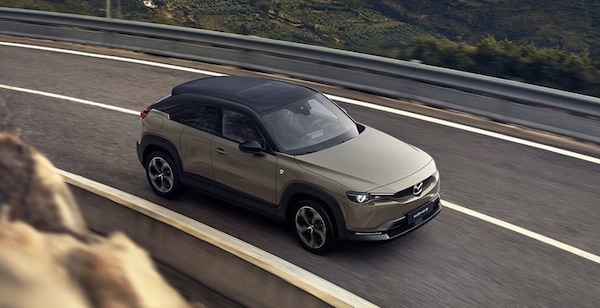
The Mazda MX-30 R-EV Plug-In Hybrid (SUV): The Complete Electric Car Buying Guide For India
Electric Cars: The Basics For those of you new to zero-emission electric driving, we recommend a read of the following articles: Sign up to the newsletter The MG ZS…
Read More