Electric Cars: The Basics
For those of you new to zero-emission electric driving, we recommend a read of the following articles:
What Is Regenerative Braking In Electric Cars: The Basics: The Complete Electric Car Buying Guide For India
Electric Cars: The Basics For those of you new to zero-emission electric driving, we recommend a read of the following articles: Sign up to the newsletter The Volvo XC40…
Read More
The History Of Electric Cars and Vehicles: Are EVs A New Invention?
Electric Cars: The Basics For those of you new to zero-emission electric driving, we recommend a read of the following articles: Sign up to the newsletter The Volvo XC40…
Read More
Different Types Of Electric Cars: The Complete Electric Car Buying Guide For India
Electric Cars: The Basics For those of you new to zero-emission electric driving, we recommend a read of the following articles: Sign up to the newsletter The Volvo XC40…
Read More
Electric Cars and Vehicles: Pros, Cons And Myths: The Complete Electric Car Buying Guide For India
Electric Cars: The Basics For those of you new to zero-emission electric driving, we recommend a read of the following articles: Sign up to the newsletter The Volvo XC40…
Read More
Electric Cars Range: WLTP: The Basics: The Complete Electric Car Buying Guide For India
Electric Cars: The Basics For those of you new to zero-emission electric driving, we recommend a read of the following articles: Sign up to the newsletter The Volvo XC40…
Read MoreSign up to the newsletter
The Volvo XC40 Recharge Electric SUV
Sweden has created its fair share of global brands, but none with a reputation as good as Volvo Cars, when it comes to passenger safety. Volvo cars is an automotive manufacturer based in Gothenburg, Sweden. The Volvo Group has a long history of success and was established in 1927. The Volvo electric vehicle (EV) current portfolio includes:
- All-electric Volvo C40 Recharge (BEV)
- All-electric Volvo EX90 (BEV)
- All-electric Volvo EX30 (BEV)
- All-electric Volvo ES90 (BEV)
- All-electric Volvo XC40 Recharge (PHEV)
- Volvo XC40 Recharge Plug-in Hybrid (BEV)
- Volvo XC60 Recharge Plug-in Hybrid (PHEV)
- Volvo XC90 Recharge Plug-in Hybrid (PHEV)
- Volvo S60 Recharge Plug-in Hybrid (PHEV)
- Volvo S90 Recharge Plug-in Hybrid (PHEV)
- Volvo V60 Recharge Plug-in Hybrid (PHEV)
- Volvo V90 Recharge Plug-in Hybrid (PHEV)
The Volvo XC40 conventional petrol and diesel variant has been available since 2017. The original XC40 SUV was awarded the prestigious Car of The Year accolade by WhatCar? in 2018.
However, Volvo has always had an intention to create a fully-electric (battery-electric vehicle) version of this compact SUV. Currently, the automotive manufacturer also offers a plug-in hybrid electric vehicle (PHEV) and mild hybrid variant of this SUV. The pure electric Recharge was unveiled in October 2019. Like the internal combustion engine (ICE) variant, the all-electric Volvo XC40 Recharge is also based on the Volvo 40.1 Concept.
The XC40 electric has the same EV battery size as the C40 Recharge (78 kWh). The manufacturer claims a zero-emission electric range up to 420 km (WLTP). Even adjusting for real-world driving conditions, the EV delivers a useful and practical electric range, for most day-to-day needs and for longer distance motorway driving.
For those new to electric driving, a number of factors impact the claimed range. These include: driving profile, weather conditions, road surface, wheel size, onboard services used, passenger load and more. The electric car also incorporates regenerative braking to increase the efficiency and electric range. A pure electric range closer to 350 km is more realistic.
The all-electric compact Volvo SUV is perfect for families already familiar with the advantages of owning and driving a Volvo car i.e. a fantastic reputation for safety and quality. Of course, the electric XC40 Recharge further enhances this enviable reputation, given the environment-friendly nature of zero-emission vehicles (ZEV) i.e. no tailpipe pollution!
The Volvo EV offers DC charging up to 130 kW. The EV can be charged up to 80% in 28 minutes. It is worth noting that the more recent EVs, in particular, in the premium segment, offer faster DC charging capability. Having said that, 28 minutes is just enough time for a coffee break and motorway rest!
The EV does incorporate a three-phase 11 kW AC onboard charger as standard (0%-100%: 7 hours). Given that most homes in India are powered by single-phase power supply, most of us will not be able to take advantage of the three-phase onboard charger. Single-phase EV charging (7.4 kW) will take longer!
In terms of performance, the front-wheel drive (FWD) XC40 electric SUV can achieve 0-100 km/h in 7.4 seconds (maximum power: 231 PS/ torque: 330 Nm). The top speed for the EV is 180 km/h. Of course, the electric car also benefits from instant torque.
The e-SUV is practical and versatile without compromising on quality and comfort. The rear seats are comfortable for adults, with ample legroom and headroom. The EV offers a 452 L boot space. Also included as standard are: a new generation 12-inch driver information display, 9-inch centre display, instant access to built-in Google apps and services and more.
Bottom-line, electric driving is good for the environment and the wallet! The Volvo XC40 Recharge electric SUV is available in India.
| PROS | CONS |
|---|---|
| Good looks and decent range | An expensive EV. Cheaper options available |
| Interior quality high and good headroom for rear passengers | Infotainment system can be improved |
| High electric performance (quick acceleration) | Heaviest SUV from the XC40 range |
Gallery


The All-Electric Volvo XC40 Recharge SUV (credit: Volvo)
| At A Glance | |
|---|---|
| EV Type: | Battery-Electric Vehicle (BEV) |
| Body Type: | SUV |
| Engine: | Electric |
| Available In India: | Yes |
| Trims (1 Option) |
|---|
| Volvo XC40 Recharge Ultimate (from Rs 55.90 Lakhs) |
| EV Battery & Emissions | |
|---|---|
| EV Battery Type: | Lithium-ion |
| EV Battery Capacity: | Available in one battery size: 78 kWh |
| Charging: | 130 kW DC Rapid Charging (10%-80%: 28 mins). Onboard charger: 11 kW AC (0%-100%: 7 hrs) |
| Charge Port: | Type 2 |
| EV Cable Type: | Type 2 |
| Tailpipe Emissions: | 0g (CO2/km) |
| Battery Warranty: | 8 years or 160,000 km |
| Charging Times (Overview) | |
|---|---|
| Slow charging AC (3 kW – 3.6 kW): | 6 – 12 hours (dependent on size of EV battery & SOC) |
| Fast charging AC (7 kW – 22 kW): | 3 – 8 hours (dependent on size of EV battery & SoC) |
| Rapid charging AC (43 kW): | 0-80%: 20 mins to 60 mins (dependent on size of EV battery & SoC) |
| Rapid charging DC (50 kW+): | 0-80%: 20 mins to 60 mins (dependent on size of EV battery & SoC) |
| Ultra rapid charging DC (150 kW+): | 0-80% : 20 mins to 40 mins (dependent on size of EV battery & SoC) |
| Tesla Supercharger (120 kW – 250 kW): | 0-80%: up to 25 mins (dependent on size of EV battery & SoC) |
- Note 1: SoC: state of charge
| Dimensions | |
|---|---|
| Height (mm): | 1647 |
| Width (mm): | 1910 |
| Length (mm): | 4440 |
| Wheelbase (mm): | 2702 |
| Turning Circle (m): | 11.8 |
| Boot Capacity (L): | 452 |
| Volvo XC40 Recharge | |
|---|---|
| EV Battery Capacity: | 78 kWh |
| Pure Electric Range (WLTP): | 420 km |
| Electric Energy Consumption (kWh/100km): | 18.7 |
| Charging: | 130 kW DC Rapid Charging (10%-80%: 28 mins). Onboard charger: 11 kW AC (0%-100%: 7 hrs) |
| Top Speed: | 180 km/h |
| 0-100 km/h: | 7.4 seconds |
| Drive: | Front-wheel drive (FWD) |
| Electric Motor (kW): | 170 |
| Horsepower (hp): | 231 |
| Torque (Nm): | 330 |
| Transmission: | Automatic |
| Seats: | 5 |
| Doors: | 5 |
| Unladen Weight (kg): | 2,030 |
| Colours: | 8 |
| NCAP Safety Rating: | Five-Star |
What Is A Heat Pump In Electric Cars?
| EV Heat Pump: The Basics | |
|---|---|
| What is a heat pump in electric cars? | In conventional internal combustion engine (ICE), petrol and diesel vehicles, the energy (waste heat) generated from the engine (powertrain), is captured to re-use for heating the interior cabin of the vehicle. However, in pure electric cars, the heat generated (waste heat) from the electric drive (electric motor, inverter, on-board AC charger) and the onboard high-voltage EV battery is not as much, as the heat generated in conventional cars, and cannot be re-used on its own to provide sufficient cabin heating (electric cars are more efficient than petrol/ diesel cars). Therefore in EVs, the sources for capturing heat, also includes the outside air i.e. it is a multi-source heat pump system. This captured heat is re-used for the onboard EV battery management and also for heating the cabin interior, increasing the electric car efficiency and reducing the need to draw energy from the onboard EV battery. In general, a lithium-ion EV battery is less energy efficient during colder months (similar to the laptop or smartphone battery). |
| How does a heat pump increase electric range in colder winter months? | Electric cars that do not incorporate an onboard heat pump, rely on the energy of the onboard EV battery for heating the interior cabin of the electric car, further impacting the available e-range. In contrast, EVs with a heat pump, do not rely on the onboard EV battery to heat the cabin. Instead, the heat pump sources heat from multiple sources and releases energy-efficient heating into the cabin. Put another way, an electric car with a heat pump does not place any demand on the onboard EV battery for heating the interior cabin. There is ample real-world evidence to prove that electric cars with a heat pump offer longer electric range in winter months, compared to electric cars that do not incorporate a heat pump. The average improvement in range is between 10% to 20%. |
| How does a heat pump work in an electric car? | Step 1: naturally heated antifreeze is channelled into the heat pump evaporator, where the heat is transferred to the coolant circulating in the unit. The evaporator converts the coolant into gas (evaporation). Step 2: the gas is sucked into a compressor to increase the pressure of the gas. When air is compressed it increases its temperature. The gas temperature is increased to 80° C. Step 3: the compressed gas is transferred to a condenser, where the heat is transferred to water in the condenser. Step 4: the heat is then circulated to the interior cabin, while the gas is converted into liquid form, and is transferred back to the heat pump evaporator via an expansion valve. The cycle is then repeated. |
| Is a heat pump used only for heating? | No. A heat pump can also be used for cooling. As an example, the Audi Q7 EV uses the onboard heat pump for heating and cooling. |
| Does a heat pump come as standard in EVs? | Though some manufacturers offer the heat pump as standard, most offer it as an optional extra. We recommend purchasing the option. |
| Can a heat pump be installed in an electric car post delivery? | Usually it is not possible, given the complexity of installing a heat pump. So always order it at the time of purchase. |
| Are all heat pumps in electric cars the same? | No. There is a difference in technology, approach and efficiency achieved for different manufacturers. As an example, Hyundai and Kia claim to have one of the most efficient heat pumps, given the ability of their technology to dynamically choose the most appropriate heat source at a given moment. Hyundai claims the heat pump incorporated in the all-electric Hyundai Kona can improve the winter electric range up to 18%, significantly higher than the average improvement (10%). |
| Are there any other advantages offered by a heat pump in colder months? | Yes, you can pre-heat the electric vehicle (EV) via your mobile app before you commence your journey. This way you can have a toasty warm interior cabin on a cold winter day! |
While e-zoomed uses reasonable efforts to provide accurate and up-to-date information, some of the information provided is gathered from third parties and has not been independently verified by e-zoomed. While the information from the third party sources is believed to be reliable, no warranty, express or implied, is made by e-zoomed regarding the accuracy, adequacy, completeness, legality, reliability or usefulness of any information. This disclaimer applies to both isolated and aggregate uses of this information.
Related articles
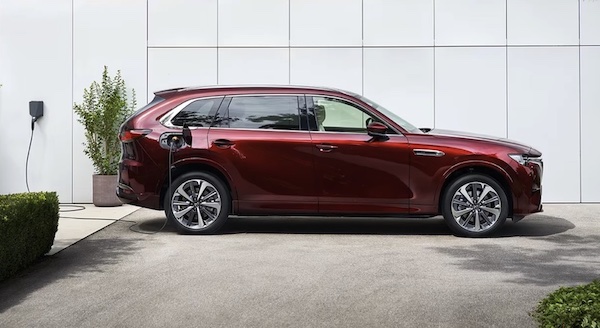
The Mazda CX-80 Plug-In Hybrid (SUV): The Complete Electric Car Buying Guide For India
Electric Cars: The Basics For those of you new to zero-emission electric driving, we recommend a read of the following articles: Sign up to the newsletter The Volvo XC40…
Read More
The All-Electric Lexus RZ 450e (SUV): The Complete Electric Car Buying Guide For India
Electric Cars: The Basics For those of you new to zero-emission electric driving, we recommend a read of the following articles: Sign up to the newsletter The Volvo XC40…
Read More
The BMW iX2 Electric (SUV): The Complete Electric Car Buying Guide For India
Electric Cars: The Basics For those of you new to zero-emission electric driving, we recommend a read of the following articles: Sign up to the newsletter The Volvo XC40…
Read More
The All-Electric Volvo EX30 (SUV): The Complete Electric Car Buying Guide For India
Electric Cars: The Basics For those of you new to zero-emission electric driving, we recommend a read of the following articles: Sign up to the newsletter The Volvo XC40…
Read More
The All-Electric Kia EV9 (SUV): The Complete Electric Car Buying Guide For India
Electric Cars: The Basics For those of you new to zero-emission electric driving, we recommend a read of the following articles: Sign up to the newsletter The Volvo XC40…
Read More