Electric Cars: The Basics
For those of you new to zero-emission electric driving, we recommend a read of the following articles:
What Is Regenerative Braking In Electric Cars: The Basics: The Complete Electric Car Buying Guide For India
Electric Cars: The Basics For those of you new to zero-emission electric driving, we recommend a read of the following articles: Sign up to the newsletter The Renault Megane…
Read More
The History Of Electric Cars and Vehicles: Are EVs A New Invention?
Electric Cars: The Basics For those of you new to zero-emission electric driving, we recommend a read of the following articles: Sign up to the newsletter The Renault Megane…
Read More
Different Types Of Electric Cars: The Complete Electric Car Buying Guide For India
Electric Cars: The Basics For those of you new to zero-emission electric driving, we recommend a read of the following articles: Sign up to the newsletter The Renault Megane…
Read More
Electric Cars and Vehicles: Pros, Cons And Myths: The Complete Electric Car Buying Guide For India
Electric Cars: The Basics For those of you new to zero-emission electric driving, we recommend a read of the following articles: Sign up to the newsletter The Renault Megane…
Read More
Electric Cars Range: WLTP: The Basics: The Complete Electric Car Buying Guide For India
Electric Cars: The Basics For those of you new to zero-emission electric driving, we recommend a read of the following articles: Sign up to the newsletter The Renault Megane…
Read MoreSign up to the newsletter
The Renault Megane PHEV Hatchback
Groupe Renault (Renault Group/ Renault S.A.), is a leading player in the global automotive sector. The company was established in 1899 and has over the course of its history, manufactured varied vehicles, to include: trucks, tractors, buses and even tanks! Renault has been part of the global Renault-Nissan-Mitsubishi Alliance since 1999 (previously, Renault-Nissan Alliance). The partnership makes the partnership the 3rd largest automotive group in the world after Volkswagen and Toyota. Renault offers both, battery-electric vehicles (BEVs), and plug-in hybrid electric vehicles (PHEVs) for passenger cars and commercial electric vehicles. The portfolio includes:
- All-electric Renault TWIZY (BEV)
- All-electric Renault ZOE E-TECH (BEV)
- All-electric Renault ZOE Van E-TECH (BEV)
- All-electric Renault Megane E-TECH (BEV)
- All-electric Renault Scenic E-TECH (BEV)
- All-electric Renault 4 E-TECH (BEV)
- All-electric Renault 5 E-TECH (BEV)
- All-electric Renault Kangoo E-TECH (BEV)
- All-electric Renault Master E-TECH (BEV)
- Renault Rafale E-Tech Plug-In Hybrid (PHEV)
- Renault Captur E-TECH Plug-In Hybrid (PHEV)
- Renault Megane E-TECH Plug-In Hybrid (PHEV)
- Renault Megane Sport Tourer E-TECH Plug-In Hybrid (PHEV)
The Renault Megane family hatchback has been available since 1996. The concept version was unveiled in 2011. The hatchback is now in its fourth generation, which was unveiled in 2015. The small family car received a facelift in 2020, which also included the introduction of the Megane plug-in hybrid electric vehicle (PHEV). The Renault Megane PHEV is not class-leading, but for those keen on a more affordable entry into electric driving, it is an option worth considering.
Though the Megane electric car EV battery size is limited to 9.8 kWh, the EV is able to deliver a fuel-free zero-tailpipe emission range up to 48 km (WLTP). Of course, do keep in mind that the real-world EV range will be lower than the claimed WLTP range, and assuming a 40 km electric range is more realistic. However, ample range to take advantage of the lower cost of driving an electric car.
Also, the best way to enjoy the smoother and silent pure electric mode, is to make sure that the EV battery is ‘topped-up’ on a regular basis. This also helps with the long-term health and maintenance of the EV battery. The EV has a 3.6 kW onboard charger and is not capable of DC charging. This is quite typical of PHEVs, however, many plug-in electric cars offer a 7.4 kW onboard charger and are capable of DC rapid charging. The EV can be fully charged in 3 hours.
Like all PHEVs, the pairing of an electric motor with the internal combustion engine (ICE), also helps reduce the tailpipe-emissions for the plug-in electric car. The claimed tailpipe-emissions is up to 28g CO2/km. The lower the emissions, the lower the local air pollution. A win-win for all!
The hybrid drivetrain also improves the overall efficiency of the electric vehicle (EV). Renault claims a fuel economy up to 1.2 l/100km. Of course, real-world fuel economy will be impacted by a number of factors, to include, the use of the e-mode i.e. the more the EV is driven on electric mode, the better the fuel economy.
The performance of the electric hatchback will not set the heart racing, but it does the job! The front-wheel drive Renault plug-in hybrid can achieve 0-100 km/h in 9.4 seconds, with a top speed of 204 km/h. The hybrid drivetrain delivers a maximum power of 160 HP (torque: 205 Nm), sufficient for city and motorway driving. Do keep in mind that the additional weight of the onboard EV battery does impact the overall performance of the vehicle (EV Kerb weight: 1,599 kg).
The EV does have a host of standard features and technology. However, the boot space has been impacted by the placement of the EV battery, nevertheless, the EV offers a cargo volume up to 250 L and an otherwise spacious interior. Bottom-line, electric driving is good for the environment and the wallet!
| PROS | CONS |
|---|---|
| Family friendly and practical | Small EV battery (9.8 kWh) and limited range |
| Affordable hatchback PHEV | Cabin interior has room for improvement |
| Cheap to drive on electric mode | Sluggish infotainment system |
Gallery


The Renault Megane PHEV Hatchback (credit: Renault)
| At A Glance | |
|---|---|
| EV Type: | Plug-In Hybrid Electric Vehicle (PHEV) |
| Body Type: | Hatchback |
| Engines: | Petrol-Electric |
| Available In India: | No |
| Variants (1 Option) |
|---|
| Renault Megane PHEV (Rs N/A) |
| EV Battery & Emissions | |
|---|---|
| EV Battery Type: | Lithium-ion |
| EV Battery Capacity: | Available in one battery size: 9.8 kWh |
| Charging: | DC charging not available. Onboard charger: 3.6 kW AC (0% – 100%: 3 hrs) |
| Charge Port: | Type 2 |
| EV Cable Type: | Type 2 |
| Tailpipe Emissions: | 28g (CO2/km) |
| Battery Warranty: | 8 years or 160,000 km |
| Charging Times (Overview) | |
|---|---|
| Slow charging AC (3 kW – 3.6 kW): | 6 – 12 hours (dependent on size of EV battery & SOC) |
| Fast charging AC (7 kW – 22 kW): | 3 – 8 hours (dependent on size of EV battery & SoC) |
| Rapid charging AC (43 kW): | 0-80%: 20 mins to 60 mins (dependent on size of EV battery & SoC) |
| Rapid charging DC (50 kW+): | 0-80%: 20 mins to 60 mins (dependent on size of EV battery & SoC) |
| Ultra rapid charging DC (150 kW+): | 0-80% : 20 mins to 40 mins (dependent on size of EV battery & SoC) |
| Tesla Supercharger (120 kW – 250 kW): | 0-80%: up to 25 mins (dependent on size of EV battery & SoC) |
- Note 1: SoC: state of charge
| Dimensions | |
|---|---|
| Height (mm): | 1445 |
| Width (mm): | 1814 |
| Length (mm): | 4359 |
| Wheelbase (mm): | 2670 |
| Turning Circle (m): | 11.2 |
| Boot capacity (L): | 250 |
| E-TECH Plug-In Hybrid 160 Auto | |
|---|---|
| EV Battery Capacity: | 9.8 kWh |
| Pure Electric Range (WLTP): | 48 km |
| Electric Energy Consumption (kWh/100km): | N/A |
| Fuel Consumption (l/100km): | 1.2 |
| Charging: | DC charging not available. Onboard charger: 3.6 kW AC (0% – 100%: 3 hrs) |
| Top Speed: | 204 km/h |
| 0-100 km/h: | 9.4 seconds |
| Drive: | Front-wheel drive (FWD) |
| Max Power (HP): | 160 |
| Torque (Nm): | 205 |
| Transmission: | Automatic |
| Seats: | 5 |
| Doors: | 5 |
| Kerb Weight (kg): | 1,599 |
| Colours: | 7 |
| NCAP Safety Rating: | Five-Star |
Electric Driving: Top 5 EV Jargons For India
Despite the increased visibility of EVs in India, the vocabulary (jargon) used in electric driving is still new to consumers. In fact, for many, it can seem daunting and confusing. We have therefore put below some of the more commonly used terms in the EV glossary, to give you an easier introduction to electric driving in India!
| EV Glossary: Top 5 | |
|---|---|
| AC/DC (Alternating Current/ Direct Current): | What is AC/ DC current? AC and DC describe the type of ‘current flow’ in a circuit. Put simply, most household appliances, like the kettle, toaster and television, use AC, while the batteries used for remotes, flashlights etc use DC. In fact, all power supplied by the grid to a dwelling or building is AC power. Therefore, an electric car charging at home will use AC power. AC is a form of current invented by Nicholas Tesla that reverses its direction of movement constantly back and forth within the circuit, by changing its magnitude and polarity (between positive and negative), at regular intervals. Such current can easily be transformed from higher voltage to lower voltage. The primary difference between AC and DC is that, DC flows only in one direction. |
| DoD (Depth-Of-Charge): | What is Depth-Of-Charge? A battery’s Depth-of-Charge is the level of discharge of a battery. As you drive an EV, the battery is discharged. The DoD indicates the % that has been discharged relative to the capacity of a battery. Conversely, a State-of-Charge (SOC), is the percentage of capacity still available in a battery. If you use 25% of your EV battery capacity, then the DoD is 25% and the SOC is 75%. It is recommended not to fully discharge an electric car battery, as this reduces the lifespan of a battery. Automotive manufacturers publish recommend DoD levels for charging, but a charging range between 20% to 80% is ideal. |
| Earthed/ Grounded: | Users of electrical equipment are protected from electric shocks through a process called earthing. If there is a fault in the electric system, a user can be subject to an electric shock, as the electricity uses part of the body to travel. Earthing protects the user by proving a path for the fault current to reach the earth. As an example, the commonplace household 3-plug pin, has one wire that connects to the earth. Earthing also protects the electrical apparatus from voltage surges etc. |
| What is CCS charging? | It is a DC (direct current) rapid charging standard/ protocol for charging electric cars. It was introduced in 2011. The CCS standard includes the Type 2 (IEC 62196) connectors, along with two DC connectors (pins), in a single connector pattern (CCS Combo 2) in the electric vehicle (EV), with a total of nine pins. The two DC connectors (pins) are at the bottom, and enable faster DC charging and communication. The communication is between the EV charger and the electric car. Communication is via Pulse Width Modulation (PWM). |
| What is a Smart EV Charger? | A smart EV charger allows users to remotely monitor, manage and control the charging session. Though smart charging offers a number of benefits, the two key benefits are: energy use optimisation and cost efficiency. Smart chargers optimise the charging session and manages the load safely. A smart EV charger monitors electrical consumption and adjusts the charging session based on the available energy (dynamic load balancing). Smart charging also allow load balancing for locations with multiple EV charging stations. For such EV charging destinations, an operator can choose how best to distribute the available energy capacity across all active EV chargers. |
While e-zoomed uses reasonable efforts to provide accurate and up-to-date information, some of the information provided is gathered from third parties and has not been independently verified by e-zoomed. While the information from the third party sources is believed to be reliable, no warranty, express or implied, is made by e-zoomed regarding the accuracy, adequacy, completeness, legality, reliability or usefulness of any information. This disclaimer applies to both isolated and aggregate uses of this information.
Related articles
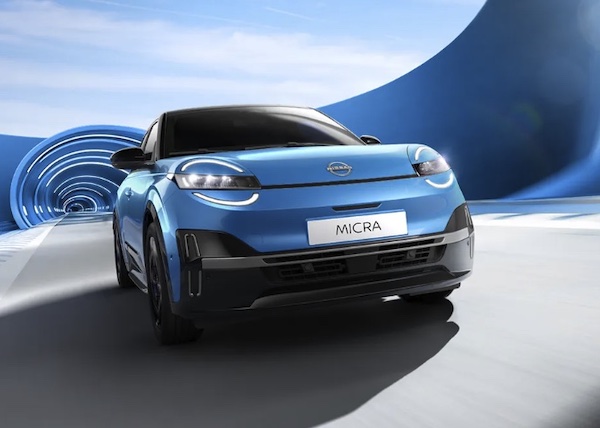
The All-Electric Nissan Micra (Hatchback): The Complete Electric Car Buying Guide For India
Electric Cars: The Basics For those of you new to zero-emission electric driving, we recommend a read of the following articles: Sign up to the newsletter The Renault Megane…
Read More
The Peugeot 308 Plug-In Hybrid (Hatchback): The Complete Electric Car Buying Guide For India
Electric Cars: The Basics For those of you new to zero-emission electric driving, we recommend a read of the following articles: Sign up to the newsletter The Renault Megane…
Read More
SEAT Leon E-Hybrid PHEV (Hatchback): The Complete Electric Car Buying Guide For India
Electric Cars: The Basics For those of you new to zero-emission electric driving, we recommend a read of the following articles: Sign up to the newsletter The Renault Megane…
Read More
The All-Electric Cupra Born (Hatchback): The Complete Electric Car Buying Guide For India
Electric Cars: The Basics For those of you new to zero-emission electric driving, we recommend a read of the following articles: Sign up to the newsletter The Renault Megane…
Read More
The Audi A3 Plug-In Hybrid TFSIe (Sportback): The Complete Electric Car Buying Guide For India
Electric Cars: The Basics For those of you new to zero-emission electric driving, we recommend a read of the following articles: Sign up to the newsletter The Renault Megane…
Read More