

Electric Cars: The Basics
For those of you new to zero-emission electric driving, we recommend a read of the following articles:
What Is Regenerative Braking In Electric Cars: The Basics: The Complete Electric Car Buying Guide For India
Electric Cars: The Basics For those of you new to zero-emission electric driving, we recommend a read of the following articles: Sign up to the newsletter The All-Electric Renault…
Read More
The History Of Electric Cars and Vehicles: Are EVs A New Invention?
Electric Cars: The Basics For those of you new to zero-emission electric driving, we recommend a read of the following articles: Sign up to the newsletter The All-Electric Renault…
Read More
Different Types Of Electric Cars: The Complete Electric Car Buying Guide For India
Electric Cars: The Basics For those of you new to zero-emission electric driving, we recommend a read of the following articles: Sign up to the newsletter The All-Electric Renault…
Read More
Electric Cars and Vehicles: Pros, Cons And Myths: The Complete Electric Car Buying Guide For India
Electric Cars: The Basics For those of you new to zero-emission electric driving, we recommend a read of the following articles: Sign up to the newsletter The All-Electric Renault…
Read More
Electric Cars Range: WLTP: The Basics: The Complete Electric Car Buying Guide For India
Electric Cars: The Basics For those of you new to zero-emission electric driving, we recommend a read of the following articles: Sign up to the newsletter The All-Electric Renault…
Read MoreSign up to the newsletter
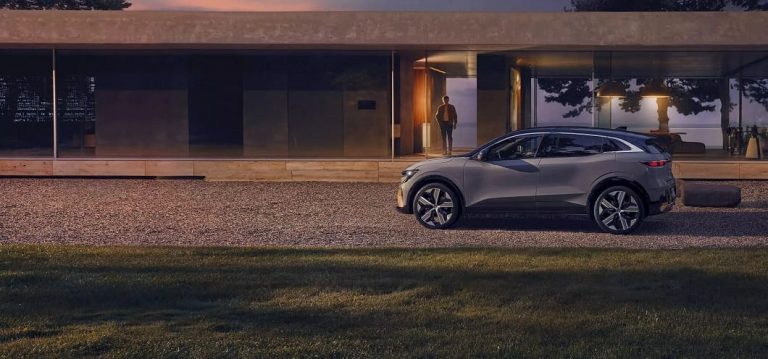
The All-Electric Renault Megane E-Tech Hatchback
Groupe Renault (Renault Group/ Renault S.A.), is a leading player in the global automotive sector. The company was established in 1899 and has over the course of its history, manufactured varied vehicles, to include: trucks, tractors, buses and even tanks! Renault has been part of the global Renault-Nissan-Mitsubishi Alliance since 1999 (previously, Renault-Nissan Alliance). The partnership makes the partnership the 3rd largest automotive group in the world after Volkswagen and Toyota. Renault offers both, battery-electric vehicles (BEVs), and plug-in hybrid electric vehicles (PHEVs) for passenger cars and commercial electric vehicles. The portfolio includes:
- All-electric Renault TWIZY (BEV)
- All-electric Renault ZOE E-TECH (BEV)
- All-electric Renault ZOE Van E-TECH (BEV)
- All-electric Renault Megane E-TECH (BEV)
- All-electric Renault Scenic E-TECH (BEV)
- All-electric Renault 4 E-TECH (BEV)
- All-electric Renault 5 E-TECH (BEV)
- All-electric Renault Kangoo E-TECH (BEV)
- All-electric Renault Master E-TECH (BEV)
- Renault Rafale E-Tech Plug-In Hybrid (PHEV)
- Renault Captur E-TECH Plug-In Hybrid (PHEV)
- Renault Megane E-TECH Plug-In Hybrid (PHEV)
- Renault Megane Sport Tourer E-TECH Plug-In Hybrid (PHEV)
Renault is in an enviable position, in that, few automotive manufacturers have the benefit of the learnings of an electric car like the all-electric Renault ZOE, which was first shown at the Geneva Motor Show in 2012. Since then, over 400,000 units have been sold, with the automotive manufacturer gaining significant first-hand experience on electric cars, EV batteries and more.
The all-electric Renault Megane E-Tech has certainly benefited from the Zoe experience, and this is clearly evident in both the design and overall proposition of the EV. The family car has little in common with its predecessor, as Renault moves ahead to its next-generation of electric cars. The Megane EV is built on a dedicated EV platform (CMF-EV electric platform), also used by the all-electric Nissan Ariya SUV.
The Megane E-Tech family electric hatchback is available in one EV battery size: 60 kWh. This is an average EV battery size we have come to expect for small to medium sized family electric cars. In general, the larger the EV battery size, the longer the electric range. However, this is not the whole story. The materials used, the ‘weight saving’ approach to design and manufacture, can all impact the efficiency and electric range of the vehicle. Bottom-line, in general, the lighter an EV, the lower the negative impact on the e-range. The Megane electric incorporates light weight aluminium doors. The EV weighs 1,636 kg.
Renault claims a pure electric range up to 450 km (WLTP) on a full battery charge. Certainly an impressive range and a demonstration of the automotive manufacturer’s experience in EV battery development and improvement in design of the new generation of Renault electric cars. Of course, the real-world electric range will be lower than the quoted range. For those new to electric driving, it is worth noting that the real-world EV range is influenced by a number of factors. Some include: driving profile, weather conditions, road conditions, passenger load, tyre size and regenerative braking profile! For the pure electric Megane, expect a real-world range closer to 415 km. Still, a very useful and practical EV range.
The manufacturer also offers a 3-phase 22 kW AC onboard charger as standard. Using a dedicated three-phase EV charger, like the 22 kW zappi EV charger, the Megane electric car can be fully charged in 3 hours and 15 minutes. Charging at 11 kW, the EV will take up to 6 hours and 15 minutes to fully charge. Single-phase (7.4 kW) charging will take longer: 9 hours and 15 minutes. We at e-zoomed recommend charging overnight, at home, when the electricity tariff rates are cheaper. We also encourage using solar energy to charge an electric car.
We discourage the use of a 3-PIN domestic plug for charging an electric car. It would take up to 30 hours and 30 minutes to charge the EV. We also encourage charging on a regular basis. This way, there is always available ‘electric miles’ and regular charging is good for the long-term maintenance of the onboard EV battery. Renault offers a 8 years or 160,000 km warranty. The EV can be DC rapid fast charged up to 130 kW DC. Not the fastest, nor the slowest. But given the EV battery size, it is appropriate. The EV can be charged from 15%-80% state-of-charge (SOC) in 30 minutes. Put another way, it would take just 7 minutes to gain 50 km!
In terms of performance, the front-wheel drive Megane E-Tech can deliver 0-100 km/h in 7.5 seconds. The electric car delivers a maximum power up to 220 hp and 300 Nm torque. The top speed of the EV is 160 km/h. The EV also benefits from instant torque and incorporates regenerative braking with paddle shift levers.
The Megane E-TECH electric car offers up to 22 advanced assistance systems, to include: cruise control and speed limiter, smart rear-view mirror, rear parking sensors, front parking sensors, 360° view 3D camera, safe following distance warning, emergency lane keeping assist, blind spot warning and more. Also included are a 9” multimedia OpenR link screen and a 12.3” driver information display cluster. The EV does not have a frunk (front storage compartment), but does offer up to 440 L boot space. Rear seats are a tight squeeze and the rear view impacted by the sportier exterior styling. The Megane electric hatchback has a sporty crossover styling blended with a hatch. It works well!
Bottom-line, electric driving is good for the environment and the wallet!
| PROS | CONS |
|---|---|
| Good electric range | Cheaper alternatives available |
| 130 kW DC and 22 kW AC onboard charger as standard | Rear view impacted by exterior styling |
| Appealing exterior styling | Headroom and legroom for rear seats limited |
Gallery
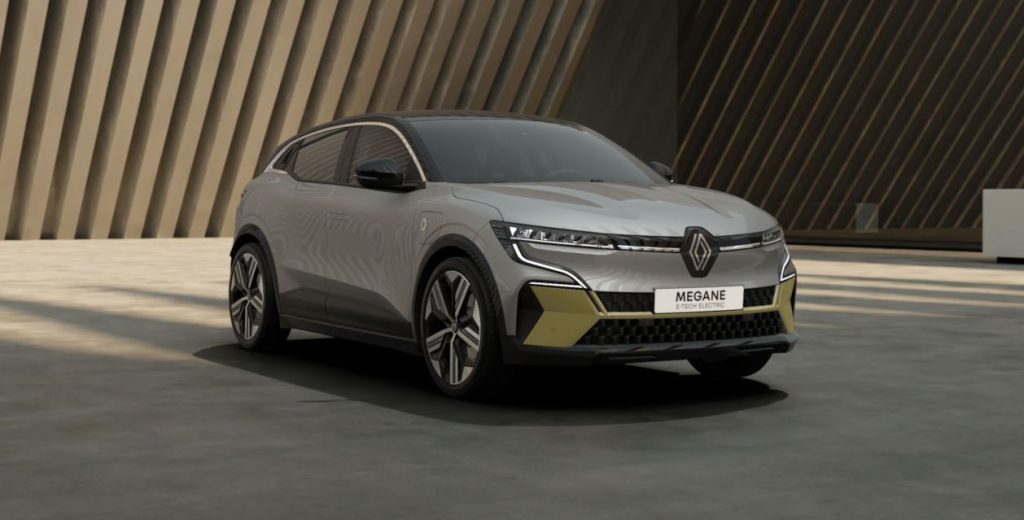
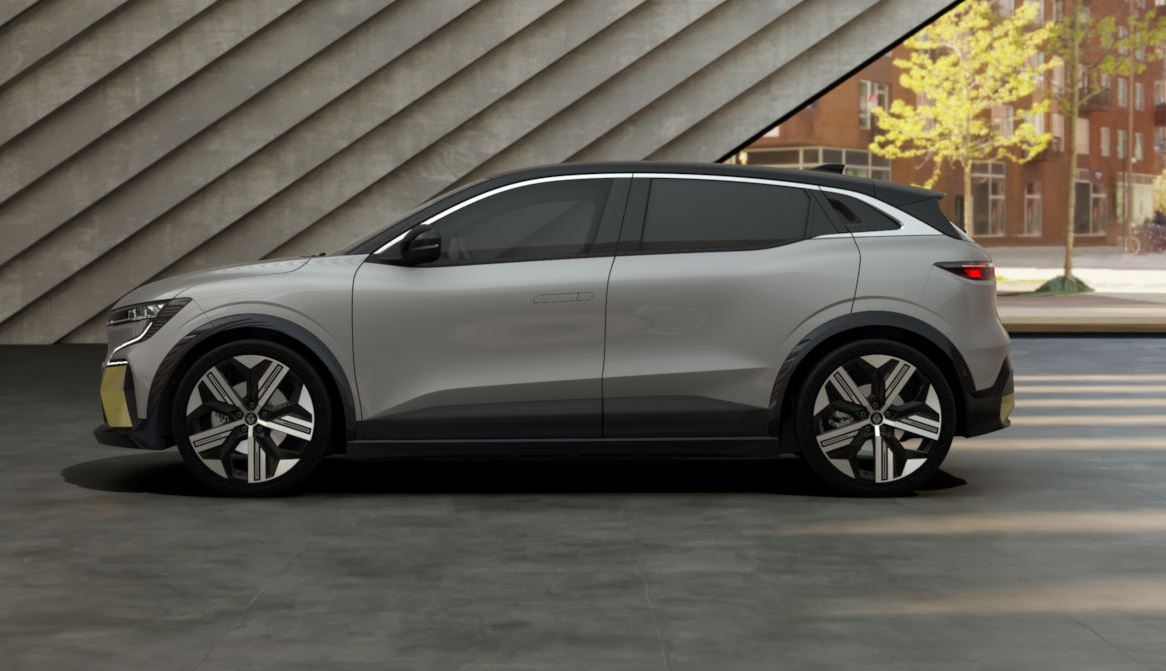
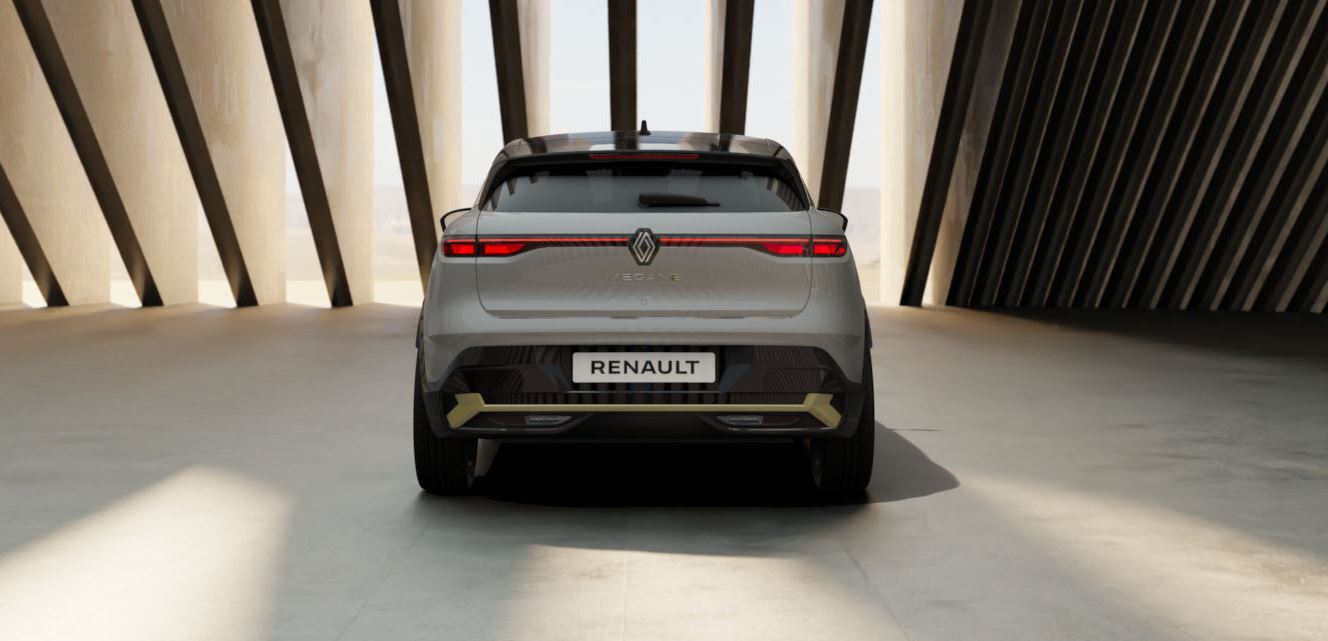
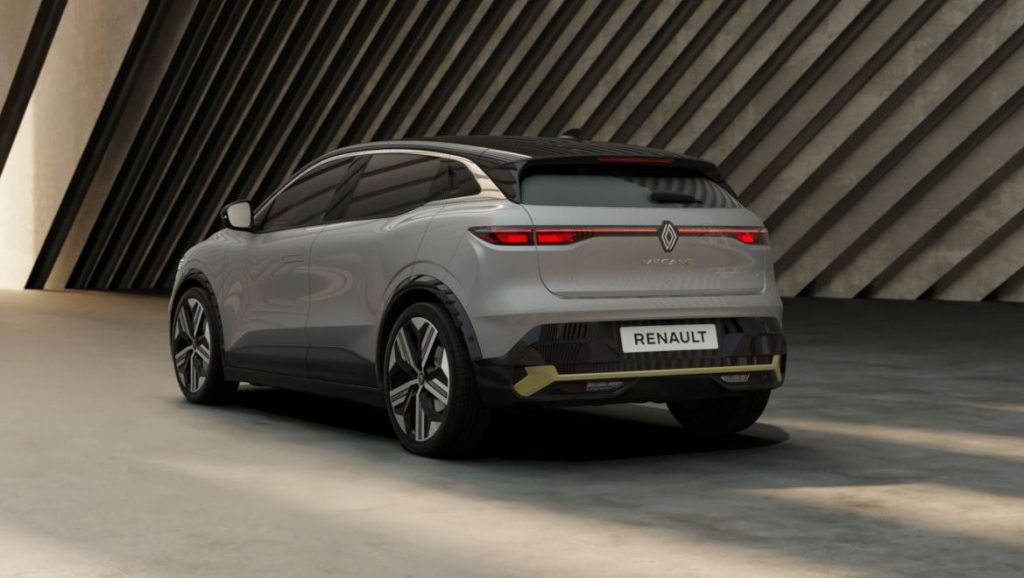
The All-Electric Renault Megane E-Tech Hatchback (credit: Renault)
| At A Glance | |
|---|---|
| EV Type: | Battery-Electric Vehicle (BEV) |
| Vehicle Type: | Hatchback |
| Engine: | Electric |
| Available In India: | No |
| Trims (1 Options) |
|---|
| Renault Megane E-Tech (from ₹ N/A) |
| EV Battery & Emissions | |
|---|---|
| EV Battery Type: | Lithium-ion |
| EV Battery Capacity: | Available in one battery size: 60 kWh |
| Charging: | 130 kW DC Rapid Charging (15%-80%: 30 mins). Onboard charger: 22 kW AC (0%-100%: 3 hrs 15 mins) |
| Charge Port: | Type 2 |
| EV Cable Type: | Type 2 |
| Tailpipe Emissions: | 0g (CO2/km) |
| Battery Warranty: | 8 years or 160,000 km |
| Charging Times (Overview) | |
|---|---|
| Slow charging AC (3 kW – 3.6 kW): | 6 – 12 hours (dependent on size of EV battery & SOC) |
| Fast charging AC (7 kW – 22 kW): | 3 – 8 hours (dependent on size of EV battery & SoC) |
| Rapid charging AC (43 kW): | 0-80%: 20 mins to 60 mins (dependent on size of EV battery & SoC) |
| Rapid charging DC (50 kW+): | 0-80%: 20 mins to 60 mins (dependent on size of EV battery & SoC) |
| Ultra rapid charging DC (150 kW+): | 0-80% : 20 mins to 40 mins (dependent on size of EV battery & SoC) |
| Tesla Supercharger (120 kW – 250 kW): | 0-80%: up to 25 mins (dependent on size of EV battery & SoC) |
- Note 1: SoC: state of charge
| Dimensions | |
|---|---|
| Height (mm): | 1505 |
| Width (mm): | 2055 |
| Length (mm): | 4200 |
| Wheelbase (mm): | 2685 |
| Turning Circle (m): | 10.56 |
| Boot Space (L): | 440 |
| Megane E-Tech | |
|---|---|
| EV Battery Capacity: | 60 kWh |
| Pure Electric Range (WLTP): | 450 km |
| Electric Energy Consumption (kWh/ 100km): | 16.1 |
| Charging: | 130 kW DC Rapid Charging (15%-80%: 30 mins). Onboard charger: 22 kW AC (0%-100%: 3 hrs 15 mins) |
| Top Speed: | 160 km/h |
| 0-100 km/h: | 7.5 seconds |
| Drive: | Front-wheel drive (FWD) |
| Electric Motor (kW): | 160 |
| Max Power (hp): | 220 |
| Torque (Nm): | 300 |
| Transmission: | Automatic |
| Seats: | 5 |
| Doors: | 5 |
| Kerb Weight (kg): | 1,636 |
| Colours: | 6 |
| NCAP Safety Rating: | N/A |
Top Reasons To Buy An Electric Vehicle (EV)
Never have the reasons to buy an electric car been more compelling, than today. The past decade has witnessed a significant maturity of all types of electric vehicles (EVs), to include, battery-electric vehicles (BEVs) and plug-in hybrid electric vehicles (PHEVs). A BEV, also known as a pure electric car, is propelled using energy stored in an EV battery via an electric motor. While a PHEV uses ‘hybrid technology’, to include, an internal combustion engine (ICE) and an electric motor, to propel the vehicle.
One of the primary differences between a BEV and a PHEV, is that, a pure electric car, like the best-selling Tesla Model 3, has a much longer zero-tailpipe emission electric range, compared to a plug-in hybrid electric car, like the Toyota Prius PHEV. The reason is simple: a BEV has a much larger onboard EV battery. In general, the latest BEVs have a zero-emission range between 150 to 600 km on a single charge, while PHEVs average between 50-75 km. Given the significant increase in electric range, improvement in EV charging infrastructure and attractive government grants, BEVs are fast becoming the preferred type of electric vehicle to own!
In India, we have also witnessed an increase in the availability of pure electric cars. Some of these include: the all-electric BMW i7, the all-electric Kia EV6, the all-electric BMW iX, the all-electric BYD ATTO 3 and many more! Expect this momentum to increase significantly, as more EV automotive manufacturers cast an eye on the Indian automotive market!
| Top Reasons To Buy An Electric Vehicle (EV) |
|---|
| Lower tailpipe emissions and lower air pollution i.e. improves air quality in the immediate area. A pure electric car (BEV) has zero-tailpipe emissions! |
| Significantly cheaper to recharge a full EV battery, compared to filling a full tank of petrol/ diesel. |
| Cheaper to drive per km, compared to an internal combustion engine petrol/ diesel car. |
| Lower maintenance costs, compared to aninternal combustion engine petrol/ diesel car. Pure electric cars have fewer moving parts, so less can go wrong! |
| Lower noise pollution,compared to aninternal combustion engine petrol/ diesel car. Noise pollution is as detrimental on health, as air pollution! |
| A vast range of fantastic EV available on sale, for all budgets and aspirations. EVs have come a long way since the introduction of the first generation all-electric Nissan Leaf in 2010. |
| Attractive government subsidies to support the uptake of electric cars. Take advantage while still available. |
| Lower life-cycle emissions compared to conventional petrol and diesel cars. EVs are far better for the environment! |
While e-zoomed uses reasonable efforts to provide accurate and up-to-date information, some of the information provided is gathered from third parties and has not been independently verified by e-zoomed. While the information from the third party sources is believed to be reliable, no warranty, express or implied, is made by e-zoomed regarding the accuracy, adequacy, completeness, legality, reliability or usefulness of any information. This disclaimer applies to both isolated and aggregate uses of this information.
Related articles
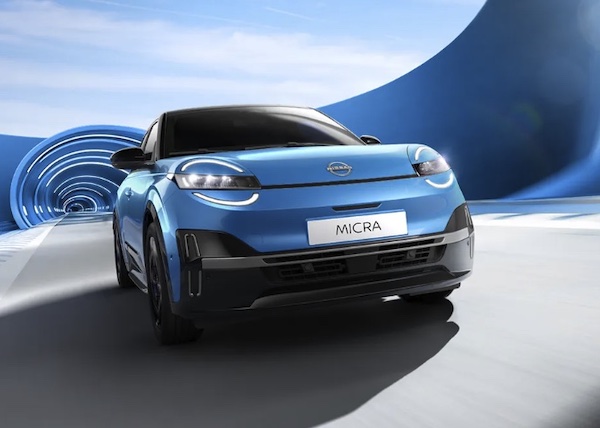
The All-Electric Nissan Micra (Hatchback): The Complete Electric Car Buying Guide For India
Electric Cars: The Basics For those of you new to zero-emission electric driving, we recommend a read of the following articles: Sign up to the newsletter The All-Electric Renault…
Read More
The MINI Electric (Hatchback): The Complete Electric Car Buying Guide For India
Electric Cars: The Basics For those of you new to zero-emission electric driving, we recommend a read of the following articles: Sign up to the newsletter The All-Electric Renault…
Read More
The All-Electric MG4 EV (Hatchback): The Complete Electric Car Buying Guide For India
Electric Cars: The Basics For those of you new to zero-emission electric driving, we recommend a read of the following articles: Sign up to the newsletter The All-Electric Renault…
Read More
The All-Electric BYD Dolphin (Hatchback): The Complete Electric Car Buying Guide For India
Electric Cars: The Basics For those of you new to zero-emission electric driving, we recommend a read of the following articles: Sign up to the newsletter The All-Electric Renault…
Read More
The All-Electric GWM Ora Funky Cat (Hatchback): The Complete Electric Car Buying Guide For India
Electric Cars: The Basics For those of you new to zero-emission electric driving, we recommend a read of the following articles: Sign up to the newsletter The All-Electric Renault…
Read More