Electric Cars: The Basics
For those of you new to zero-emission electric driving, we recommend a read of the following articles:
Different Types Of Electric Cars: The Complete Electric Car Buying Guide For India
Electric Cars: The Basics For those of you new to zero-emission electric driving, we recommend a read of the following articles: Sign up to the newsletter Introduction V2H Bidirectional…
Read More
What Is Regenerative Braking In Electric Cars: The Basics: The Complete Electric Car Buying Guide For India
Electric Cars: The Basics For those of you new to zero-emission electric driving, we recommend a read of the following articles: Sign up to the newsletter Introduction V2H Bidirectional…
Read More
The History Of Electric Cars and Vehicles: Are EVs A New Invention?
Electric Cars: The Basics For those of you new to zero-emission electric driving, we recommend a read of the following articles: Sign up to the newsletter Introduction V2H Bidirectional…
Read More
Electric Cars and Vehicles: Pros, Cons And Myths: The Complete Electric Car Buying Guide For India
Electric Cars: The Basics For those of you new to zero-emission electric driving, we recommend a read of the following articles: Sign up to the newsletter Introduction V2H Bidirectional…
Read More
Electric Cars Range: WLTP: The Basics: The Complete Electric Car Buying Guide For India
Electric Cars: The Basics For those of you new to zero-emission electric driving, we recommend a read of the following articles: Sign up to the newsletter Introduction V2H Bidirectional…
Read MoreSign up to the newsletter
Introduction V2H Bidirectional Charging
Electric cars offer many benefits, some related directly to driving and others not related to transportation. One such benefit is Vehicle-to-Home (V2H) bidirectional technology. Some of you may have come across, Vehicle-to-Grid (V2G), Vehicle-to-Load (V2L) and Vehicle-to-Vehicle (V2V) charging technology. Though these are all part of ‘bidirectional technology’, each has its own unique benefit and constraint.
Bidirectional charging allows a two-way electricity flow, while, unidirectional charging allows only a one-way flow. Though V2H has much in common with V2G, differences exist between the two technologies. In V2H, the energy used is for powering the home and is not fed back to the National Grid, as is the case with V2G.
Though the primary role of an electric vehicle (EV) is transportation, it is now clear that an electric vehicle can also be leveraged for a lot more than just driving, given the advantages of the onboard high-voltage EV battery. Over the past few years, as the electric driving market has developed, we have witnessed both, EV battery size and battery performance improve substantially, offering broader opportunities unique to electric vehicles (EVs).
A number of trials are underway in regards to Vehicle-to-Home (V2H) technology. One such example is Indra, an EV charging station manufacturer with experience in bidirectional electric car chargers. The company is currently running a V2H trial in the UK. Automotive manufacturers are also just as keen on developing V2H. In fact, the Ford Motor Company already offers V2H compatibility in its F-150 Lightning truck. According to Ford, the F-150 can power a home for up to 3 days. Expect many more EV manufacturers to follow suit. General Motors, the US based automotive manufacturer is currently running a V2H trial in the United States.
Bidirectional V2H charging allows an electric vehicle to be leveraged for powering a home. In Vehicle-to-Home charging, the high-voltage onboard EV battery becomes a battery energy storage systems (BESS), enabling energy to be stored, for use when the customer needs it. Decentralised EV battery storage units are expected to become an integral component of the National Energy Framework of a country. As the number of electric cars on our roads increase, the role of EV batteries will only become more pronounced and important to our day-to-day lives.
According to the IEA (International Energy Agency), “The Net Zero Emissions by 2050 Scenario sees an electric car fleet of over 300 million in 2030 and electric cars accounting for 60% of new car sales”. Put another way, the IEA expects at least 300 million EV batteries in use!
It is clear from our experience of vehicle ownership over the past many decades, that, the majority of the time vehicles are parked. In fact, some estimates suggest that cars are parked up to 95% of the time. Put another way, cars move only 5% of the time. Though we may see some improvement in capacity utilisation of vehicles in the coming years, as new services like ‘car sharing schemes’ develop further, we can still expect to see vehicles parked for the majority of time, in particular, in residential garages.
Vehicle-to-Home charging will allow this ‘downtime’ to be capitalised by EV owners to power their home from the energy stored in the EV battery, resulting in a number of benefits, to include, financial savings. In general, battery-electric vehicles (BEVs) have an onboard EV battery between 30 kWh to 100 kWh. Some of the recent introductions of pure electric cars offer an EV battery size larger than 100 kWh. But an average is 60 kWh.
An EV battery is no different from a home battery storage system, like the Tesla Powerwall. The Tesla Powerwall allows the stored solar energy to be used by the household reducing the reliance on grid sourced electricity, resulting in the family saving money and using clean and renewable energy. An EV battery is capable of doing just the same!
Given the average consumption of electricity for a household in India, a 60 kWh EV battery will have enough stored energy to power a home for up to five days, if not longer! Bottom-line, V2H is not only applicable for an emergency, like a power outage, but can be used on a day-to-day basis to power the home.
Though the V2H concept is simple to understand, its execution is not as straightforward, as a number of factors have to be considered, to include, the conversion of DC (direct current) to AC (alternating current). When charging an electric car at home, AC needs to be converted to DC. However, when discharging the onboard energy in an EV, DC has to be converted to AC.
For V2H to be possible, the bidirectional EV charger and the electric car have to be compatible with the V2H capability embedded. Also, some of the electrical infrastructure in the house will need to be updated to support V2H. Though V2H is at an early stage of deployment, expect it to become more widespread in the near future, as electric driving becomes more central to our narrative.
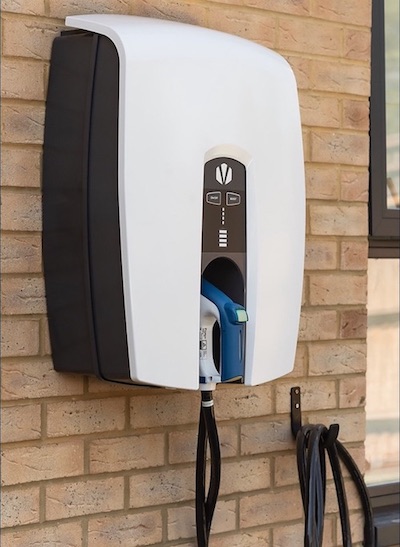
What Are The Benefits Of Vehicle-To-Home (V2H) Bidirectional Charging
| V2H: Benefits | |
|---|---|
| Increase self-sufficiency | V2H reduces the household dependence on sourcing grid power or from third party energy suppliers. Homeowners are becoming prosumers i.e. producers and consumers of self-generated electricity. The advantages are cheaper and cleaner power! |
| Increased financial savings | V2H allows the household to ‘call’ on cheaper power when tariff rates from the grid/ energy supplier are high, for example at peak hours. Most electric cars are charged overnight, when electric tariff prices are lower. V2H allows the use of the stored energy in the EV battery when electricity prices are higher. |
| V2H can be combined with on-site renewable energy generation | We can continue to expect a shift in the energy generation national framework in India, with distributed/ decentralised renewable energy generation becoming more widespread. Put another way, we can expect more homes in India to install on-site small-scale solar (PV panels) or wind generation to power the home. In effect, every home will become a mini-generator/utility. V2H will help leverage the benefits of on-site renewable energy generation a step further, by allowing cheap and clean solar power to stored in the EV battery to be consumed by the dwelling when grid electricity prices are higher. |
| Greener and cleaner | On-site renewable energy generation stored in the EV battery will reduce the use of ‘dirty power’ (fossil fuels) from the grid, further reducing the carbon footprint (carbon emissions) of the household and benefiting the environment. |
| Increasing the grid stability | With the increased use of electric vehicles in India, we can expect a significant change to the demand/ supply of power in relation to the grid, potentially reducing the stability of the national grid. By reducing the demand on the grid, in effect, homes help increase the overall stability of the power infrastructure in India. |
Electric Driving: Top 5 EV Jargons For India
Despite the increased visibility of EVs in India, the vocabulary (jargon) used in electric driving is still new to consumers. In fact, for many, it can seem daunting and confusing. We have therefore put below some of the more commonly used terms in the EV glossary, to give you an easier introduction to electric driving in India!
| EV Glossary: Top 5 | |
|---|---|
| Regenerative Braking: | Driving at all times requires braking. However, on more densely populated roads, the frequency and intensity of braking increases. Yes, it does result in longer journeys, but also reduces the efficiency of the vehicle. Regenerative braking is process of capturing energy otherwise wasted during braking. According to the rules of physics, energy cannot be destroyed, instead it simply transfers from one state to another. The same principle applies to braking. The kinetic energy that propels a car forward is usually displaced or wasted as heat. Regenerative braking captures this kinetic energy that in turns recharges an on board battery, increasing both efficiency and range. Cars like Toyota Prius, Jaguar I-PACE and Tesla Model 3 use regenerative braking. |
| What is Vehicle-to-Load (V2L) charging? | V2L charging is a bidirectional functionality allowing an electric vehicle (EV) to use its onboard high-voltage EV battery to charge or power devices/ appliances. It is also sometimes referred to as Vehicle-to-Device (V2D). Depending on the type of device/ appliance that needs to be charged or operated, V2L can be used while the EV is moving or parked. As an example, a laptop can be charged or used when an EV is parked or moving, while a lawn mower can only be charged or used when the EV is parked. V2L is a less complicated technology, compared to V2G, which requires interaction with the National Grid. V2L does not interact directly with the grid infrastructure. V2L cannot be used for powering your home or office. |
| What is Vehicle-to-Grid (V2G)? | V2G is an innovative bidirectional technology that allows the onboard EV battery to be charged and discharged i.e. electrical energy to be exported/ discharged from the onboard EV battery to the grid via a V2G compatible EV charger. It also allows for vital informational flow (data) to the grid. In effect, the V2G technology allows an EV battery to be used as a grid-connected energy storage unit. |
| One-Pedal Driving: | What is one-pedal driving? In one-pedal driving, the EV slows down or stops, when the pedal is released. One-pedal functionality reduce the need to use the brake pedal, for speed reduction or stopping. Of course, the brake pedal is still the best way to hold a vehicle in place at a complete stop. |
| WLTP (Worldwide Harmonised Light Vehicle Test Procedure): | In a bid to continue to improve the quality of realistic data released by automotive manufacturers, on economy, range and CO2 emissions, Europe has implemented its first phase for the WLTP program. The testing procedures under WLTP will result in reduced ranges for electric cars released under other previous testing regimes. The WLTP is seen as a significant improvement over the New European Driving Cycle (NEDC) designed in the 1980s and based on theoretical driving. The WLTP has been developed with the aim of becoming a global standard, so that cars can be easily compared between regions. |
While e-zoomed uses reasonable efforts to provide accurate and up-to-date information, some of the information provided is gathered from third parties and has not been independently verified by e-zoomed. While the information from the third party sources is believed to be reliable, no warranty, express or implied, is made by e-zoomed regarding the accuracy, adequacy, completeness, legality, reliability or usefulness of any information. This disclaimer applies to both isolated and aggregate uses of this information.
Related articles
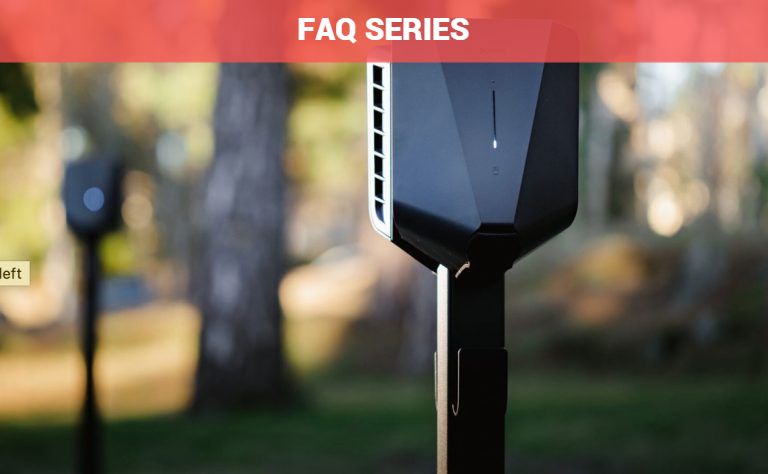
What Is A Smart EV Charger?: The Complete Electric Car Buying Guide For India
Electric Cars: The Basics For those of you new to zero-emission electric driving, we recommend a read of the following articles: Sign up to the newsletter Introduction V2H Bidirectional…
Read More
An Introduction To AC And DC Electric Car Charging: The Complete Electric Car Buying Guide For India
Electric Cars: The Basics For those of you new to zero-emission electric driving, we recommend a read of the following articles: Sign up to the newsletter Introduction V2H Bidirectional…
Read More
Battery Storage & Electric Car Charging: The Complete Electric Car Buying Guide For India
Electric Cars: The Basics For those of you new to zero-emission electric driving, we recommend a read of the following articles: Sign up to the newsletter Introduction V2H Bidirectional…
Read More
Electric Cars And Vehicle-To-Load Charging (V2L): The Benefits: The Complete Electric Car Buying Guide For India
Electric Cars: The Basics For those of you new to zero-emission electric driving, we recommend a read of the following articles: Sign up to the newsletter Introduction V2H Bidirectional…
Read More
Benefits Of Green Energy and Electric Driving : The Complete Electric Car Buying Guide For India
Electric Cars: The Basics For those of you new to zero-emission electric driving, we recommend a read of the following articles: Sign up to the newsletter Introduction V2H Bidirectional…
Read More