Electric Cars: The Basics
For those of you new to zero-emission electric driving, we recommend a read of the following articles:
What Is Regenerative Braking In Electric Cars: The Basics: The Complete Electric Car Buying Guide For India
Electric Cars: The Basics For those of you new to zero-emission electric driving, we recommend a read of the following articles: Sign up to the newsletter The Jaguar I-PACE…
Read More
The History Of Electric Cars and Vehicles: Are EVs A New Invention?
Electric Cars: The Basics For those of you new to zero-emission electric driving, we recommend a read of the following articles: Sign up to the newsletter The Jaguar I-PACE…
Read More
Different Types Of Electric Cars: The Complete Electric Car Buying Guide For India
Electric Cars: The Basics For those of you new to zero-emission electric driving, we recommend a read of the following articles: Sign up to the newsletter The Jaguar I-PACE…
Read More
Electric Cars and Vehicles: Pros, Cons And Myths: The Complete Electric Car Buying Guide For India
Electric Cars: The Basics For those of you new to zero-emission electric driving, we recommend a read of the following articles: Sign up to the newsletter The Jaguar I-PACE…
Read More
Electric Cars Range: WLTP: The Basics: The Complete Electric Car Buying Guide For India
Electric Cars: The Basics For those of you new to zero-emission electric driving, we recommend a read of the following articles: Sign up to the newsletter The Jaguar I-PACE…
Read MoreSign up to the newsletter
The Jaguar I-PACE Electric SUV
Jaguar Land Rover (JLR) Automotive PLC is a leading luxury vehicle manufacturer with a distinctive reputation of being British and iconic. However the automotive company is now owned by the leading Indian industrial conglomerate, the Tata Group. The blue chip, India headquartered company is a leading player in the automotive sector via its Tata Motors subsidiary based in Mumbai.
Tata acquired Jaguar and Land Rover from Ford Motor Company in 2008. JLR continues to conduct its operations from Coventry in the United Kingdom. Electric vehicles (EVs) in the company’s portfolio include:
- All-electric Jaguar I-PACE (BEV)
- Jaguar F-PACE Plug-In Hybrid (PHEV)
- Jaguar E-PACE Plug-In Hybrid (PHEV)
The Jaguar I-PACE battery-electric vehicle (BEV) was unveiled at the 2018 Geneva Motor Show. It is the first all-electric performance SUV from Jaguar Land Rover (JLR). Deliveries commenced in the second half of 2018. The model has won a number of awards, to include: the European Car of the Year, World Car of the Year, the Best Design and Best Green Car awards.
Though the Jaguar I-PACE was one of the first pure electric SUVs from a mainstream automotive manufacturer to challenge the dominance of Tesla electric cars, since 2018, many other car manufacturers have entered the zero-emission electric vehicle (EV) sector. Competition in the pure electric SUV segment is now fierce, with a number of EVs on offer at different price ranges. Jaguar competes in the premium e-SUV range, along with Audi and Mercedes.
The Jaguar electric SUV is available in one EV battery size (90 kWh), with a claimed emission-free range up to 446 km. The newest eco-friendly BEVs on the market will average between 500 to 600 km on a fully-charged EV battery! Of course, the real-world electric range will be lower, impacted by several factors. Some include: weather conditions, road surface, tyre size, speed, load, onboard services used etc. Expect the I-PACE to deliver an electric range closer to 380 km.
This is certainly a useful range for city and motorway driving. It is a widely known fact, in that, the average distance of a trip is a mere 25 km. An average vehicle will travel between 10k and 12k km per annum i.e. less than 33 km per day.
The Jaguar EV offers DC charging up to 100 kW DC. This is not bad, but it is not class-leading. Some of the newer pure electric cars offer even faster DC charging capability. Having said that, 100 kW DC is still very fast and can charge the I-PACE 10% – 80% in 47 minutes. Put another way, at 100 kW DC, the EV can achieve 125 km in 15 minutes. At 50 kW DC, the EV can achieve 100 km in 15 minutes.
Though the I-PACE incorporates a 3-phase 11 kW onboard AC charger, given that most homes in India are powered by single-phase, leveraging up to 11 kW will only be possible for those homes fortunate to have 3-phase power supply. Using a single-phase (7.4) kW dedicated EV charger, the I-PACE electric SUV can be fully charged in 12.75 hours (35 km of range from 60 minutes). For 11 kW AC charging, the EV can be fully charged in 9 hours (53 km of range from 60 minutes).
Though the EV can be charged using a domestic 3-PIN socket, we at e-zoomed discourage the use of a domestic socket to charge an electric vehicle (EV). It will take up to 48 hours to charge the e-SUV via a domestic socket! We recommend charging overnight, at home, when the electricity prices are lower.
The Jaguar BEV is practical and versatile without compromising on quality and comfort. The rear seats are comfortable for adults, with ample legroom and headroom and appropriate for most family requirements. The available boot space is 505 L. The EV offers a number of safety features, to include: driver condition monitor, traffic sign recognition and adaptive speed limiter, lane keep assist, rear camera and more. The e-SUV has a 10″ Pivi Pro infotainment system and interactive driver display.
The all-wheel drive Jaguar I-PACE can achieve 0-100 km/h in 4.5 seconds. The EV delivers a maximum power up to 400 PS and 696 Nm instant torque. The top speed is 200 km/h. Do keep in mind that the EV has an increased weight due to the onboard battery. The SUV also benefits from regenerative braking.
Bottom-line, electric driving is good for the environment and the wallet! The Jaguar I-PACE EV is available in India.
| PROS | CONS |
|---|---|
| Good looks and exterior styling | Expensive. Cheaper pure electric SUV alternatives available |
| Decent electric range | DC charging limited to 100 kW |
| 11 kW AC 3-phase onboard charger as standard | Limited visibility/ blind spots (rear) |
Gallery
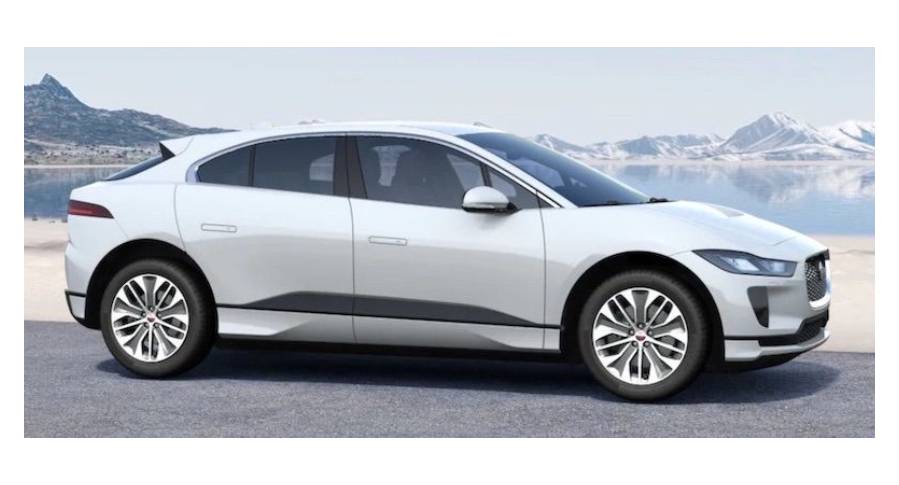


The All-Electric Jaguar I-PACE SUV (credit:JLR)
| At A Glance | |
|---|---|
| EV Type: | Battery-Electric Vehicle (BEV) |
| Vehicle Type: | SUV |
| Engine: | Electric |
| Available In India: | Yes |
| Trims (3 Options) |
|---|
| Jaguar I-PACE SE(from Rs 1.19 Crore) |
| Jaguar I-PACE Black(from Rs 1.19 Crore) |
| Jaguar I-PACE HSE(from Rs 1.24 Crore) |
| EV Battery & Emissions | |
|---|---|
| EV Battery Type: | Lithium-ion |
| EV Battery Capacity: | Available in one battery size: 90 kWh |
| Charging: | 100 kW DC Rapid Charging (10%-80%: 47 mins). Onboard charger 11 kW AC (0%-100%: 9 hrs) |
| Charge Port: | Type 2 |
| EV Cable Type: | Type 2 |
| Tailpipe Emissions: | 0g (CO2/km) |
| Battery Warranty: | 8 years or 160,000 km |
| Charging Times (Overview) | |
|---|---|
| Slow charging AC (3 kW – 3.6 kW): | 6 – 12 hours (dependent on size of EV battery & SOC) |
| Fast charging AC (7 kW – 22 kW): | 3 – 8 hours (dependent on size of EV battery & SoC) |
| Rapid charging AC (43 kW): | 0-80%: 20 mins to 60 mins (dependent on size of EV battery & SoC) |
| Rapid charging DC (50 kW+): | 0-80%: 20 mins to 60 mins (dependent on size of EV battery & SoC) |
| Ultra rapid charging DC (150 kW+): | 0-80% : 20 mins to 40 mins (dependent on size of EV battery & SoC) |
| Tesla Supercharger (120 kW – 250 kW): | 0-80%: up to 25 mins (dependent on size of EV battery & SoC) |
- Note 1: SoC: state of charge
| Dimensions | |
|---|---|
| Height (mm): | 1566 |
| Width (mm): | 2139 |
| Length (mm): | 4682 |
| Wheelbase (mm): | 2990 |
| Turning Circle (m): | 11.98 |
| Boot Capacity (L): | 505 |
| I-PACE EV400 | |
|---|---|
| EV Battery Capacity: | 90 kWh |
| Pure Electric Range (WLTP): | 446 km |
| Electric Energy Consumption (Wh/km): | 224.9 |
| Charging: | 100 kW DC Rapid Charging (10%-80%: 47 mins). Onboard charger 11 kW AC (0%-100%: 9 hrs) |
| Top Speed: | 200 km/h |
| 0-100 km/h: | 4.5 seconds |
| Drive: | All-wheel drive (AWD) |
| Electric Motor (kW): | 294 |
| Max Power (PS): | 400 |
| Torque (Nm): | 696 |
| Transmission: | Automatic |
| Seats: | 5 |
| Doors: | 5 |
| Driving Modes: | 3 (Comfort, Dynamics, Range Preservation) |
| Unladen Weight-EU (kg): | 2,208 |
| Colours: | 8 |
| NCAP Safety Rating: | Five-Star |
Vehicle-to-Grid (V2G): An Introduction
V2G is an innovative bidirectional technology that allows the onboard EV battery to be charged and discharged i.e. electrical energy to be exported/ discharged from the onboard EV battery to the grid via a V2G compatible EV charger. It also allows for vital informational flow (data) to the grid. In effect, the V2G technology allows an EV battery to be used as a grid-connected energy storage unit.
| Benefits: V2G | |
|---|---|
| Lower energy costs: | V2G can lower utility costs to include, lowering wholesale and retail energy costs |
| Improving the grid’s response ability: | V2G can improve the stability of the intra-day supply and demand needs, improving the grids ability to meet the needs of peak demand |
| Improving power quality: | V2G can improve power quality by controlling voltage and power factors |
| Increase resilience: | V2G can improve the resilience of the grid and electricity network in significantly adverse conditions |
| Increase use of renewable energy: | V2G enables an increase in the contribution of renewable energy to the national energy generation mix. The higher the contribution of RE, the greener the power supplied |
| Reduce cost of EV ownership: | V2G can reduce the cost of EV ownership by enabling EV owners to earn from exporting energy to the grid |
| Improves national energy security: | V2G can improve the national energy security of a country by reducing dependence on imported energy |
| Improve environmental impact: | V2G can improve the environmental impact of energy usage and transportation by reducing the dependence on fossil fuels |
While e-zoomed uses reasonable efforts to provide accurate and up-to-date information, some of the information provided is gathered from third parties and has not been independently verified by e-zoomed. While the information from the third party sources is believed to be reliable, no warranty, express or implied, is made by e-zoomed regarding the accuracy, adequacy, completeness, legality, reliability or usefulness of any information. This disclaimer applies to both isolated and aggregate uses of this information.
Related articles

The Jaguar E-PACE Plug-In Hybrid (SUV): The Complete Electric Car Buying Guide For India
Electric Cars: The Basics For those of you new to zero-emission electric driving, we recommend a read of the following articles: Sign up to the newsletter The Jaguar I-PACE…
Read More
The Jaguar F-PACE Plug-In Hybrid (SUV): The Complete Electric Car Buying Guide For India
Electric Cars: The Basics For those of you new to zero-emission electric driving, we recommend a read of the following articles: Sign up to the newsletter The Jaguar I-PACE…
Read More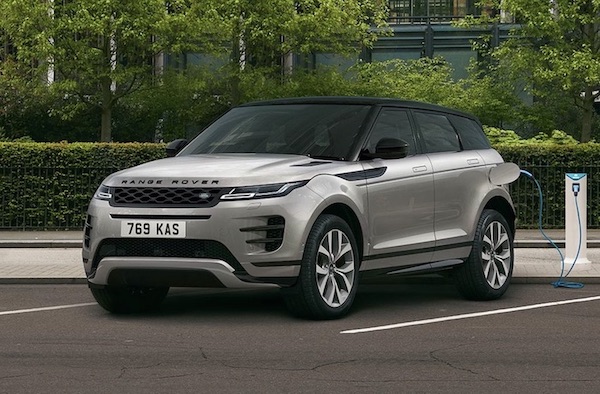
Land Rover Range Rover Evoque Plug-In Hybrid (SUV): The Complete Electric Car Buying Guide For India
Electric Cars: The Basics For those of you new to zero-emission electric driving, we recommend a read of the following articles: Sign up to the newsletter The Jaguar I-PACE…
Read More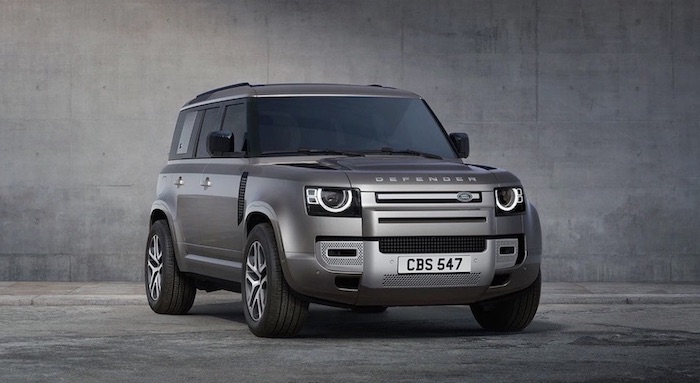
The Land Rover Defender 110 Plug-In Hybrid (SUV): The Complete Electric Car Buying Guide For India
Electric Cars: The Basics For those of you new to zero-emission electric driving, we recommend a read of the following articles: Sign up to the newsletter The Jaguar I-PACE…
Read More
The Vauxhall Grandland Plug-In Hybrid (SUV): The Complete Electric Car Buying Guide For India
Electric Cars: The Basics For those of you new to zero-emission electric driving, we recommend a read of the following articles: Sign up to the newsletter The Jaguar I-PACE…
Read More