Electric Cars: The Basics
For those of you new to zero-emission electric driving, we recommend a read of the following articles:
What Is Regenerative Braking In Electric Cars: The Basics: The Complete Electric Car Buying Guide For India
Electric Cars: The Basics For those of you new to zero-emission electric driving, we recommend a read of the following articles: Sign up to the newsletter The Jaguar E-PACE…
Read More
The History Of Electric Cars and Vehicles: Are EVs A New Invention?
Electric Cars: The Basics For those of you new to zero-emission electric driving, we recommend a read of the following articles: Sign up to the newsletter The Jaguar E-PACE…
Read More
Different Types Of Electric Cars: The Complete Electric Car Buying Guide For India
Electric Cars: The Basics For those of you new to zero-emission electric driving, we recommend a read of the following articles: Sign up to the newsletter The Jaguar E-PACE…
Read More
Electric Cars and Vehicles: Pros, Cons And Myths: The Complete Electric Car Buying Guide For India
Electric Cars: The Basics For those of you new to zero-emission electric driving, we recommend a read of the following articles: Sign up to the newsletter The Jaguar E-PACE…
Read More
Electric Cars Range: WLTP: The Basics: The Complete Electric Car Buying Guide For India
Electric Cars: The Basics For those of you new to zero-emission electric driving, we recommend a read of the following articles: Sign up to the newsletter The Jaguar E-PACE…
Read MoreSign up to the newsletter
The Jaguar E-PACE PHEV SUV
Jaguar Land Rover (JLR) Automotive PLC is a leading luxury vehicle manufacturer with a distinctive reputation of being British and iconic. However the automotive company is now owned by the leading Indian industrial conglomerate, the Tata Group. The blue chip, India headquartered company is a leading player in the automotive sector via its Tata Motors subsidiary based in Mumbai.
Tata acquired Jaguar and Land Rover from Ford Motor Company in 2008. JLR continues to conduct its operations from Coventry in the United Kingdom. Electric vehicles (EVs) in the company’s portfolio include:
- All-electric Jaguar I-PACE (BEV)
- Jaguar F-PACE Plug-In Hybrid (PHEV)
- Jaguar E-PACE Plug-In Hybrid (PHEV)
The conventional compact Jaguar E-PACE SUV was launched in 2017. Since then, Jaguar has also made this compact SUV available as a mild hybrid electric vehicle (MHEV) and a plug-in hybrid electric vehicle (PHEV).
If you like the Jaguar F-PACE PHEV, but are keen on a more ‘affordable’ Jaguar plug-in hybrid SUV, then the Jaguar E-PACE PHEV is worth considering. The shorter wheelbase (2681 mm) P300e AWD Automatic PHEV is markedly cheaper than the F-PACE PHEV.
The all-wheel drive Jaguar E-PACE PHEV has a 15 kWh onboard EV battery, with a WLTP certified emission-free electric range up to 60 km. Though the E-PACE PHEV range is considerably lower than the pure electric Jaguar I-PACE, the claimed 60 km EV range is still useful and helps save money.
2/3rd of motorists drive at an average 50 km or less a day. This should not come as a surprise, as the majority of our commutes are shorter distances. Even assuming a real-world electric range for the E-PACE PHEV closer to 50 km, the EV can be used on a regular basis on the electric mode, which is considerably lower than using petrol or diesel.
Moreover, the use of the EV mode will help improve the overall efficiency of the vehicle. The automotive manufacturer claims a fuel economy up to 2.0 l/100km, but expect the real-world fuel economy to be less efficient. Nevertheless, there is much to gain in improved fuel economy from a PHEV, compared to a conventional petrol or diesel variant.
To achieve the financial savings, charging the onboard EV battery on a regular basis is imperative. The Jaguar plug-in hybrid benefits from DC charging (not all PHEVs do!). You can charge up to 32 kW DC charging at public charging stations: 0% – 80% in 30 minutes. When charging at home, the EV can be charged via a 7 kW dedicated EV charger, overnight (1.4 hours to 80%, 2.2 hours to 100%), when the electricity tariff rates are more attractive.
The E-PACE P300e AWD PHEV combines a 1.5-litre petrol engine with an electric motor. Despite the additional weight of the onboard EV battery, the EV delivers good performance. The E-PACE plug-in achieves 0-100 km/h in 6.1 seconds (maximum power: 309 PS/ maximum torque: 540 Nm). The top speed of the e-SUV is 216 km/h.
Both the exterior and interior of the EV are compelling, completed to a high quality standard and technical specification. In terms of practicality, the boot size of the PHEV is smaller (494 L) than the petrol variant, due to the placement of the onboard EV battery. The headroom for rear seat passengers is limited due to the roofline. Moreover, rear view visibility is also impacted.
There are a host of driver assistance tools as standard, to include: adaptive cruise control, lane keep assist, traffic sign recognition, rear camera, front and rear parking aid etc. Also included as standard are: wireless device charging, wireless Apple CarPlay, voice control, ECO driving style assistant and more.
Jaguar offers a 8 years or 160,000 km warranty and the electric vehicle (EV) has been awarded a Five-Star NCAP Safety Rating. Bottom-line, electric driving is good for the environment and the wallet! The Jaguar PHEV is not available in India.
| PROS | CONS |
|---|---|
| Good looks and exterior styling | Expensive. Cheaper PHEV SUV alternatives available |
| Good infotainment system and high quality interior | Smaller boot space compared to rivals |
| Running on electric mode is cheap | Limited rear view visibility |
Gallery


The All-Electric Jaguar E-PACE PHEV SUV (credit:JLR)
| At A Glance | |
|---|---|
| EV Type: | Plug-In Hybrid Electric Vehicle (PHEV) |
| Vehicle Type: | SUV |
| Engine: | Electric/ Petrol |
| Available In India: | No |
| Trims (1 Option) |
|---|
| Jaguar E-PACE (from ₹ N/A) |
| EV Battery & Emissions | |
|---|---|
| EV Battery Type: | Lithium-ion |
| EV Battery Capacity: | Available in one battery size: 15 kWh |
| Charging: | 32 kW DC charging: 0-80%: 30 minutes. Onboard charger: 7 kW AC: 1.4 hrs to 80%, 2.2 hrs to 100% |
| Charge Port: | Type 2 |
| EV Cable Type: | Type 2 |
| Tailpipe Emissions: | 44g (CO2/km) |
| Battery Warranty: | 8 years or 160,000 km |
| Charging Times (Overview) | |
|---|---|
| Slow charging AC (3 kW – 3.6 kW): | 6 – 12 hours (dependent on size of EV battery & SOC) |
| Fast charging AC (7 kW – 22 kW): | 3 – 8 hours (dependent on size of EV battery & SoC) |
| Rapid charging AC (43 kW): | 0-80%: 20 mins to 60 mins (dependent on size of EV battery & SoC) |
| Rapid charging DC (50 kW+): | 0-80%: 20 mins to 60 mins (dependent on size of EV battery & SoC) |
| Ultra rapid charging DC (150 kW+): | 0-80% : 20 mins to 40 mins (dependent on size of EV battery & SoC) |
| Tesla Supercharger (120 kW – 250 kW): | 0-80%: up to 25 mins (dependent on size of EV battery & SoC) |
- Note 1: SoC: state of charge
| Dimensions | |
|---|---|
| Height (mm): | 1648 |
| Width (mm): | 2088 |
| Length (mm): | 4395 |
| Wheelbase (mm): | 2681 |
| Turning Circle (m): | 11.63 |
| Boot Space (L): | 494 |
| P300e AWD Automatic PHEV | |
|---|---|
| EV Battery Capacity: | 15 kWh |
| Pure Electric Range (WLTP): | 60 km |
| Electric Energy Consumption (Wh/km): | 209.6 |
| Fuel Consumption (l/100km): | 2.0 |
| Charging: | 32 kW DC charging: 0-80%: 30 minutes. Onboard charger: 7 kW AC: 1.4 hrs to 80%, 2.2 hrs to 100% |
| Top Speed: | 216 km/h |
| 0-100 km/h: | 6.1 seconds |
| Drive: | All-wheel drive (AWD) |
| Electric Motor (kW): | 80 |
| Max Power (PS): | 309 |
| Torque (Nm): | 540 |
| Transmission: | Automatic |
| Seats: | 5 |
| Doors: | 5 |
| Unladen Weight-EU (kg): | 2,173 |
| Colours: | 12 |
| NCAP Safety Rating: | Five-Star |
Electric Vehicles (EVs): Top Jargons
Despite the increased visibility of EVs in India, the vocabulary (jargon) used in electric driving is still new to consumers. In fact, for many, it can seem daunting and confusing. We have therefore put below some of the more commonly used terms in the EV glossary, to give you an easier introduction to electric driving in India!
| Glossary: Electric Vehicles (EVs) | |
|---|---|
| Battery-Electric Vehicle (BEV): | What is a BEV? A battery-electric vehicle (BEV) is more commonly referred to as a pure electric car. A BEV is ‘pure’, in that, the vehicle only uses electric power for propulsion i.e. a BEV does not have an internal combustion engine (ICE). It is easy to recognise these zero-tailpipe emission green cars, as these vehicles are silent (except for the artificial noise), and do not have a tailpipe! |
| Frunk: | What is a frunk? Though a frunk is not a new term, its availability is becoming more widespread with the development of electric vehicles (EVs). A frunk is a storage space/ compartment/ trunk in the front of a vehicle, rather than the rear. In the case of pure electric cars, given that these vehicles do not have an onboard internal combustion engine (ICE), there is space for a frunk. It is worth noting that a frunk is usually much smaller than a trunk, and in EVs, a good space for storing the EV cable. |
| Mild Hybrid Electric Vehicles (MHEVs): | What is a MHEV? Mild hybrids use both an internal combustion engine (ICE) and an electric motor. These cars are also known as ‘self-charging hybrids’. The vehicle uses regenerative braking (recuperated electric energy) to improve the fuel efficiency and to reduce tailpipe emissions (CO2 g/km). However, mild hybrids cannot be charged by an external power source, like an EV charger. |
| Plug-In Hybrid Electric Vehicle (PHEV): | What is a PHEV? Like a MHEV, a plug-in hybrid electric vehicle (PHEV) aims to increase the fuel efficiency and reduce tailpipe emissions. However there is much difference between a PHEV and a MHEV. A PHEV has a more powerful electric motor and a larger onboard EV battery. In a PHEV, the electric motor and onboard EV battery are also used to propel the electric vehicle. Moreover, a PHEV battery is charged by using an external power source, like a dedicated EV charger. |
| Regenerative Braking: | What is regenerative braking? Also known as regen braking or brake recuperation, regenerative braking is a process of capturing the wasted energy (during braking) from an electric vehicle, to be reused (recycled). In the case of electric driving, the ‘captured’ energy is reused to increase the pure electric range of the EV. |
While e-zoomed uses reasonable efforts to provide accurate and up-to-date information, some of the information provided is gathered from third parties and has not been independently verified by e-zoomed. While the information from the third party sources is believed to be reliable, no warranty, express or implied, is made by e-zoomed regarding the accuracy, adequacy, completeness, legality, reliability or usefulness of any information. This disclaimer applies to both isolated and aggregate uses of this information.
Related articles

The All-Electric Jaguar I-PACE (SUV): The Complete Electric Car Buying Guide For India
Electric Cars: The Basics For those of you new to zero-emission electric driving, we recommend a read of the following articles: Sign up to the newsletter The Jaguar E-PACE…
Read More
The Jaguar F-PACE Plug-In Hybrid (SUV): The Complete Electric Car Buying Guide For India
Electric Cars: The Basics For those of you new to zero-emission electric driving, we recommend a read of the following articles: Sign up to the newsletter The Jaguar E-PACE…
Read More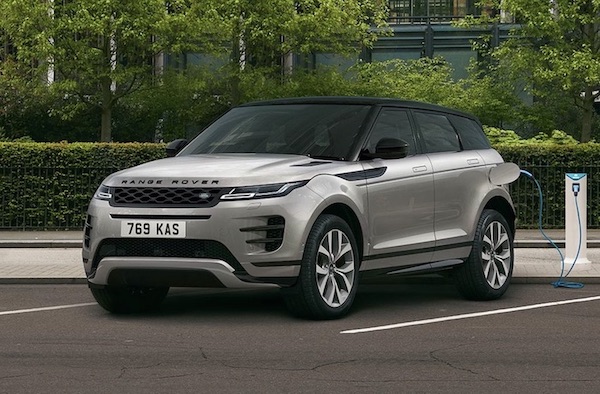
Land Rover Range Rover Evoque Plug-In Hybrid (SUV): The Complete Electric Car Buying Guide For India
Electric Cars: The Basics For those of you new to zero-emission electric driving, we recommend a read of the following articles: Sign up to the newsletter The Jaguar E-PACE…
Read More
The Land Rover Defender 110 Plug-In Hybrid (SUV): The Complete Electric Car Buying Guide For India
Electric Cars: The Basics For those of you new to zero-emission electric driving, we recommend a read of the following articles: Sign up to the newsletter The Jaguar E-PACE…
Read More
The Vauxhall Grandland Plug-In Hybrid (SUV): The Complete Electric Car Buying Guide For India
Electric Cars: The Basics For those of you new to zero-emission electric driving, we recommend a read of the following articles: Sign up to the newsletter The Jaguar E-PACE…
Read More