

Electric Cars: The Basics
For those of you new to zero-emission electric driving, we recommend a read of the following articles:
What Is Regenerative Braking In Electric Cars: The Basics: The Complete Electric Car Buying Guide For India
Electric Cars: The Basics For those of you new to zero-emission electric driving, we recommend a read of the following articles: Sign up to the newsletter The Toyota Prius…
Read More
The History Of Electric Cars and Vehicles: Are EVs A New Invention?
Electric Cars: The Basics For those of you new to zero-emission electric driving, we recommend a read of the following articles: Sign up to the newsletter The Toyota Prius…
Read More
Different Types Of Electric Cars: The Complete Electric Car Buying Guide For India
Electric Cars: The Basics For those of you new to zero-emission electric driving, we recommend a read of the following articles: Sign up to the newsletter The Toyota Prius…
Read More
Electric Cars and Vehicles: Pros, Cons And Myths: The Complete Electric Car Buying Guide For India
Electric Cars: The Basics For those of you new to zero-emission electric driving, we recommend a read of the following articles: Sign up to the newsletter The Toyota Prius…
Read More
Electric Cars Range: WLTP: The Basics: The Complete Electric Car Buying Guide For India
Electric Cars: The Basics For those of you new to zero-emission electric driving, we recommend a read of the following articles: Sign up to the newsletter The Toyota Prius…
Read MoreSign up to the newsletter
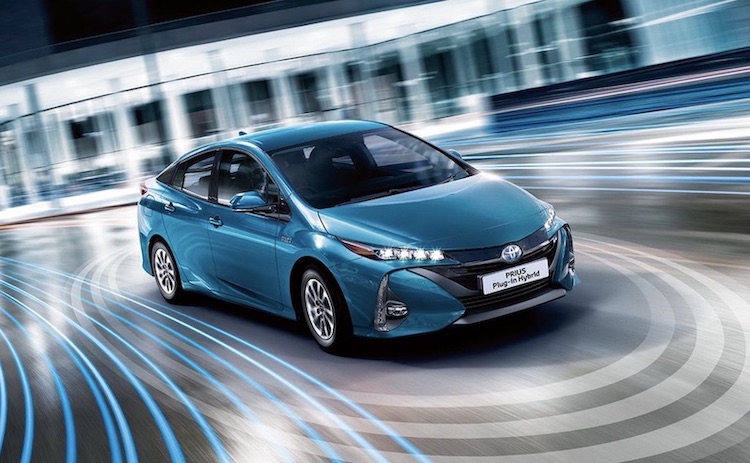
The Toyota Prius Hatchback PHEV
Toyota Motor Corporation, known simply as Toyota, is a leading global automotive company. The company is one of the largest automobile manufacturers in the world and is headquartered in Aichi, Japan. The company has already established an enviable track record for the development and marketing of environment friendly hybrid vehicles.
Toyota has one of the largest portfolios of mild hybrid electric vehicles (MHEVs), currently 11 hybrid models. It is also a world leader in fuel cell electric vehicles (FCEVs). The company currently has a portfolio of the following fully electric and plug-in electric vehicles:
- All-Electric Toyota bZ4X (BEV)
- Toyota Mirai Hydrogen Fuel Cell (FCEV)
- Toyota RAV4 Plug-In Hybrid (PHEV)
- Toyota Prius Plug-In Hybrid (PHEV)
Prius is a Latin word meaning ‘first’ and therefore quite appropriate for the Prius. The Toyota Prius has been manufactured since 1997. The Prius has built a global reputation as a ‘clean car’ since 2007 and has been acknowledged by the US Environment Protection Agency (EPA). The Prius is now sold in over 90 global markets, making it one of the most successful models for the Japanese automotive manufacturer. The production version of the Prius PHEV was released in 2012.
The Prius plug-in hybrid electric vehicle (PHEV) is an option worth considering for those keen to migrate to affordable lower emission electric driving. The Toyota Prius PHEV is certainly one of the more affordable options for electric driving. The hatchback has a 8.8 kWh onboard EV battery with a WLTP certified zero-emission electric range up to 50 km. Nothing earth shattering, but it is typical of many PHEVs in its class.
Of course, do keep in mind, that most of us average a mere 50 km a day and the majority of our trips are short commutes (school-runs, grocery store, high street, gym etc). Even adjusting for real-world driving conditions, the Toyota Prius plug-in hybrid will be able to deliver well over 40 km (emission-free). This is no doubt a useful EV range and financial savings can be achieved by driving on the e-mode.
Another benefit of driving on the electric mode, is the improved efficiency of the electric vehicle. Toyota claims a fuel economy up to 1.3 l/100km. Real-world fuel economy will be lower, but much improved from the conventional internal combustion engine (ICE) variant.
The PHEV is not DC charging compatible (most PHEVs are not) and has a 3.3 kW onboard charger. Again, quite typical for a PHEV in this price segment. We discourage the use of a 3-PIN domestic plug for charging and encourage charging via a dedicated home EV charger. The PHEV can be fully charged in just over 2 hours.
Taking advantage of the EV range will also require inculcating a habit of charging the EV on a regular basis, which again is as easy as charging a smartphone. A ‘topping up’ approach to charging will help improve the overall efficiency of the vehicle and also improve the long-term maintenance of the onboard EV battery. Toyota offers a class-leading 10 years or 240,000 km warranty.
The Prius PHEV pairs a 1.8-litre petrol engine with an electric motor, powered by the onboard EV battery. The performance of the EV will not get you dizzy, but given the emphasis on affordability and economy, the performance is acceptable. The Prius plug-in electric car can achieve 0-100 km/h in 11.1 seconds. Top speed is 160 km/h. In terms of practicality, the electric hatchback is not class-leading, but does get the job done. The EV offers 191 L cargo volume.
The EV has claimed tailpipe emissions up to 34g CO2/km. Again, substantially lower than the emissions of the conventional petrol variant. Bottom-line, electric driving is good for the environment and the wallet! The Toyota plug-in electric car is not available in India.
| PROS | CONS |
|---|---|
| Practical, tried and tested | Infotainment system needs updating |
| Cheap to run on electric mode | Not the most inspiring drive or design |
| Extended warranty | On board charger limited to 3.3 kW |
Gallery


The Toyota Prius PHEV Hatchback (credit: Toyota)
| At A Glance | |
|---|---|
| EV Type: | Plug-In Hybrid Electric Vehicle (PHEV) |
| Body Type: | Hatchback |
| Engine: | Petrol-Electric |
| Available In India: | No |
| Trims (1 Option) |
|---|
| Toyota Prius PHEV (Rs N/A) |
| EV Battery & Emissions | |
|---|---|
| EV Battery Type: | Lithium-ion |
| EV Battery Capacity: | Available in one battery size: 8.8 kWh |
| Charging: | DC charging not available. Onboard charger: 3.3 kW AC (0% – 100%: 2 hrs) |
| Charge Port: | Type 2 |
| EV Cable Type: | Type 2 |
| Tailpipe Emissions: | 28 – 34g (CO2/km) |
| Battery Warranty: | 10 years or 240,000 km |
| Charging Times (Overview) | |
|---|---|
| Slow charging AC (3 kW – 3.6 kW): | 6 – 12 hours (dependent on size of EV battery & SOC) |
| Fast charging AC (7 kW – 22 kW): | 3 – 8 hours (dependent on size of EV battery & SoC) |
| Rapid charging AC (43 kW): | 0-80%: 20 mins to 60 mins (dependent on size of EV battery & SoC) |
| Rapid charging DC (50 kW+): | 0-80%: 20 mins to 60 mins (dependent on size of EV battery & SoC) |
| Ultra rapid charging DC (150 kW+): | 0-80% : 20 mins to 40 mins (dependent on size of EV battery & SoC) |
| Tesla Supercharger (120 kW – 250 kW): | 0-80%: up to 25 mins (dependent on size of EV battery & SoC) |
- Note 1: SoC: state of charge
| Dimensions | |
|---|---|
| Height (mm): | 1470 |
| Width (mm): | 1760 |
| Length (mm): | 4645 |
| Wheelbase (mm): | 2700 |
| Turning Circle (m): | 10.2 |
| Boot Space (L): | 191 |
| 1.8 Plug-in Petrol Hybrid PHEV | |
|---|---|
| EV Battery Capacity: | 8.8 kWh |
| Pure Electric Range (WLTP): | 50 km |
| Electric Energy Consumption (Wh/km): | N/A |
| Fuel Consumption (l/100km): | 1.3 |
| Charging: | DC charging not available. Onboard charger: 3.3 kW AC (0% – 100%: 2 hrs) |
| Top Speed: | 160 km/h |
| 0-100 km/h: | 11.1 seconds |
| Drive: | Front-wheel drive (FWD) |
| Max Power (hp): | 122 |
| Torque (Nm): | 142 |
| Transmission: | Automatic |
| Seats: | 5 |
| Doors: | 5 |
| Kerb Weight (kg): | 1,530 – 1,550 |
| Colours: | 6 |
| NCAP Safety Rating: | Five-Star |
Buying EV Cables: Top 3 Tips
When it comes to electric car charging cables, an astute electric car owner will focus on quality and performance over cheapest price. We encourage all EV owners to adopt a similar approach!
| EV Cables: Top 3 Tips | |
|---|---|
| Never buy cheap: | Not all EV charging cables are the same. It is simply false economy to try and save a few Rupees on buying a cheaper cable, when in all probability the EV you own is worth over Rs 50 Lakhs! Nor are we suggesting you buy the most expensive. There is always a balance between price and quality, and electric car charging cables are no different. The last thing you need is to have the EV charging cable stop working when you most need it. EV cables on the e-zoomed Electric Living Shop are made from TPU (Thermoplastic Polyurethane), a higher quality material that is extremely flexible, durable and smooth to touch. |
| The shortest length is never the best choice: | A number of customers seek the shortest length (2m EV charging cable) because it is the cheapest. However a 2m EV cable is limited in practicality and usually not a good long-term investment. Most charging destinations (home or public) require an EV charging cable that is longer than 2m. In our experience, most customers buy EV charging cables between 5m and 25m. We recommend at least a 5m charging cable. It is long enough to meet most charging needs, but compact enough to be carried and put away easily! Of course, a number of customers need even longer EV cables. |
| A lower technical specification EV charging cable Is never the best choice: | As above, a number of electric car owners seek to buy a 16 amp (single-phase) EV charging cable, instead of a 32 amp (single-phase) EV charging cable. The reason is simple. The 16 amp is marginally cheaper! However, a 16 amp charging cable charges at 3.6 kW, a much slower rate to a 32 amp EV charging cable that charges at 7.2 kW. An ampere is the unit for measuring electricity. The accepted standard unit used for measuring how fast an electric current flows is an example of an ampere. The reason why customers in India buy a single-phase EV cable, is because most homes in India are powered by single-phase power supply. Also important to asses is the IP Rating for the EV cable. Not all EV cables have the same IP Rating. Of course, warranty is also important. Most EV cables are sold with a warranty of at least 2 years! |
While e-zoomed uses reasonable efforts to provide accurate and up-to-date information, some of the information provided is gathered from third parties and has not been independently verified by e-zoomed. While the information from the third party sources is believed to be reliable, no warranty, express or implied, is made by e-zoomed regarding the accuracy, adequacy, completeness, legality, reliability or usefulness of any information. This disclaimer applies to both isolated and aggregate uses of this information.
Related articles

The All-Electric MG4 EV (Hatchback): The Complete Electric Car Buying Guide For India
Electric Cars: The Basics For those of you new to zero-emission electric driving, we recommend a read of the following articles: Sign up to the newsletter The Toyota Prius…
Read More
The MINI Electric (Hatchback): The Complete Electric Car Buying Guide For India
Electric Cars: The Basics For those of you new to zero-emission electric driving, we recommend a read of the following articles: Sign up to the newsletter The Toyota Prius…
Read More
The All-Electric Abarth 500e Scorpionissima (Hatchback): The Complete Electric Car Buying Guide For India
Electric Cars: The Basics For those of you new to zero-emission electric driving, we recommend a read of the following articles: Sign up to the newsletter The Toyota Prius…
Read More
The All-Electric BYD Dolphin (Hatchback): The Complete Electric Car Buying Guide For India
Electric Cars: The Basics For those of you new to zero-emission electric driving, we recommend a read of the following articles: Sign up to the newsletter The Toyota Prius…
Read More
The All-Electric GWM Ora Funky Cat (Hatchback): The Complete Electric Car Buying Guide For India
Electric Cars: The Basics For those of you new to zero-emission electric driving, we recommend a read of the following articles: Sign up to the newsletter The Toyota Prius…
Read More