

Electric Cars: The Basics
For those of you new to zero-emission electric driving, we recommend a read of the following articles:
What Is Regenerative Braking In Electric Cars: The Basics: The Complete Electric Car Buying Guide For India
Electric Cars: The Basics For those of you new to zero-emission electric driving, we recommend a read of the following articles: Sign up to the newsletter The All-Electric MG…
Read More
The History Of Electric Cars and Vehicles: Are EVs A New Invention?
Electric Cars: The Basics For those of you new to zero-emission electric driving, we recommend a read of the following articles: Sign up to the newsletter The All-Electric MG…
Read More
Different Types Of Electric Cars: The Complete Electric Car Buying Guide For India
Electric Cars: The Basics For those of you new to zero-emission electric driving, we recommend a read of the following articles: Sign up to the newsletter The All-Electric MG…
Read More
Electric Cars and Vehicles: Pros, Cons And Myths: The Complete Electric Car Buying Guide For India
Electric Cars: The Basics For those of you new to zero-emission electric driving, we recommend a read of the following articles: Sign up to the newsletter The All-Electric MG…
Read More
Electric Cars Range: WLTP: The Basics: The Complete Electric Car Buying Guide For India
Electric Cars: The Basics For those of you new to zero-emission electric driving, we recommend a read of the following articles: Sign up to the newsletter The All-Electric MG…
Read MoreSign up to the newsletter
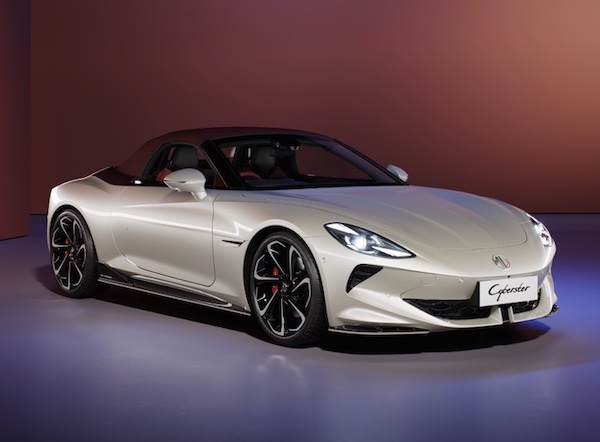
The All-Electric MG Cyberster Roadster
MG Motor UK Limited (MG Motor), is a UK headquartered British automotive manufacturer, now owned by the Chinese automotive company, SAIC Motor (December 2007). SAIC is owned by the Chinese government and headquartered in Shanghai. MG was owned by MG Rover up to 2005, before the collapse of the company. The history of the company can be traced back to 1924 to its founding in Oxford (UK). MG was founded by Cecil Kimber, a motor car designer. The automotive company currently has the following battery-electric vehicles (BEVs) and plug-in hybrid electric vehicles (PHEVs):
- All-electric MG ZS EV (BEV)
- All-electric MG4 EV (BEV)
- All-electric MG5 EV (BEV)
- All-electric MG Cyberster (BEV)
- MG HS Plug-In Hybrid (PHEV)
Those seeking the best of driving performance in an environmentally-friendly car, an all-electric roadster is worth considering! A roadster battery-electric vehicle (BEV) is able to deliver, both, instant torque and zero-tail pipe emissions. The pure electric MG Cyberster Roadster is one such example. Do keep in mind that an internal combustion engine (ICE) petrol or diesel vehicle cannot deliver instant torque, nor zero-tailpipe emissions.
The high-performance two-seat Cyberster sports electric car can achieve 0-100 km/h in 5.0 seconds for the single-motor (RWD) variant (maximum power: 340 PS/ Torque: 475 Nm). If you are seeking even more performance, the dual-motor (AWD) variant can achieve 0-100 km/h in 3.2 seconds (maximum power: 503 PS/ Torque: 725 Nm). The top speed of the BEV is 200 km/h. By way of comparison, the all-electric Lotus Emeya saloon can achieve 0-100 km/h in 2.78 seconds with a 256 km/h top speed!
The MG Cyberster concept car was unveiled in March 2021. The 2-door coupé has been inspired by the MGB Roadster, also a two-door sports car manufactured between 1962 and 1980. According to MG, “Our intention was to create a completely new roadster ready for a new generation of sportscar drivers and which opens a bold and compelling new chapter for MG.” The new chapter has been warmly welcomed by both, critics and consumers alike.
Though a ‘roadster’ has become more varied in appearance and style over the years, in general, it is a sportier two-seater vehicle, usually without weather protection. More recently, convertibles have also been referred to as a roadster. A pre-production Cyberster was revealed in April 2023 and also made an appearance at the 2023 Goodwood Festival of Speed (UK).
The Cyberster roadster is available in one EV battery size: 77 kWh (usable: 74.4 kWh). We believe an appropriate battery capacity, achieving a good balance between electric range, performance and the weight of the onboard lithium-ion battery. MG claims a range up to 507 km (WLTP) for the single-motor RWD variant, while the higher-performance dual-motor AWD variant has a claimed 443 km (WLTP) range. Even adjusting for real-world driving conditions, the BEV offers more than adequate real-world practical e-range. For the entry-level single-motor variant, expect a real-world range up to 430 km and for the all-wheel drive (AWD) variant, 380 km will be realistic.
For those new to electric cars, a number of factors can impact the range of an electric car. Some of these factors include: driving profile, speed, payload, road conditions, weather, temperature, tyre size, regenerative braking profile and more. Though WLTP is a more accurate methodology for assessing range compared to the older NEDC testing profile, do expect some deviation between the WLTP published electric range and the real-world electric range. Having said that, it is not always the case there is a deviation!
It is disappointing, in that, the Cyberster EV incorporates DC rapid charging capability up to only 144 kW DC. Given the price tag, and the general DC charging capability of other premium priced BEVs, a higher DC charging capability would have been more appropriate. In any case, the all-electric MG Cyberster can achieve 10%-80%: 38 mins via a 150 kW DC rapid charger.
For home charging, the EV has a single-phase (7 kW) AC onboard charger. Given that most homes in Ireland are powered by single-phase power supply, this is appropriate. The electric car can be charged 0%-100% in 10 hours 30 minutes using a smart EV charger like myenergi zappi. We encourage a topping up approach to charging an electric car, this way, there is always electric miles available, and a topping up approach is better for the long-term health of the EV battery.
We also encourage the use of a solar compatible smart EV charger, along with an on-site PV system and energy storage system. It is the best way to further lower the costs of driving an electric car, and further reducing the vehicles life-cycle emissions footprint.
The manufacturer offers a decent level of equipment, features and technology, as standard. Some of these include: fully electric fabric hood, electric scissor doors, wraparound 3-screen cockpit (10.25″ driver display & 2 x 7″ auxiliary screens), 7″ central colour touchscreen, Apple CarPlay, Android Auto, vehicle-to-load (V2L), blind spot detection, rear cross traffic alert, lane change assist, intelligent speed assist, lane keep assist, pedestrian warning and more. The EV has not yet been awarded a NCAP Safety Rating. Having said that, the MG4 EV uses the same platform, and it was awarded a Five-Star NCAP Rating. We would expect no different for the Cyberster!
In terms of practicality, well, it is a roadster! One is not buying this high performance BEV for practicality. The EV has a 249 L boot, just enough space for items for a weekend getaway! As expected there is no frunk. The EV is 4.53m long, with a 1.32m height. In comparison, the Lotus Emeya is 5.13m long with a 1.45m height. As for exterior styling, no doubt that the electric car is attractive. Don’t forget the electric operated scissor doors when you want to make a statement!
Bottom-line, electric driving is good for the environment and the wallet!
| PROS | CONS |
|---|---|
| High performance, sporty and practical electric range | DC charging limited to 144 kW DC |
| Good level of equipment/ technology, to include V2L as standard | Warranty not as compelling as some competitors |
| Relatively affordable pricing | Scissor doors may not always be practical |
Gallery
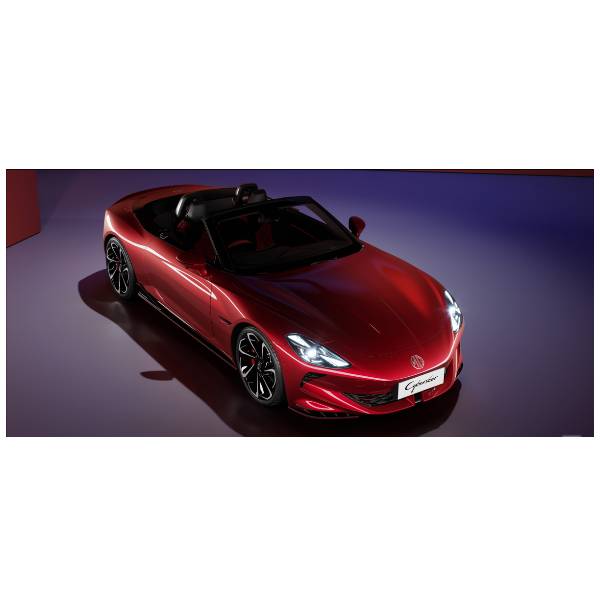
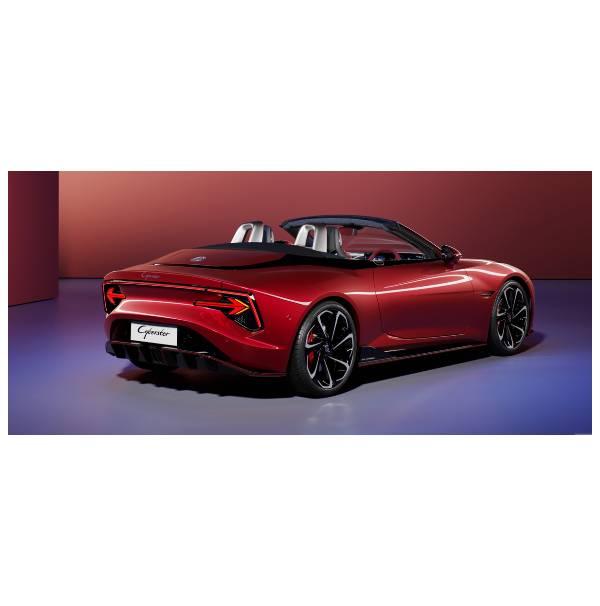
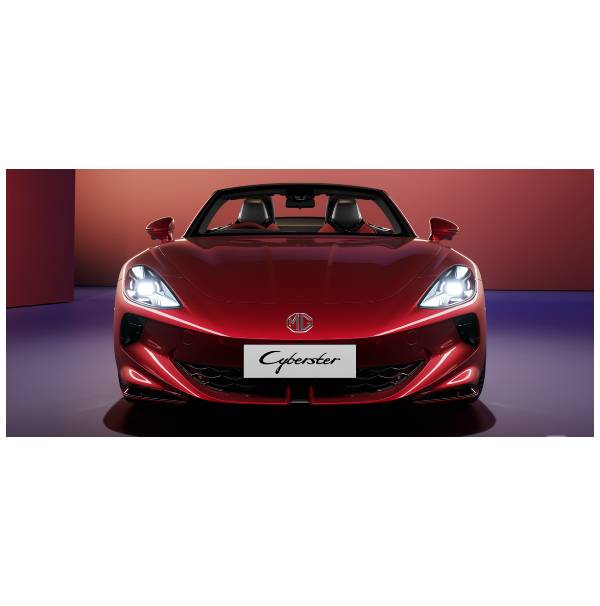
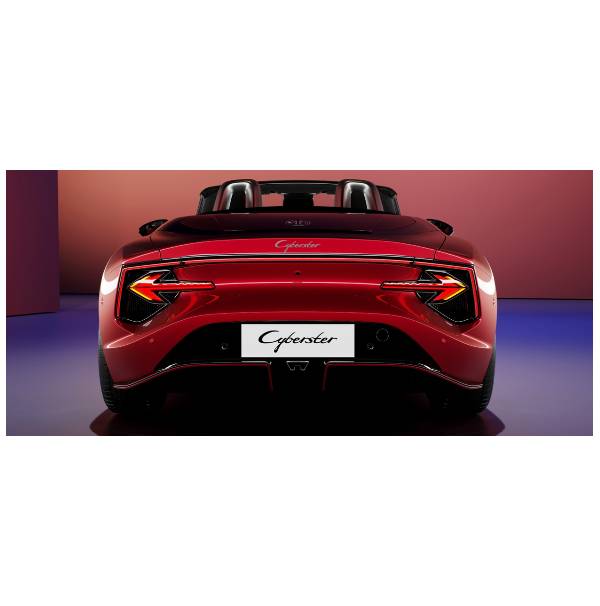
The All-Electric MG Cyberster Roadster (credit: MG)
| At A Glance | |
|---|---|
| EV Type: | Battery-Electric Vehicle (BEV) |
| Vehicle Type: | Roadster |
| Engine: | Electric |
| Available In India: | No |
| Variants (1 Option) |
|---|
| MG Cyberster (from ₹ N/A) |
| EV Battery & Emissions | |
|---|---|
| EV Battery Type: | Lithium-ion |
| EV Battery Capacity: | Available in one battery size: 77 kWh |
| Charging: | 144 kW DC Rapid Charging (10%-80%: 38 mins). Onboard charger: 7 kW AC (0%-100%: 10 hrs 30 mins) |
| Charge Port: | Type 2 |
| EV Cable Type: | Type 2 |
| Tailpipe Emissions: | 0g (CO2/km) |
| EV Battery Warranty: | 7 years or 160,000 km |
| Charging Times (Overview) | |
|---|---|
| Slow charging AC (3 kW – 3.6 kW): | 6 – 12 hours (dependent on size of EV battery & SOC) |
| Fast charging AC (7 kW – 22 kW): | 3 – 8 hours (dependent on size of EV battery & SoC) |
| Rapid charging AC (43 kW): | 0-80%: 20 mins to 60 mins (dependent on size of EV battery & SoC) |
| Rapid charging DC (50 kW+): | 0-80%: 20 mins to 60 mins (dependent on size of EV battery & SoC) |
| Ultra rapid charging DC (150 kW+): | 0-80% : 20 mins to 40 mins (dependent on size of EV battery & SoC) |
| Tesla Supercharger (120 kW – 250 kW): | 0-80%: up to 25 mins (dependent on size of EV battery & SoC) |
- Note 1: SoC: state of charge
| Dimensions | |
|---|---|
| Height (mm): | 1329 |
| Width (mm): | 1913 |
| Length (mm): | 4535 |
| Wheelbase (mm): | 2690 |
| Turning Circle (m): | N/A |
| Boot Space (L): | 249 |
| Frunk (L): | N/A |
| MG CYBERSTER SINGLE MOTOR | |
|---|---|
| EV Battery Capacity: | 77 kWh (usable: 74.4 kWh) |
| Pure Electric Range (WLTP): | 507 km |
| Electric Energy Consumption (kWh/100km): | N/A |
| Charging: | 144 kW Rapid Charging (10%-80%: 38 mins). Onboard charger: 7 kW AC (0%-100%: 10 hrs 30 mins) |
| Top Speed: | 195 km/h |
| 0-100 km/h: | 5.0 seconds |
| Drive: | Rear-wheel drive (RWD) |
| Electric Motor (kW): | 250 |
| Maximum Power (PS): | 340 |
| Torque (Nm): | 475 |
| Transmission: | Automatic |
| Seats: | 2 |
| Doors: | 2 |
| Gross Weight (kg): | 2,110 |
| Towing Capacity (Braked/Unbraked)/ (kg): | N/A |
| Colours: | 5 |
| NCAP Safety Rating: | N/A |
| MG CYBERSTER DUAL MOTOR | |
|---|---|
| EV Battery Capacity: | 77 kWh (usable: 74.4 kWh) |
| Pure Electric Range (WLTP): | 443 km |
| Electric Energy Consumption (kWh/100km): | N/A |
| Charging: | 144 kW Rapid Charging (10%-80%: 38 mins). Onboard charger: 7 kW AC (0%-100%: 10 hrs 30 mins) |
| Top Speed: | 200 km/h |
| 0-100 km/h: | 3.2 seconds |
| Drive: | All-wheel drive (AWD) |
| Electric Motor (kW): | 375 |
| Maximum Power (PS): | 503 |
| Torque (Nm): | 725 |
| Transmission: | Automatic |
| Seats: | 2 |
| Doors: | 2 |
| Gross Weight (kg): | 2,210 |
| Towing Capacity (Braked/Unbraked)/ (kg): | N/A |
| Colours: | 5 |
| NCAP Safety Rating: | N/A |
Electric Vehicles (EVs): Top Jargons
Despite the increased visibility of EVs in India, the vocabulary (jargon) used in electric driving is still new to consumers. In fact, for many, it can seem daunting and confusing. We have therefore put below some of the more commonly used terms in the EV glossary, to give you an easier introduction to electric driving in India!
| Glossary: Electric Vehicles (EVs) | |
|---|---|
| Battery-Electric Vehicle (BEV): | What is a BEV? A battery-electric vehicle (BEV) is more commonly referred to as a pure electric car. A BEV is ‘pure’, in that, the vehicle only uses electric power for propulsion i.e. a BEV does not have an internal combustion engine (ICE). It is easy to recognise these zero-tailpipe emission green cars, as these vehicles are silent (except for the artificial noise), and do not have a tailpipe! |
| Frunk: | What is a frunk? Though a frunk is not a new term, its availability is becoming more widespread with the development of electric vehicles (EVs). A frunk is a storage space/ compartment/ trunk in the front of a vehicle, rather than the rear. In the case of pure electric cars, given that these vehicles do not have an onboard internal combustion engine (ICE), there is space for a frunk. It is worth noting that a frunk is usually much smaller than a trunk, and in EVs, a good space for storing the EV cable. |
| Mild Hybrid Electric Vehicles (MHEVs): | What is a MHEV? Mild hybrids use both an internal combustion engine (ICE) and an electric motor. These cars are also known as ‘self-charging hybrids’. The vehicle uses regenerative braking (recuperated electric energy) to improve the fuel efficiency and to reduce tailpipe emissions (CO2 g/km). However, mild hybrids cannot be charged by an external power source, like an EV charger. |
| Plug-In Hybrid Electric Vehicle (PHEV): | What is a PHEV? Like a MHEV, a plug-in hybrid electric vehicle (PHEV) aims to increase the fuel efficiency and reduce tailpipe emissions. However there is much difference between a PHEV and a MHEV. A PHEV has a more powerful electric motor and a larger onboard EV battery. In a PHEV, the electric motor and onboard EV battery are also used to propel the electric vehicle. Moreover, a PHEV battery is charged by using an external power source, like a dedicated EV charger. |
| Regenerative Braking: | What is regenerative braking? Also known as regen braking or brake recuperation, regenerative braking is a process of capturing the wasted energy (during braking) from an electric vehicle, to be reused (recycled). In the case of electric driving, the ‘captured’ energy is reused to increase the pure electric range of the EV. |
While e-zoomed uses reasonable efforts to provide accurate and up-to-date information, some of the information provided is gathered from third parties and has not been independently verified by e-zoomed. While the information from the third party sources is believed to be reliable, no warranty, express or implied, is made by e-zoomed regarding the accuracy, adequacy, completeness, legality, reliability or usefulness of any information. This disclaimer applies to both isolated and aggregate uses of this information.
Related articles

The All-Electric Lotus Eletre (Hyper-SUV): The Complete Electric Car Buying Guide For India
Electric Cars: The Basics For those of you new to zero-emission electric driving, we recommend a read of the following articles: Sign up to the newsletter The All-Electric MG…
Read More
The All-Electric Lotus Emeya Hyper-GT (Saloon): The Complete Electric Car Buying Guide For India
Electric Cars: The Basics For those of you new to zero-emission electric driving, we recommend a read of the following articles: Sign up to the newsletter The All-Electric MG…
Read More
The All-Electric Lotus Evija Hypercar (Coupé): The Complete Electric Car Buying Guide For India
Electric Cars: The Basics For those of you new to zero-emission electric driving, we recommend a read of the following articles: Sign up to the newsletter The All-Electric MG…
Read More
The All-Electric Polestar 4 (SUV): The Complete Electric Car Buying Guide For India
Electric Cars: The Basics For those of you new to zero-emission electric driving, we recommend a read of the following articles: Sign up to the newsletter The All-Electric MG…
Read More
The Tesla Roadster Electric Car (Roadster): The Complete Electric Car Buying Guide For India
Electric Cars: The Basics For those of you new to zero-emission electric driving, we recommend a read of the following articles: Sign up to the newsletter The All-Electric MG…
Read More