Electric Cars: The Basics
For those of you new to zero-emission electric driving, we recommend a read of the following articles:
What Is Regenerative Braking In Electric Cars: The Basics: The Complete Electric Car Buying Guide For India
Electric Cars: The Basics For those of you new to zero-emission electric driving, we recommend a read of the following articles: Sign up to the newsletter The Volvo V60…
Read More
The History Of Electric Cars and Vehicles: Are EVs A New Invention?
Electric Cars: The Basics For those of you new to zero-emission electric driving, we recommend a read of the following articles: Sign up to the newsletter The Volvo V60…
Read More
Different Types Of Electric Cars: The Complete Electric Car Buying Guide For India
Electric Cars: The Basics For those of you new to zero-emission electric driving, we recommend a read of the following articles: Sign up to the newsletter The Volvo V60…
Read More
Electric Cars and Vehicles: Pros, Cons And Myths: The Complete Electric Car Buying Guide For India
Electric Cars: The Basics For those of you new to zero-emission electric driving, we recommend a read of the following articles: Sign up to the newsletter The Volvo V60…
Read More
Electric Cars Range: WLTP: The Basics: The Complete Electric Car Buying Guide For India
Electric Cars: The Basics For those of you new to zero-emission electric driving, we recommend a read of the following articles: Sign up to the newsletter The Volvo V60…
Read MoreSign up to the newsletter
The Volvo V60 Recharge Plug-In Hybrid Estate
Sweden has created its fair share of global brands, but none with a reputation as good as Volvo Cars, when it comes to passenger safety. Volvo cars is an automotive manufacturer based in Gothenburg, Sweden. The Volvo Group has a long history of success and was established in 1927. The Volvo electric vehicle (EV) current portfolio includes:
- All-electric Volvo C40 Recharge (BEV)
- All-electric Volvo EX90 (BEV)
- All-electric Volvo EX30 (BEV)
- All-electric Volvo ES90 (BEV)
- All-electric Volvo XC40 Recharge (BEV)
- Volvo XC40 Recharge Plug-in Hybrid (PHEV)
- Volvo XC60 Recharge Plug-in Hybrid (PHEV)
- Volvo XC90 Recharge Plug-in Hybrid (PHEV)
- Volvo S60 Recharge Plug-in Hybrid (PHEV)
- Volvo S90 Recharge Plug-in Hybrid (PHEV)
- Volvo V60 Recharge Plug-in Hybrid (PHEV)
- Volvo V90 Recharge Plug-in Hybrid (PHEV)
The Volvo V60 conventional petrol and diesel variants have been available since 2010. The second generation V60 estate was launched in 2016. As with other Volvo models, the company has also introduced the V60 as a lower emission plug-in hybrid electric vehicle (PHEV).
The update Volvo V60 Recharge PHEV has much to offer families and company-car drivers seeking a practical and spacious electric vehicle (EV). The upgrade of the onboard EV battery to 18.8 kWh has positioned this estate electric car, as one of the few EVs capable of delivering a real-world emission-free electric range close to 80 km.
Volvo claims a pure electric range up to 91 km (WLTP certified), however, the real-world EV range will be closer to 75 km. Nevertheless, it is an impressive and certainly very useful EV range to reduce the cost of motoring. Do keep in mind that driving an electric car is far cheaper than driving a conventional petrol or engine car. There are real financial savings to be gained in electric driving.
Moreover, using the electric mode, also improves the overall efficiency of the vehicle. Volvo claims a fuel economy up to 1.0 l/100km for the estate PHEV. Of course, the real-world fuel economy will be less efficient, but far improved compared to the fuel economy of the conventional petrol variant. The EV also benefits from regenerative braking to improve range and vehicle efficiency.
Despite the updates, it is disappointing to note that the PHEV does not offer DC charging. The EV has a 3.6 kW onboard charger. The Volvo electric vehicle can be charged 0% to 100% via a dedicated EV charging station in 5 hours. We at e-zoomed recommend a ‘topping up’ approach to EV charging. This way, EV range is available to use and regular charging also improves the long-term maintenance of the onboard EV battery. Volvo offers a 8 years or 160,000 km warranty.
Despite the placement of the onboard EV battery, practicality has not been compromised, in comparison to the conventional petrol variant. The V60 plug-in offers a 519 L boot and ample space for passengers.
The interior has been finished to a high standard and offers leather free upholstery and recycled carpets. It also offers a generous level of standard equipment, safety features and technology. These include: google built in, 360° camera, BLIS and cross traffic alert, keyless entry and keyless start, advanced air purifier, intelligent safety assistance and more.
Also improved are the tailpipe emissions for the plug-in hybrid electric vehicle. The V60 PHEV has tailpipe emission up to 18g CO2/km, benefiting the local air quality. The conventional petrol variant has tailpipe emissions up to 142g CO2/km.
The all-wheel drive V60 plug-in electric estate car combines the T6 2.0-litre powertrain with an electric motor. The EV can achieve 0-100 km/h in 5.2 seconds (350 hp). The top speed of the EV is 180 km/h. Bottom-line, electric driving is good for the environment and the wallet! The plug-in hybrid is not available in India.
| PROS | CONS |
|---|---|
| Good emission-free electric range | Despite the price tag, DC charging unavailable |
| High interior quality with good level of standard equipment | Onboard charger limited to 3.6 kW |
| Attractive exterior styling | A relatively expensive plug-in hybrid estate car |
Gallery
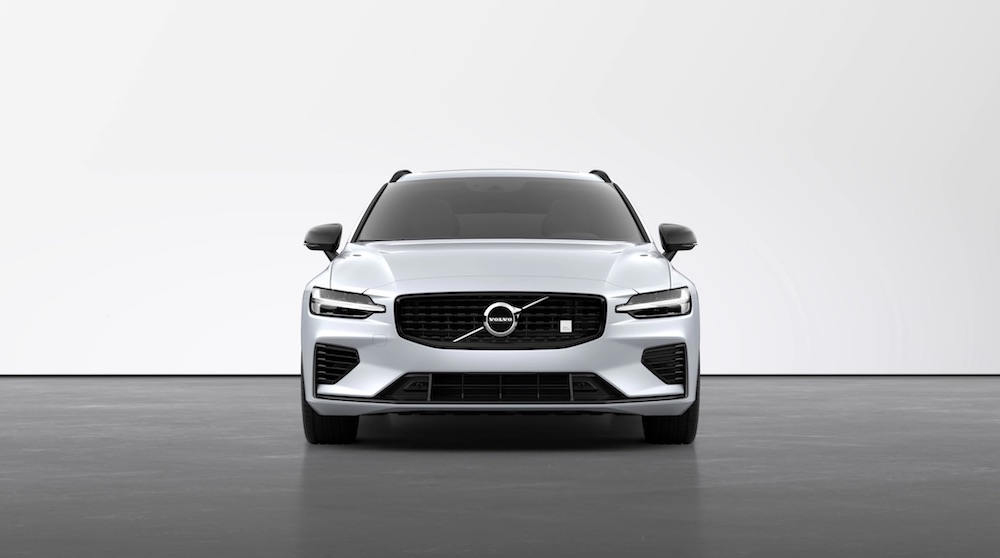


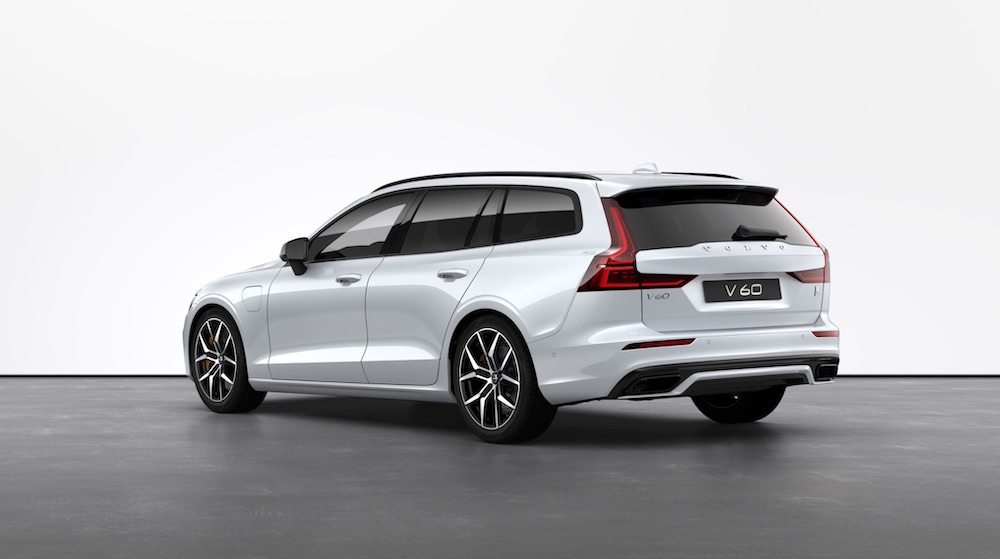
The Volvo V60 Recharge Plug-In Hybrid Estate (credit: Volvo)
| At A Glance | |
|---|---|
| EV Type: | Plug-In Hybrid Electric Vehicle (PHEV) |
| Body Type: | Estate |
| Engine: | Electric/ Petrol |
| Available In India: | No |
| Trims (1 Option) |
|---|
| Volvo V60 Recharge (Rs N/A) |
| EV Battery & Emissions | |
|---|---|
| EV Battery Type: | Lithium-ion |
| EV Battery Capacity: | Available in one battery size: 18.8 kWh |
| Charging: | DC charging not available. Onboard charger: 3.6 kW AC (0% – 100%: 5 hrs) |
| Charge Port: | Type 2 |
| EV Cable Type: | Type 2 |
| Tailpipe Emissions: | 18g (CO2/km) |
| Battery Warranty: | 8 years or 160,000 km |
| Charging Times (Overview) | |
|---|---|
| Slow charging AC (3 kW – 3.6 kW): | 6 – 12 hours (dependent on size of EV battery & SOC) |
| Fast charging AC (7 kW – 22 kW): | 3 – 8 hours (dependent on size of EV battery & SoC) |
| Rapid charging AC (43 kW): | 0-80%: 20 mins to 60 mins (dependent on size of EV battery & SoC) |
| Rapid charging DC (50 kW+): | 0-80%: 20 mins to 60 mins (dependent on size of EV battery & SoC) |
| Ultra rapid charging DC (150 kW+): | 0-80% : 20 mins to 40 mins (dependent on size of EV battery & SoC) |
| Tesla Supercharger (120 kW – 250 kW): | 0-80%: up to 25 mins (dependent on size of EV battery & SoC) |
- Note 1: SoC: state of charge
| Dimensions | |
|---|---|
| Height (mm): | 1437 |
| Width (mm): | 1916 |
| Length (mm): | 4761 |
| Wheelbase (mm): | 2872 |
| Turning Circle (m): | 11.4 |
| Boot Space (L): | 519 |
| Volvo V60 Plug-in Hybrid (T6 AWD) | |
|---|---|
| EV Battery Capacity: | 18.8 kWh |
| Pure Electric Range (WLTP): | 91 km |
| Electric Energy Consumption (kWh/100km): | 17.7 |
| Fuel Consumption (l/100km): | 0.8 – 1.0 |
| Charging: | DC charging not available. Onboard charger: 3.6 kW AC (0% – 100%: 5 hrs) |
| Top Speed: | 180 km/h |
| 0-100 km/h: | 5.2 seconds |
| Drive: | All-wheel drive (AWD) |
| Electric Motor (kW): | N/A |
| Horsepower (hp): | 350 |
| Torque (Nm): | 400 |
| Transmission: | Automatic |
| Seats: | 5 |
| Doors: | 5 |
| Gross Vehicle Weight (kg): | 2,480 |
| Colours: | 9 |
| NCAP Safety Rating: | Five-Star |
Solar And EV Charging: An Overview
The benefits of renewable energy, in particular, solar and wind energy, is already well established in India and in other parts of the world. With the increase in sales of electric vehicles (EVs) over the past three years, the advantages of using clean and renewable energy has been further enhanced.
Firstly, on-site renewable energy systems can be used for powering, both, business premises and homes. For on-site generation, we have witnessed a significant increase in distributed clean energy generating plants i.e. many commercial buildings and residential buildings have become generators i.e. generating electricity on-site! Solar roof projects have been popular for such on-site generation installations.
The war in Ukraine has further amplified the need to develop energy security, not only at a national level, but also at a local level, to include, businesses and households. Those households and businesses that already generate and consume clean energy on-site have been spared the significant onslaught of energy price rise in 2022 and 2023.
Installing solar panels on-site, mitigates the risks associated with energy price inflation, a significant contributor to costs for a business or a household. On-site renewable energy generation also impacts the environment positively. For those with electric vehicles (EVs), in particular, pure electric vehicles, we strongly encourage the use of renewable energy for EV charging. Of course, we also encourage the use of solar energy for charging a plug-in hybrid electric vehicle (PHEV).
Apart from the significant cost benefit i.e. generating renewable energy is a nominal cost per kWh (after initial set-up/ installation costs), to achieve true zero-tailpipe emission electric driving, renewable energy needs to be used for EV charging. This is also known as ‘well-to-wheel’. Just one electric car on the road can save an average of 1.5 million grams of CO2.
The good news for electric car owners is that a number of EV charging stations are now compatible with solar/ wind generation and battery storage. The UK based manufacturer myenergi zappi is a good example of a solar/ wind compatible EV charger. We encourage business and households to adopt an on-site ecosystem of ‘renewable energy-battery storage-EV charging’, to gain the maximum from the advantages of low carbon generation and zero-emission electric driving. Bottom-line, renewable energy is good for the environment and the wallet!
While e-zoomed uses reasonable efforts to provide accurate and up-to-date information, some of the information provided is gathered from third parties and has not been independently verified by e-zoomed. While the information from the third party sources is believed to be reliable, no warranty, express or implied, is made by e-zoomed regarding the accuracy, adequacy, completeness, legality, reliability or usefulness of any information. This disclaimer applies to both isolated and aggregate uses of this information.
Related articles

The All-Electric MG5 EV (Estate): The Complete Electric Car Buying Guide For India
Electric Cars: The Basics For those of you new to zero-emission electric driving, we recommend a read of the following articles: Sign up to the newsletter The Volvo V60…
Read More
The Renault Megane Sport Tourer E-Tech Plug-In Hybrid (Estate): The Complete Electric Car Buying Guide For India
Electric Cars: The Basics For those of you new to zero-emission electric driving, we recommend a read of the following articles: Sign up to the newsletter The Volvo V60…
Read More
The Mercedes-Benz C Class Plug-In Hybrid (Estate): The Complete Electric Car Buying Guide For India
Electric Cars: The Basics For those of you new to zero-emission electric driving, we recommend a read of the following articles: Sign up to the newsletter The Volvo V60…
Read More
The Vauxhall Astra Sports Tourer Plug-In Hybrid (Estate): The Complete Electric Car Buying Guide For India
Electric Cars: The Basics For those of you new to zero-emission electric driving, we recommend a read of the following articles: Sign up to the newsletter The Volvo V60…
Read More
The Volkswagen ID.Buzz Electric (MPV): The Complete Electric Car Buying Guide For India
Electric Cars: The Basics For those of you new to zero-emission electric driving, we recommend a read of the following articles: Sign up to the newsletter The Volvo V60…
Read More