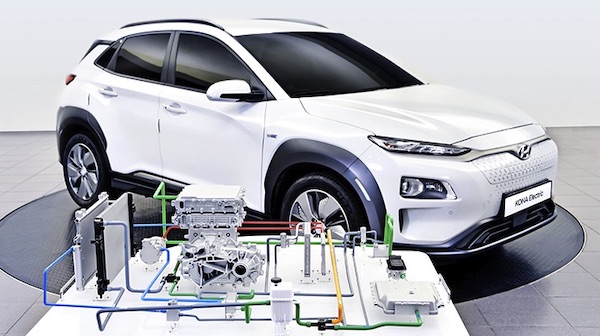
Electric Cars: The Basics
For those of you new to zero-emission electric driving, we recommend a read of the following articles:
Different Types Of Electric Cars: The Complete Electric Car Buying Guide For India
Electric Cars: The Basics For those of you new to zero-emission electric driving, we recommend a read of the following articles: Sign up to the newsletter What Is A…
Read More
What Is Regenerative Braking In Electric Cars: The Basics: The Complete Electric Car Buying Guide For India
Electric Cars: The Basics For those of you new to zero-emission electric driving, we recommend a read of the following articles: Sign up to the newsletter What Is A…
Read More
The History Of Electric Cars and Vehicles: Are EVs A New Invention?
Electric Cars: The Basics For those of you new to zero-emission electric driving, we recommend a read of the following articles: Sign up to the newsletter What Is A…
Read More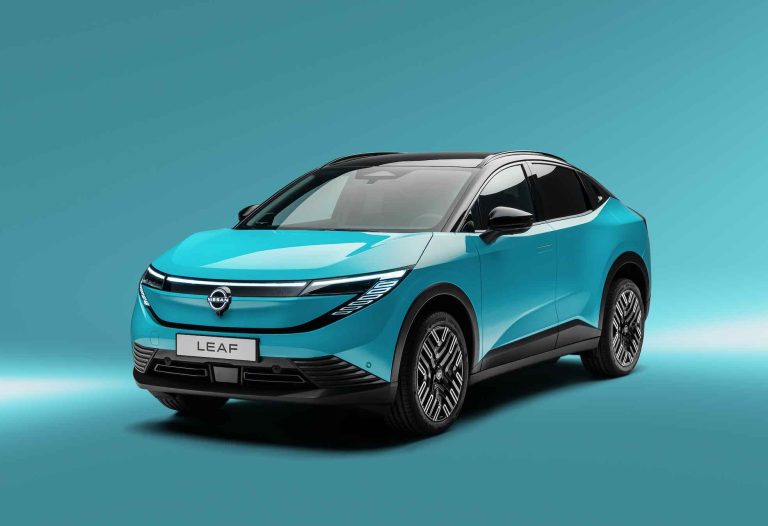
Electric Cars and Vehicles: Pros, Cons And Myths: The Complete Electric Car Buying Guide For India
Electric Cars: The Basics For those of you new to zero-emission electric driving, we recommend a read of the following articles: Sign up to the newsletter What Is A…
Read More
Electric Cars Range: WLTP: The Basics: The Complete Electric Car Buying Guide For India
Electric Cars: The Basics For those of you new to zero-emission electric driving, we recommend a read of the following articles: Sign up to the newsletter What Is A…
Read MoreSign up to the newsletter
What Is A Heat Pump In Electric Cars?
There are two keywords that begin with the letter ‘E’ in electric driving. Yes, the first one is ‘electric‘, but equally important is ‘efficiency‘. Since the introduction of modern electric cars, automotive manufacturers have been working hard in developing technology for electric vehicles (EVs), to enhance vehicle efficiency and improve electric range.
A good example of technology (innovation) that improves efficiency in electric cars, is regenerative braking. Also known as regen braking or brake recuperation, regenerative braking is a process of capturing the wasted energy (during braking) from an electric vehicle, to be re-used (recycled). In the case of electric driving, the ‘captured’ energy is reused to increase the pure electric range of the EV.
Heat pumps for electric cars is another ‘efficiency enhancing’ innovation fast gaining acceptance by automotive manufacturers. At the core, it works on the same principle as regenerative braking, in that, it captures ‘waste energy’, to be re-used (recycled) for improving e-range. We can continue to expect automotive manufacturers to develop new technologies based on ‘recycling’, as any form of transport will always have inefficiencies (waste) that can be re-used!
A heat pump is not a new technology and in fact, similar technologies have been used for several decades, in particular, in home appliances, like the ubiquitous refrigerator (similar, but in reverse). However, in relation to electric cars, it is relatively new, with the Japanese automotive manufacturer Nissan to become the first to incorporate a heat pump in a battery-electric vehicle (BEV) in 2012, the all-electric Nissan Leaf.
EV manufacturers gained significant insights early in the evolution of modern electric cars, in particular, related to the onboard EV battery performance and real-world electric range. It became clear that the impact of extreme temperatures (hot and cold) had a material adverse impact on the performance of the onboard EV battery and the available e-range. In particular, during the colder winter months. The genesis of the incorporation of a high efficiency heat pump is a result of such insights.
| EV Heat Pump: The Basics | |
|---|---|
| What is a heat pump in electric cars? | In conventional internal combustion engine (ICE), petrol and diesel vehicles, the energy (waste heat) generated from the engine (powertrain), is captured to re-use for heating the interior cabin of the vehicle. However, in pure electric cars, the heat generated (waste heat) from the electric drive (electric motor, inverter, on-board AC charger) and the onboard high-voltage EV battery is not as much, as the heat generated in conventional cars, and cannot be re-used on its own to provide sufficient cabin heating (electric cars are more efficient than petrol/ diesel cars). Therefore in EVs, the sources for capturing heat, also includes the outside air i.e. it is a multi-source heat pump system. This captured heat is re-used for the onboard EV battery management and also for heating the cabin interior, increasing the electric car efficiency and reducing the need to draw energy from the onboard EV battery. In general, a lithium-ion EV battery is less energy efficient during colder months (similar to the laptop or smartphone battery). |
| How does a heat pump increase electric range in colder winter months? | Electric cars that do not incorporate an onboard heat pump, rely on the energy of the onboard EV battery for heating the interior cabin of the electric car, further impacting the available e-range. In contrast, EVs with a heat pump, do not rely on the onboard EV battery to heat the cabin. Instead, the heat pump sources heat from multiple sources and releases energy-efficient heating into the cabin. Put another way, an electric car with a heat pump does not place any demand on the onboard EV battery for heating the interior cabin. There is ample real-world evidence to prove that electric cars with a heat pump offer longer electric range in winter months, compared to electric cars that do not incorporate a heat pump. The average improvement in range is between 10% to 20%. |
| How does a heat pump work in an electric car? | Step 1: naturally heated antifreeze is channelled into the heat pump evaporator, where the heat is transferred to the coolant circulating in the unit. The evaporator converts the coolant into gas (evaporation). Step 2: the gas is sucked into a compressor to increase the pressure of the gas. When air is compressed it increases its temperature. The gas temperature is increased to 80° C. Step 3: the compressed gas is transferred to a condenser, where the heat is transferred to water in the condenser. Step 4: the heat is then circulated to the interior cabin, while the gas is converted into liquid form, and is transferred back to the heat pump evaporator via an expansion valve. The cycle is then repeated. |
| Is a heat pump used only for heating? | No. A heat pump can also be used for cooling. As an example, the Audi Q7 EV uses the onboard heat pump for heating and cooling. |
| Does a heat pump come as standard in EVs? | Though some manufacturers offer the heat pump as standard, most offer it as an optional extra. We recommend purchasing the option. |
| Can a heat pump be installed in an electric car post delivery? | Usually it is not possible, given the complexity of installing a heat pump. So always order it at the time of purchase. |
| Are all heat pumps in electric cars the same? | No. There is a difference in technology, approach and efficiency achieved for different manufacturers. As an example, Hyundai and Kia claim to have one of the most efficient heat pumps, given the ability of their technology to dynamically choose the most appropriate heat source at a given moment. Hyundai claims the heat pump incorporated in the all-electric Hyundai Kona can improve the winter electric range up to 18%, significantly higher than the average improvement (10%). |
| Are there any other advantages offered by a heat pump in colder months? | Yes, you can pre-heat the electric vehicle (EV) via your mobile app before you commence your journey. This way you can have a toasty warm interior cabin on a cold winter day! |
| Examples of electric cars with an on-board heat pump |
|---|
| Audi Q4 e-tron |
| Hyundai Kona Electric |
| Hyundai Ioniq 5 |
| Mercedes EQE SUV |
| Nissan Leaf |
| Tesla Model Y |
| Volkswagen ID.3 |
| Volkswagen ID.4 |
| Volkswagen ID.5 |
Electric Driving: Top 5 EV Jargons For India
Despite the increased visibility of EVs in India, the vocabulary (jargon) used in electric driving is still new to consumers. In fact, for many, it can seem daunting and confusing. We have therefore put below some of the more commonly used terms in the EV glossary, to give you an easier introduction to electric driving in India!
| EV Glossary: Top 5 | |
|---|---|
| DoD (Depth-Of-Charge): | What is Depth-Of-Charge? A battery’s Depth-of-Charge is the level of discharge of a battery. As you drive an EV, the battery is discharged. The DoD indicates the % that has been discharged relative to the capacity of a battery. Conversely, a State-of-Charge (SOC), is the percentage of capacity still available in a battery. If you use 25% of your EV battery capacity, then the DoD is 25% and the SOC is 75%. It is recommended not to fully discharge an electric car battery, as this reduces the lifespan of a battery. Automotive manufacturers publish recommend DoD levels for charging, but a charging range between 20% to 80% is ideal. |
| EV Battery Life: | What is the life of an EV battery? Like petrol and diesel engines, electric car batteries also have a finite lifespan. Though EV battery technology has come a long way over the past few years, battery degradation is inevitable. Just as normal wear and tear is the case for an internal combustion engine (ICE) vehicle. Currently most EV manufacturers are offering a warranty up to 8 years or 160,000 km. However, some automotive manufacturers are offering an even longer EV battery warranty. An example is the Japanese automotive manufacturer, Toyota. The company offers a 10 years EV battery warranty for the all-electric Toyota bZ4X SUV. In most cases, such warranties are up to 70% of the original EV battery capacity. The battery life is impacted by a number of factors, which in turn impacts battery electrical performance, to include, the range the electric car can travel. The most commonly used batteries in electric cars are lithium-ion batteries. |
| Frunk: | What is a frunk? Though a frunk is not a new term, its availability is becoming more widespread with the development of electric vehicles (EVs). A frunk is a storage space/ compartment/ trunk in the front of a vehicle, rather than the rear. In the case of pure electric cars, given that these vehicles do not have an onboard internal combustion engine (ICE), there is space for a frunk. It is worth noting that a frunk is usually much smaller than a trunk, and in EVs, a good space for storing the EV cable. |
| One-Pedal Driving: | What is one-pedal driving? In one-pedal driving, the EV slows down or stops, when the pedal is released. One-pedal functionality reduce the need to use the brake pedal, for speed reduction or stopping. Of course, the brake pedal is still the best way to hold a vehicle in place at a complete stop. |
| WLTP (Worldwide Harmonised Light Vehicle Test Procedure): | In a bid to continue to improve the quality of realistic data released by automotive manufacturers, on economy, range and CO2 emissions, Europe has implemented its first phase for the WLTP program. The testing procedures under WLTP will result in reduced ranges for electric cars released under other previous testing regimes. The WLTP is seen as a significant improvement over the New European Driving Cycle (NEDC) designed in the 1980s and based on theoretical driving. The WLTP has been developed with the aim of becoming a global standard, so that cars can be easily compared between regions. |
While e-zoomed uses reasonable efforts to provide accurate and up-to-date information, some of the information provided is gathered from third parties and has not been independently verified by e-zoomed. While the information from the third party sources is believed to be reliable, no warranty, express or implied, is made by e-zoomed regarding the accuracy, adequacy, completeness, legality, reliability or usefulness of any information. This disclaimer applies to both isolated and aggregate uses of this information.
Related articles
What Is Vehicle-To-Home (V2H) Bidirectional Charging?: The Complete Electric Car Buying Guide For India
Electric Cars: The Basics For those of you new to zero-emission electric driving, we recommend a read of the following articles: Sign up to the newsletter What Is A…
Read More
An Introduction To AC And DC Electric Car Charging: The Complete Electric Car Buying Guide For India
Electric Cars: The Basics For those of you new to zero-emission electric driving, we recommend a read of the following articles: Sign up to the newsletter What Is A…
Read More
Battery Storage & Electric Car Charging: The Complete Electric Car Buying Guide For India
Electric Cars: The Basics For those of you new to zero-emission electric driving, we recommend a read of the following articles: Sign up to the newsletter What Is A…
Read More
Electric Cars And Vehicle-To-Load Charging (V2L): The Benefits: The Complete Electric Car Buying Guide For India
Electric Cars: The Basics For those of you new to zero-emission electric driving, we recommend a read of the following articles: Sign up to the newsletter What Is A…
Read More
Benefits Of Green Energy and Electric Driving : The Complete Electric Car Buying Guide For India
Electric Cars: The Basics For those of you new to zero-emission electric driving, we recommend a read of the following articles: Sign up to the newsletter What Is A…
Read More